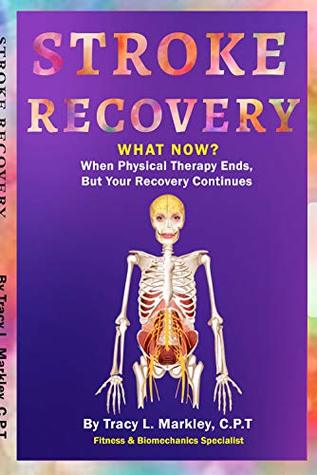
In “Stroke Recovery; What Now?” Tracy brings as much knowledge and experience as she can, hoping to help survivors continue with their personal stroke recovery. She teaches about the biomechanics of the body’s movements based on science. Tracy has helped several survivors achieve continued success in their stroke recovery. In “Stroke Recovery; What Now?” Tracy’s desire is to bring understanding to why specific muscles must be strengthened before other movements in the body can improve. Included in this book, are several important exercises for survivors and anyone who wants to become more stable when they stand and walk. There are also descriptions of why each exercise works. Tracy shares tips to improve a drop foot, spasticity, muscle strength, balance, communication, spatial awareness, cognitive skills, brain care and more. Tracy asked more than one hundred survivors about the struggles and challenges they faced when they were left on their own to continue their recovery. She was surprised by many of the tough challenges some faced, and she was determined to include all concerns in this book. There is no time frame on stroke recovery. Learning ways to help your brain build new pathways and helping your body move correctly more will assist you toward further recovery.
Title: Stroke Recovery, What Now?: When Physical Therapy Ends, But Your Recovery Continues
Author: Tracy L. Markley
Pages: 203
My review
This book is an all-in-one solution for every stroke survivor. Many survivors are confused on their recovery process after the limited physical therapy sessions. Either they don’t have proper knowledge of the continuing recovery or they may have the financial constraints to carry on physical therapy sessions. They may not have proper knowledge of the muscle groups that are affected by each exercises and the home workouts. Tracy has more than 20 years of experience in this field and helped many survivors in her long career. All her real-life experiences are bundled together and presented through this guide.
This is an A-Z guide on stroke and recovery. She starts from the basic information about stroke and its types. Then move on to the long recovery process. Along with illustrations on the exercises from beginner to advanced levels, she also stresses out the role of support groups. Many stroke survivors struggle with remembering things and depression. A strong support group is an excellent way out in this process.
One of the unique features of this book is its comprehensive coverage on all relevant topics. This significantly reduced my search for other books in this subject. Because it has anatomical illustrations, explanations and exercise diagrams. This is indeed a very helpful guide.
 The Ultimate Reviewer