Parenting is hard. It’s a never-ending series of particular problems that require ambiguous solutions. And the frustrating truth is that the specifics of your child’s situation aren’t in the literature. Believe me. I’ve been looking for it for two decades.
I’m a mother to four beautiful kids. When my second child was born with a disability, it took a lot of trial and error (and time hiding in the closet) before I realized the importance of holding myself back, almost sitting on my hands, so my kids could learn to think about where they had made mistakes, reflect on what they needed to change. “Let them do it themselves,” became our family mantra.
This book isn’t about the importance of one parenting style over another. It doesn’t tell you how important it is to hug your child, and it won’t help you minimize tantrums at any age. It’s about microparenting, which is when a parent tries to control every detail, no matter how small, of their child’s life. The point of this book is to help you stop microparenting and start doing something that works faster and better.
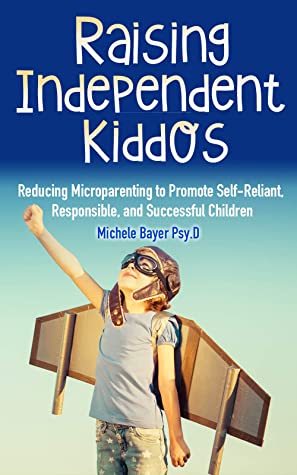
Title: Raising Independent Kiddos
Author: Michele Bayer
Pages: 139
My review
We never receive any training to become a parent. Yet most of the population will go through this challenging phase in their adult years. The best thing we can do to counteract ignorance is to learn. Knowledge can undo everything. But this is not a traditional parenting advice book. This book concentrates on one thing- microparenting.
Microparenting is same as the micromanaging. Most of the parents control every small task, every small detail in their child’s day-to-day life. This affects a child’s behavior as well as emotional development in unspeakable volumes. The author draws our attention to this most common practice of parenting through this. Most of today’s generation is affected by microparenting. The long-lasting effects of microparenting causes the development of domineering and unsatisfactory adult relationships in their later lives. We all exhibit the bits of this nature in our everyday life. Undoing this from our life, for the betterment of our children is not an easy task. However, we have to put conscious efforts for this.
The book has an elaborate introduction of microparenting and its effects, in the beginning. Later on, the author introduces a worksheet to test ourselves on the range of microparenting we already have. To minimize and gradually eliminate microparenting, first, we have to understand our child’s needs. They are empty shells. Their overall personality depends on what we try to fill them with, in their early years. Cultivating self-reliance and a sense of responsibility is not a simple task. But it is what they need to excel in their adult life.
The author supplements every step in this process with her life experiences. Her experiments and responses to the unfavorable and favorable results, teach us very practical solutions for every step. This alone makes the book a realistic guide.
 The Ultimate Reviewer