Today I’ll be hosting author Kevyn ‘LeShane’ Teape on my blog. His newly published poetry collection Discontinued: A Short Film is now available on Amazon.com
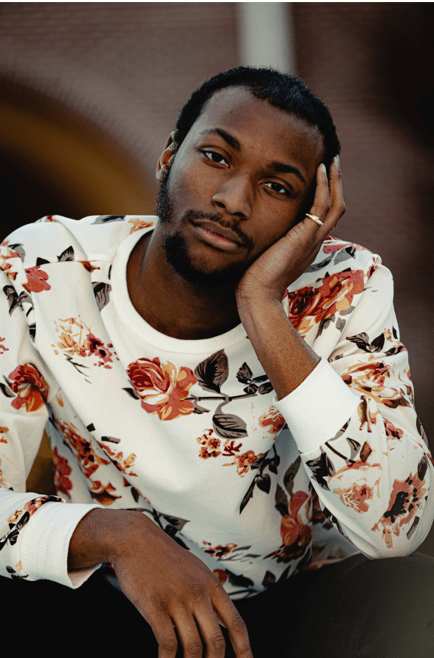
Kevyn ‘LeShane’ Teape is a critically acclaimed spoken word artist, poet, and entrepreneur. He began professional writing at the age of 16. By the time he graduated from The College of New Jersey at 22, he had self-published his first full-length anthology, two chapter books, and had won an Outstanding Book Award from the American Education Research Association for his contributions to the book “Open Mic Night: Campus Programs That Champion College Student Voice and Engagement”.
Kevyn is passionate and outspoken about social reform. He has worked and volunteered for a variety of equal rights, feminist, and mental health awareness advocacy organizations. He continues to push for social reform in his daily life and regularly uses his platform to discuss social issues, grief, and healthy ways to cope with hardship in his written works.
It is my pleasure to welcome author LeShane to this episode.
- When did you first realize you wanted to be a writer?
I don’t think I had come to a realization that I wanted to be a writer until I was maybe 18 or so despite the fact that I had already marked becoming a published author on my bucket list for years. At about 15, I started dreaming about being a successful director but I didn’t start writing until a year later when I began writing a trilogy that I would have liked to be adapted into film.
Even to this day, the term writer doesn’t seem to encompass what I really desire. I do refer to myself as a writer, but what I really want is to be a storyteller. I want to tell stories and use every medium at my disposal to do so. I perform spoken word, I’m invested in music production, and I am involved in visual arts as well. I want to combine these mediums and more to create more complex and rich stories that elaborate on some of my thoughts and spark discourse for people to engage in.
- How long have you been writing?
I started writing about 9 years ago. During this time I’ve had a few hiatuses and there were a couple of times when I told myself that I was in ‘retirement’. Over the past two years though I’ve become more consistent and found a process that works well for me.
When I was younger my English teachers complimented me on my creative writing and poetry in particular. I thought if I’m good at writing poetry, maybe it would be romantic to write my girlfriend a poem every month for our anniversaries. I realized that I enjoyed creative writing during those times where I would write for her. Once our relationship ended, I continued to write. I took inspiration from what was going on in the world around me, things I learned in school, and the conversations that I took part in or just overhead. Eventually, my writing preferences grew to include conceptual stories.
- What inspired you to write Discontinued: A Short Film?
In simplest terms, I was inspired by the present.
On a personal level I was experiencing strong feelings of despair, frustration and sadness when I began to write this book. I graduated with my Bachelor’s in May of 2020 in the midst of a recession, I had lost my job and a family friend because of COVID, and everyone in my life was experiencing hardships as a direct result of the virus.
On a broader level, I was extremely discontented with the current state of affairs in the world both domestically and internationally. The prevalence of police brutality, racism, misogyny, & ethnocentric ideologies in the United States tears me apart inside. I don’t see how anyone can watch someone get choked to death by someone whose responsibility is to ensure public safety and not find an issue with it. I can’t fathom how someone can be blind to how someone’s racial, gender, and sexual identities play a role in how much they are compensated at work to their likelihood to be victims of violence and abuse. These factors impact our lives and that’s just reality. I grew more frustrated as COVID 19 continued to spread, the lack of political leadership, and how people showed a lack of accountability for the safety of others as many people continued to disregard safety protocols, regulations, and recommendations from healthcare organizations and officials despite the growing number of casualties and hospitalizations.
All of the frustration drove me to write about what was going on. The overarching theme that was showing itself through most of my writing around the time was a sense of pain and grief. At least in American society, we don’t talk enough about dealing with hardship and grief and it’s so counterintuitive. We are exposed to positive and cheery emotions all the time in the media but in comparison we are seldom exposed to a more realistic depiction of life and the full spectrum of emotional experiences. Everyone in life will go through trying times, experience the death of a loved one, experience some form of trauma, etc. These things are all a part of the human experience and it is crucial that we learn how to navigate them. I wanted to write a real story about overcoming grief in a relatable way. There’s material that shows what it may look like to process the events that have happened, the destructive coping mechanisms someone might engage in, uncovering the underlying emotions, constructive ways to cope, positive thinking and more. I just really wanted to frame a fictional narrative that people could relate to and could maybe help someone dealing with hardships overcome them. Powerful stories can really have that kind of impact on people.
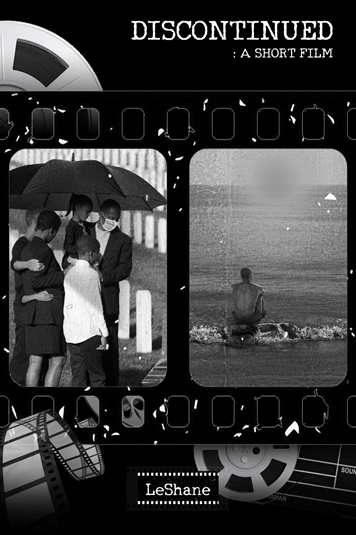
You can now purchase Discontinued: A Short Film on Kindle, Paperback and Hardcover formats from Amazon.com
- What is the most difficult part of your artistic process?
The most difficult part of the process is the final editing stages. I don’t know anyone in their right mind that enjoys it. Personally, by the time I get into that phase where I don’t believe there’s much of anything to add but before the final edit, fatigue starts to set in. That’s when I start awaiting the finish line: that time when you can finally rest knowing that the book is done, in production, and soon to be published. Once that happens you can fully reinvest your time and energy into all the other projects and creative efforts you are still excited for but haven’t been able to allocate most of your time to because you’ve been so hyper-focused on putting the final touches on this one project.
For me this always takes at least two months or so to complete because I find myself rereading and overanalyzing what I’ve written in the pursuit of that mythical destination we refer to colloquially as artistic perfection. Like all artists and creatives that share their work with the public, I take pride in releasing the best quality content I can. I think I put even more pressure on myself when I write these conceptual anthologies as each poem doesn’t just have to stand on its own merit but also has to add something of value and fit within the larger story. I find myself constantly hovering my cursor over the same lines trying to find the exact words, the exact style, and the exact phrasing to get not only the point across but the emotion I want to convey.
I think one thing that helps though is to put things back into perspective. You’ll never articulate exactly what your initial vision was. That’s the thing about art. It starts off as an idea in your head with no tangible elements and you have to reinterpret that thought into something that represents it as closely as you can. It’s like painting Van Gogh’s Starry Night, it’s not going to be an exact replica but you’ll get most of it and what you create is unique and beautiful in its own right.
- What is the most surprising thing you discovered while writing your book?
I discovered that it’s possible. The biggest reason why writing a book was on my bucket list was because I once thought that it was an impossible task for someone like me to stay focused enough to follow through a long-form cohesive narrative. I have always struggled with staying attentive and I have been accused of not being detail-oriented enough in the past so it was a huge step for me to write and publish my first full-length book last year. After I published my last book I didn’t really know if I could do it again. I was lost and didn’t know what to do next for a few months and the fear that I wouldn’t be able to write another book that could even compare in quality loomed over me until I just started writing without a purpose in mind. This year I took on an even bigger project that is significantly longer in duration, deals with a broader scope of issues, and is every bit as detail-oriented if not more so than my last book. This book has proven to me that I can not just replicate what I did in the past but also venture further and go every bit as far as my thoughts can take me.
- Who is your favourite author and why?
Alan Moore is my favorite author of all-time. Everything he writes is so compelling and intriguing. I don’t really enjoy happy endings in fiction. I prefer hyperrealism because that’s more relatable and applicable to real life. From V for Vendetta, to Promethea, to Watchmen, he utilizes a hyper-realistic approach to tell complex stories that have rich social commentary. There’s such a strong existential element to all of his writing and his writing is always thought-provoking and pushes the reader to really engage with their own beliefs, life choices, and to the extent that any of it matters. I’m not at all suggesting that his works are nihilistic either as that would be a gross and inaccurate oversimplification. There’s just so much to be said that any short summary of his works can’t possibly do them justice. Alan Moore might actually be insane in all the ways that are perfect for a writer to be. He’s an absolute genius and a legend. If you enjoy philosophy and thought-provoking books you need to read his catalog.
- What books or authors have most influenced your own writing?
I would have to say books like Watchmen, The Great Gatsby, 1984, Disgraceland: Musicians Getting Away With Murder and Behaving Very Badly, A History of the World in Seven Glasses, and Storynomics have influenced my writing the most. Each has had an impact on me and not for reasons that you may initially be led to believe. Watchmen is influential to me because it doesn’t primarily rely on plot to drive the story and the story provides a lot of open discourse to ponder and that’s one of the biggest things I try to provide my readers with. 1984 is influential because it is a dystopian novel about the future. Often when we think about the future we assume that our situations will improve but it won’t unless we actively do something to improve our way of life. If we stumble, the future can be the present with improved technology or worse we may find ourselves in more disadvantageous situations. The Great Gatsby has such a powerful feel and I love F. Scott Fitzgerald’s use of voice. Something about the voice of the story is so emotionally resonant with me in a melancholic way and it’s a feeling I try to replicate in some of my work. Similarly, I love Jake Brannan’s Disgraceland book and subsequent podcast of the same title for his use of voice. A History of the World in 7 Glasses is influential because of the perspective. It uses drinks, something so simple, to really extrapolate and share their impact on different societies and cultures over human history. Storynomics by Robert McKee because it’s helped me venture out from traditional three act structures while being able to hone in on what’s important to a story.
- What is the best piece of advice you received about writing?
Just do it. There’s no such thing as good writing, just good editing. I was watching a writer discuss her writing process in a Ted Talk interview on Youtube years ago and this piece of advice really stuck with me. You know as writers, it’s common to feel pressured to convey your thoughts perfectly from the start and that’s just not a realistic expectation. Writing anything exactly how you envisioned in one take is like catching lightning in a bottle. It’s just not sustainable and something you can rely on to happen often enough as a writer. I’ve written over a thousand poems and I can honestly say I might have written 3 poems in one take.
There are a few different strategies that you could implement but here’s my typical process. I typically get inspired by things I think about or come across during the day. For example, an interesting line or phrase that I think in my internal monologue, a discussion on a podcast, or the sound of someone’s voice can inspire me to write. I’ll write any lines that come to mind and then write a quick one-liner, or several bullet-point summary about what my thoughts were, the emotion I’m trying to invoke and the conclusion in my iPhone notes app. When I get a chance to start fleshing out my thoughts I’ll just write a couple trial lines that encapsulate the feeling first then experiment with rhyming schemes or stanza structures. I am really busy and I have attention span deficit related issues so by this time I’ve completed this task I’m ready to move on to something else. At a later time or date I’ll revisit the rough draft I’ve created and will find the words and format to really convey what I was trying to get across. Just start writing and trust in your editing process. If you can do this you’ll eventually flesh out your thought and be proud of what you’ve come up with.
- What inspires you to get out of bed each day?
Death. I don’t fear death, I fear not making the most out of every chance I get until that day comes. Not to be incredibly morbid but it can happen at any time too. I’ve witnessed so many people die in my life over the years from youth to old age. Witnessing friends die in high school and cousins die in their early 20’s provided me with an additional sense of urgency. Every day I’m just trying to be the best person I can be, help someone if I can, grow interpersonally and professionally, and just try to be alive. To me being alive is about being active, venturing out of my comfort zone, taking risks, finding out more about myself through exploration and putting myself out there.
- If you had to describe yourself in three words, what would they be?
I would describe myself as ambitious, compassionate, and open-minded. For better or for worse I have a number of goals that I would like to achieve and I’m unwavering in my pursuit of what I want. I would describe myself as compassionate as I don’t have any problems with showing sympathy. One of my biggest desires is to spread love and to receive love. I meet my friends and family where they are, that’s a boundary of mine. You can have as much love and support as you need as long as you are also bringing love and support in return. Also, I try to work towards contributing to progress on social issues that I care about. I’m pretty open-minded, I like to explore academically and learn about other perspectives, ideas, and engage in hypothetical what-ifs. Even more, than exploring beliefs, I’m into epistemology which is the study of why you hold the beliefs you do and if they’re justified. I think that’s part of being an artist of any sort. What can you create if you don’t first venture out into what’s new or lightly explored?
- Writing can be an emotionally draining and stressful pursuit. Any tips for aspiring writers?
Sometimes you just have to be reminded why you started writing in the first place. When you do anything for the primary purpose of making money it will get stressful. It’s something that stressed me out for 3 years in college as I struggled to justify writing on the side if it just was going to take up my time and not contribute to me financially. Yet writing does indeed contribute, maybe not financially right away but for me, writing can be relaxing and a fun way to convey what’s on my mind. Getting back to the core of why you write and focusing on that will help you stay on task and help your writing out as well. It only feels like work if you view what you’re doing as work, and not as something you’re doing because you want to accomplish something.
- Are you working on anything at the present you would like to share with your readers about?
My annual goal is to write and publish at least one book per year. I started this goal with my first full-length book for mass release in 2020 and I’m holding myself accountable to hit that target. With that said I’m roughly 30-40% done with what will be my next full-length release titled “Skyscrapers..” for 2022. I’m really excited for the finished product and this project has spawned some of my most creative and favorite poems to date.
In the meantime, I have a lot of content that is ready to be released once I come up with a solid plan. I am selecting one of a few finished conceptual anthologies to release in 2022. I am also in the process of creating a shop where my readers can buy merch. So stay tuned for more big news to come down the line.
You can follow me on my blog to keep up-to-date on the progress of these projects.
About Discontinued: A Short Film
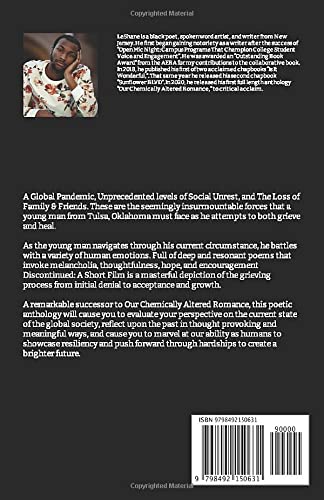
A Global Pandemic, Unprecedented levels of Social Unrest, and The Loss of Family & Friends. These are the seemingly insurmountable forces that a young man from Tulsa, Oklahoma must face as he attempts to both grieve and heal.
As the young man navigates through his current circumstance, he battles with a variety of human emotions. Full of deep and resonant poems that invoke melancholia, thoughtfulness, hope, and encouragement Discontinued: A Short Film is a masterful depiction of the grieving process from initial denial to acceptance and growth.
A remarkable successor to Our Chemically Altered Romance, this poetic anthology will cause you to evaluate your perspective on the current state of the global society, reflect upon the past in thought provoking and meaningful ways, and cause you to marvel at our ability as humans to showcase resiliency and push forward through hardships to create a brighter future.
Purchase here: Amazon.com
 The Ultimate Reviewer