Daughters of The Brothel: Stories from Delhi’s Red-light District

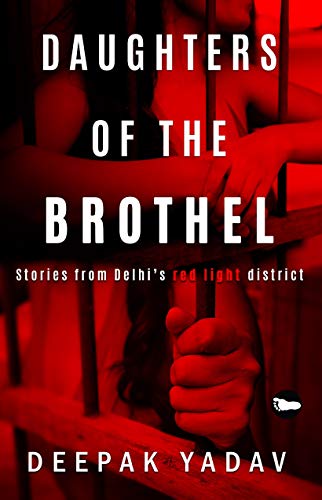
Title: Daughters of The Brothel: Stories from Delhi’s Red-light District

Author: Deepak Yadav

Publisher: Bigfoot Publications Pvt. Ltd

Pages: 224

Few words
41ofnQOEzpL

“My nath utrai (Taking off the nose ring) was performed when I was twelve or thirteen. The initial days were tough but now it gives me pleasure. I have inherited the art of making love from my grandmother.”
-Roopal, a sex worker from the Bedia community in brothel number 56.

Nath Utrai ceremony is nothing but the auction of the girl by the highest bidder near Bharatpur in Rajasthan.

“Everyone believes that all hijras are castrated, but this is not true. We call it nirvana. Castration is usually optional. It cannot be forced upon a hijra.”
-Sharmila, a eunuch from the streets of Varanasi

The narrator spends a considerable amount of time in G.B. Road, the famous red-light district in New Delhi during his stint with an NGO. He records the narratives of the sex workers of brothel number 56, insights of their daily lives, local lingos, quarrels, and the ins and outs of their business with an honest stoicism that does not dilute the terrible pathos of their lives.

Through this voyage within the walls of pleasurable cells, the writer learns that the G.B. road is an inexorable web…but only because the women trapped in it believe it to be so.

Review

From the title itself, it is evident that this is not a book for everyone. This is not a story of romance and love. These are the real-life stories of a lesser-known section, often termed as taboos of the polished society we live in.


The author gives insights into the daily lives of sex workers, prostitutes, and transgenders of the G. B road, the infamous red-light district of Delhi. These are not just stories. The author has written this as a mix of conversation and his own thoughts. The writing style is captivating.


Every account is unique. We can either read this book for leisure or for gaining knowledge. Knowledge about the hard life of girls, how they are treated at home and how they end up here and there bitter experiences. You can’t close this book without a heavy heart.

Rating:4/5

Buy here: Amazon

“April is lush” by Aditya Tiwari

41GYwXd1+gL._SX307_BO1,204,203,200_ - Copy.jpg

You tell them

that you are fine,

but these are

just your

little lilac lies

-April is lush (Adithya Tiwari)

April is lush is a collection of poems written by Aditya Tiwari. The first impression of this book is its cover and title. There is nothing graphic about the cover. But somehow I liked it a lot. The tinge of red merged with black yellow, green and grey colors is the expression of the author’s poetry. This somehow gives us a hint of a rainbow without opening the book. The seasons of human life, from a pupa to a beautiful butterfly or the different emotions one has throughout their life. The definition of the rainbow is limitless. The title is also apt for a poetry collection which describes very fragile emotions of human life.

I’m truly proud that I read this book in the pride month. LGBTQIA+ community has been sidelined in literature too as well as in other fields. Their voice s important as much as ours. That’s how we can merge them to us. Being a queer writer, Aditya’s pen bleeds the emotions of utmost difficult phase in human life. The emotions are raw and thus makes it most desirable. The power he attained from broken and healing throughout the phases of his metamorphosis has been strengthened his literary senses too. This has been evident from the small poems he wrote.

The poetry collection also includes poems on love, loss, heartbreak, trauma, woman and self-worth other than LGBTQIA+ thoughts. The flow of poems is what I admired most about this book. The phase of love and loss is always a favorite subject for poets. Its because it is the truest of all emotions one has. But the specialty of Adithya’s poems is he tried explored the phase of grief much more than others. The poems on trauma and loss have tons of difference. The small differences in our thoughts and emotions during the phase of loss is essayed beautifully in these small poems. This makes the poetry long-lasting in the thoughts of readers even after turning the last page.

The language used in poems is simple making even a beginner understand what it is meant. This is a must-read for every poetry enthusiasts.

Rating: 4/5

Buy paperback here
Buy Kindle edition here

The Peshwa: War of the Deceivers by Ram Sivasankaran

51LoQcy4wZL._SX322_BO1,204,203,200_.jpg

The Peshwa: War of the Deceivers
Ram Sivasankaran
Westland Publications
2018. Pages – 474.

Blurb: Seven years have passed since Peshwa Bajirao Bhat annihilated the Nizam’s armies at Fort Mandu. The two forces have been engaged in attacks and skirmishes ever since. Acting on the advice of his right-hand man, the mysterious Anaamik Dabhade, the Peshwa now sets about laying a trap to truly ensnare the Mughals, and break their might.

The Empire, of course, has methods of its own. And Nizam Ul Mulk is itching for an opportunity to exact revenge of the formidable Bajirao. With assassins, saboteurs and criminals infiltrating the Maratha lands, the Mughal Empire scores as many victories in the night as the Peshwa does during the day.

Meanwhile, in the far reaches of the country, set ablaze by the never-ending conflict between these major powers, a Sikh warlord, a Rajput king and a Bundela princess find themselves increasingly tangled up in the endgame that will determine the very course of history. It is a battle of wits and skill, and the greatest deceiver of them all will prevail.

My Review

The Peshwa: War of the Deceivers by Ram Sivasankaran is the second part of the Peshwa series. This is the story of lust for power and cunning inside politics to achieve them. The plot mainly focuses on the character and leadership quality of Peshwa. Also, there is some hint of his famous love story with Mastani in this book, but the story is clearly written to talk about Peshwa, who was he really.

I always loved historical fiction because they are always the perfect blend of creativity and history. This book also never disappoints me. The book is comparatively thick because the author has narrated the story in-depth through these pages. These kinds of large books need a compelling narrative and unputdownable story to successfully lead the reader through these pages. In my opinion, this kind of beautiful narrative alone can drive the story. The blurb itself is written to generate the curiosity and we can expect an action-packed thriller. The war scenes were described so perfectly that a reader can imagine whole drama as if they were watching a movie.

The internal conflicts bother the nation’s integrity rather than any invasions. Any story on the background of lust for power is filled with revenge. This story also has a fierce flow of revenge throughout the pages.

Another highlight of the story is character built-up. Strong characters can only drive the story forward. Here, the characters are created to perfectly blend with the storyline. Each and every character is unique and attention-grabbing. Again the beauty of powerful writing skill.

The illustrations in between the pages completed the creation of the fictional historical world where the story is based.

The story has a perfect climax. A climax which fills the heart of every reader. That’s why I call it a masterpiece.

In a nutshell, it was an enthralling experience to read The Peshwa.

Rating:4/5


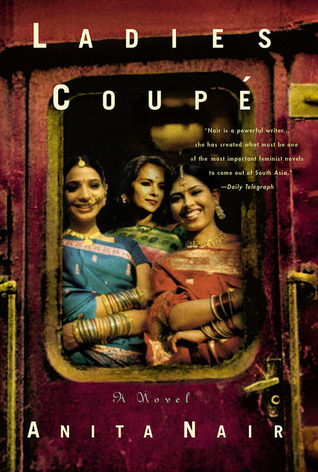
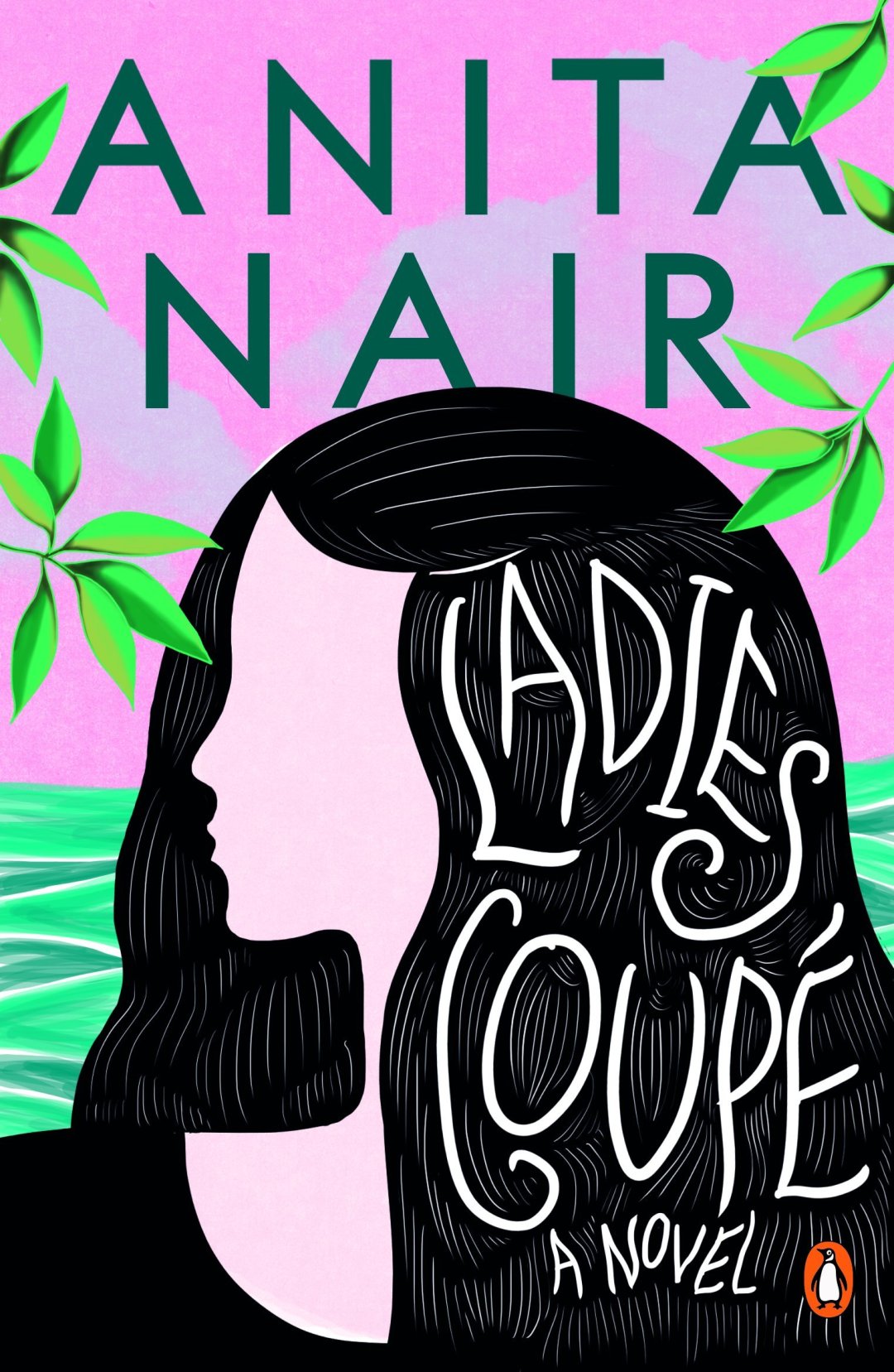
Ladies Coupé by Anita Nair

109728.jpg

Title: Ladies Coupé

Author: Anita Nair

Paperback: 228 pages

Publisher: Penguin Books Ltd (22 June 2015)

Language: English

Synopsis

The story of a woman’s search for strength and independence.

Meet Akhilandeshwari, Akhila for short: forty-five and single, an income-tax clerk, and a woman who has never been allowed to live her own life – always the daughter, the sister, the aunt, the provider.

Until the day she gets herself a one-way ticket to the seaside town of Kanyakumari, gloriously alone for the first time in her life and determined to break free of all that her conservative Tamil brahmin life has bound her to.

In the intimate atmosphere of the ladies coupé which she shares with five other women, Akhila gets to know her fellow travellers:

Janaki, pampered wife and confused mother;

Margaret Shanti, a chemistry teacher married to the poetry of elements and an insensitive tyrant too self-absorbed to recognize her needs;

Prabha Devi, the perfect daughter and wife, transformed for life by a glimpse of a swimming pool;

Fourteen-year-old Sheela, with her ability to perceive what others cannot;

And Marikolanthu, whose innocence was destroyed by one night of lust.

As she listens to the women’s stories, Akhila is drawn into the most private moments of their lives, seeking in them a solution to the question that has been with her all her life: Can a woman stay single and be happy, or does a woman need a man to feel complete?

91eaOsWmEkL.jpg


The Code Of Manavas: Beyond The Realm by Arpit Bakshi

512dOyPtlmL._SX326_BO1,204,203,200_.jpgBlurb

“The earth and the human race as we knew it have ceased to exist.
Bhoomidium, discovered by Krishna, healed the unstable core of Bhoomi during the last apocalypse. It has transformed Man to Manavas and Kali-Yug into Swarnim-Yug.
The year is 2050.2.0000001 and the Manavas are divided into two states, Madhavpur and Ayudhpur.
Krishna sees another apocalypse around the corner and he has a way out – an alternate universe, which can be reached by travelling through Omechta realm.
Can he save his race this time?”

My review

The Code of Manavas: Beyond The Realm is the first book of the Maha Vishnu trilogy written by Arpit Bakshi. The plot of this book is crafted in the combination of two unlikely genres, Indian Mythology, and Science fiction. Often the stories written on these genres are perfect entertainers because it is very difficult to build a story compared to other genres. The difficulty is because it demands much more research and knowledge along with creativity. Also without good storytelling skills, the plot may slip away or become weak. This story is the best example of the fusion of these genres. The author has done a commendable job to create a story with a strong backbone.

I loved the plot very much purely because of its uniqueness. How often you can see the mythological characters blended in the science world?

The creativity of the author has to be mentioned. For the first 40 pages, the author took his time to explain the new world, he crafted. Then only the true struggle was started. This is very much an unlikely skill because often the story becomes weak because it will lack the details of the background at the beginning. This is carefully avoided by explaining the new world at first. Through this, the author can take the reader their present to the future which he created rather smoothly.

The cover is excellently designed giving the glimpse of the story. The characters are uniquely named after many prominent mythological characters such as Krishna, Raghav, Gopal, Meera, Mohan, Vasu, Shyam etc. This is a very unique thought that I found interesting. From the title, it is evident that this is a Maha Vishnu trilogy, so the author named the characters according to that.

Being the first book of a trilogy, this book has an important role. It has to set a stage for crafting the remaining two stories. The Code of Manavas leaves the reader in a cliffhanger giving a perfect opportunity to the remaining two books.

I like the science fiction genre because they always offer something new to learn along with a beautiful story. This story also never disappointed me on this.

Overall, this is a nice read and takes away the reader from our present to the future for some time.

Rating: 4.5/5

I received a copy of this book through the BOOK GENIE REVIEW PROGRAM.