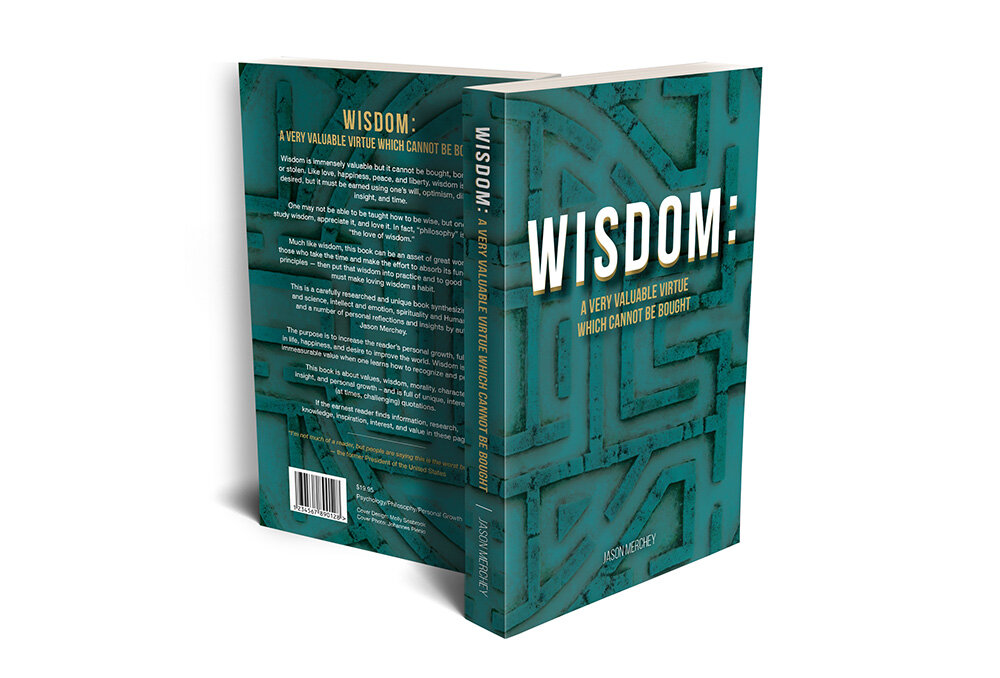
Jason A. Merchey’s Wisdom: A Very Valuable Virtue that Cannot Be Bought is an attempt to simplify a widely ignored and misunderstood concept. Wisdom is frequently dismissed as too philosophical and inaccessible to the average person. But isn’t it that difficult? Not at all. Jason Merchey is proving it to be otherwise. With devotion, it can be understood and internalized.
Wisdom is the skill that helps us to regulate our behaviors towards ourselves, others, and geopolitical issues in the world. The twenty-first-century generation particularly lacks this skill. They have made enormous improvements in terms of technology and science. But they are socially isolated, ignorant and unwise. This encourages the inherently destructive nature of humans and their toxic traits. Ignorant communities led by unwise leaders will surely lead to the misuse of power. Someone who doesn’t know when to show power and mercy will ultimately lead us to catastrophe. Hence, wisdom should be learnt and applied to our own existence.
What I liked most about this book is its clarity. The author used his rational and just views of the world to explain the concepts. This is a well-structured book that essentially shows the author’s knowledge of this subject. Because writing on a topic that is difficult to define but necessary for survival necessitates a high level of comprehension. For a better understanding of the concepts, we can divide the book into two parts. In the first part, the author talks about wise qualities such as generosity, kindness, love, emotional regulation, intelligence, empathy, compassion, and modesty. This part is a treasure of knowledge. It clearly draws the line between what is wrong and what is right. The next part is about the applicability of wisdom. Gaining knowledge is one part. But how can we apply these lessons to our lives and achieve the most from our mere 100 years of existence? Life cannot be lived without patience, delayed gratification, self-awareness, and self-discipline. All these qualities stem from wisdom. It can be nurtured and practiced. Only this can lead us to fulfilment in our lives.
Wisdom gives a realistic perspective on all the things happening around us. It helps to articulate our decisions and actions. It creates a sense of responsibility and humility towards our actions. With these qualities, one can anticipate problems and act accordingly. This book should be approached with an open mind to learn and an unbiased view for understanding. With this attitude, we can easily assimilate the wisdom of ancient Greek philosophers to 21st-century thinkers. This vast knowledge is intimidating. But disregarding this opportunity will be the greatest regret of one’s life.
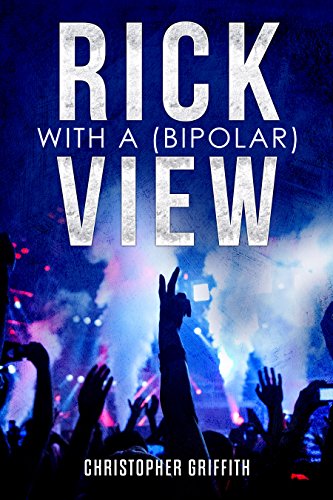
Today I’ll be hosting Christopher Griffith author of Rick With A (Bipolar) View in my blog. He is an accomplished author with 8 novels in his credit other than Rick With A (Bipolar) View. Christopher loves television, electronic music, Matthew, poetry, rip-roaring conspiracies, supermarkets, fantasy fiction from The Lord of the Rings to Harry Potter, and anything Shakespeare. He writes upon these subjects that in the study of them he will hopefully interest others, and learn thereby himself!
It is my pleasure to welcome Mr Griffith to this episode of the author interview.
When did you first realize you wanted to be a writer?
I was 21 years old and having a torrid time on a teacher training course at the University of Reading; I absolutely loved the friends I was making these but the experience of teaching was just dire, and although I didn’t know it at the time I was also suffering from undiagnosed mental illness, bipolar disorder. Fighting this sickness was taking up much of my energy, and in fact, my whole body and soul was crying out for a change of direction in my life. I’d flirted with creative writing in my second year as an undergraduate, starting to write the book previous to this one but eventually getting bogged back down in the academic study of the time, and so one day, when I was sitting in my accommodation at Reading the memory of that venture, presented itself to me again and I thought, ‘Let’s finish writing that book.’
How long have you been writing?
I’m 45 now, so 24 years. Wow, it doesn’t feel that long!
What inspired you to write Rick With A (Bipolar) View?
As mentioned above, I was struggling with the condition bipolar disorder and in fact, had only just recently been diagnosed in April 1998; I finished writing my first book, Temples of a Fantasy Revenge that winter and was determined to start a different subject than fantasy for my next book. I also wanted it to be a stream-of-consciousness effort in which the narrator ‘talks’ to the audience of the book. Once I’d made that decision, and then further decided I’d put much of my then present self into the main protagonist, it became an easy final decision to populate the rest of the book with versions of my good friends at the time, friends with whom I’d shared great experiences back at school. I wanted to keep on record that kind of easy, lazy even lifestyle you have as a student when the only worries are really who you’re dating and when is the next party. I hope I’ve captured that sense in my book.
You can now purchase Kindle and Paperback versions of Rick With A (Bipolar) View fromAmazon.co.uk
What is the most difficult part of your artistic process?
Getting it right! I mean that and what I mean is that there are so many permutations needed to make a book work – you’ve got to get the characters right, the story, plot lines, dialogue, description, style, tone, rhythm, pace, spelling(!), and at the end of the day it’s really simple, the best books you read are the ones where all these things come together harmoniously, in equal measure. Have I achieved it? Well of course I hope so but you must be the judge of that! All I can say is that I bring my best effort to every composition I undertake and I really try to respect that bond between author and reader. There’s one last thing of course to the artistic process – inspiration. Mine doesn’t come from the clouds or a Muse but from everyday life in which an item on the news or an experience I have that day can inspire me to examine that situation, that story, in more detail. Once I’ve found inspiration, all those elements I’ve mentioned above then come to bear on the subsequent output; blending them together is the difficult part.
What is the most surprising thing you discovered while writing your book?
The most surprising thing is that I was able to find any humour in the situation of having bipolar disorder. For all those who suffer from the condition, or know someone who does, the thought that you might be able to laugh at/with it is simply untenable. This is a horrid mental illness that invades the sufferer and tries to turn them against themselves. It can be stopped by medication of course, but also by the affection and love of those closest to us. When we’re in late adolescence and early adulthood that kind of support can come to us as much from friends as family, and so I went for an examination of the former realising along the way, particularly in the central chapter when Jimmy takes on Rick’s illness, that actually likes everything evil in the world, and bipolar disorder is that insidious, laughing at it can diminish and even expel its horror. Evil has no sense of humour, neither understanding it nor comprehending the power it has over darkness, decay and death. Sorry for getting a bit deep here, but along with suffering the tragedy of mental illness, try also to laugh at it too.
Who is your favourite author and why?
My favourite author is Willard Price; I have favourite books of course but I have rarely read through an author’s entire output as I did with Willard’s books when I was in childhood. For those not in the know, these were a series of adventure stories in which two brothers found themselves tackling a variety of what could loosely be called ‘dangers’. The thing is, I learnt so much from these tales, that a person who is in a starving state can’t just be fed lots of food to fill them up and get their weight back, it has to be a much longer, drawn-out process. Much like when the brothers dive deep underwater and have to come up slowly or they get what can be called ‘the bends’. What I took on board the most here was the patience you have to have with life, surely a tremendous lesson given our society’s current infatuation with immediacy and having every craving satisfied straightaway. Favourite authors teach us life lessons, and I have never forgotten the importance of waiting patiently for the desired outcome.
What books or authors have most influenced your own writing?
All of them. Every author I have read has had an impact on me and my writing, but if I had to be more determined it would be the great minds that have put pen to paper, Shakespeare, Chaucer, Milton right at the top. Then there were novels by authors like Henry Fielding, William Godwin, Mary Shelley whose style was a revelation for me, but then getting back down to earth there have also been a tremendous science fiction and fantasy authors, Arthur C. Clarke, Isaac Asimov, Philip K Dick, Tolkien, Robert Jordan, Terry Brooks whose work has developed and expanded my mind in entirely different ways to the Classics I’ve mentioned. I’ll also spare a word for all ‘normal’ reading material too, newspapers, magazines, anything in print or on-screen really which contains words. The English Language isn’t my forte, and I have no skills in that department, but I love words in any shape or form, always seeking to learn more about how to fit them together to make more effect.
If you had to describe yourself in three words, what would they be?
Inquisitive, Ireful, Indefatigable
Writing can be an emotionally draining and stressful pursuit. Any tips for aspiring writers?
Yes, I completely agree, and it can actually be dangerous to your health; I wrote a now-lost novel once which made me a thousand times more ill mentally than I had been before. The problem was, I lost control of the narrative. Sometimes that can be good when for example character takes on greater life than you thought and alters the plot accordingly, but you as the author still need to be in overall control of the story. If you feel it is running away from you, stop, read back and more often than not you’ll realise that at some point in the past you’ve let the plot slide into areas that don’t gel with where the story was going until that point. And that’s the most important tip I can give you because the writer’s hunch, just like the detective’s, must be acute at all times, and more importantly must be listened to and thereby acted upon. If you’re emotionally drained and stressed with your pursuit, recognise it early and put stop to it by recollecting your thoughts. Stop, go back, see where you turned left in your narrative rather than right, and then off you go again. Writing should never be laboursome, sometimes intense, yes, sometimes hard going, but not a chore, enjoyable.
Are you working on anything at the present you would like to share with your readers about?
Yes, I’ve posted all the poetry I’ve written over twenty or so years on a blog which can be found at https://christophergriffith50.blogspot.com/ and whose last few poems I have only just been working on very recently. I’m also determined to write a thriller like the Da Vinci Code and have started planning that; lastly, I still keep my hand into the literature I first studied as an undergraduate and am working on a translation of a medieval poem called Piers Plowman by William Langland. This amazing writer worked on this single poem throughout his entire life and it really does offer the most amazing insight into the fourteenth century, a century often likened to our recent twentieth for how dreadful it was for the human race to sometimes live through and suffer. But we’re resilient, humankind, and we tend to get back to our feet when we’ve been cast on our behinds! Resilience, there’s my final word for being a writer. Don’t let anyone tell you how to or you can’t or what are you doing etc. if you want to write then sit down, take a piece of paper and cast your thoughts upon it…
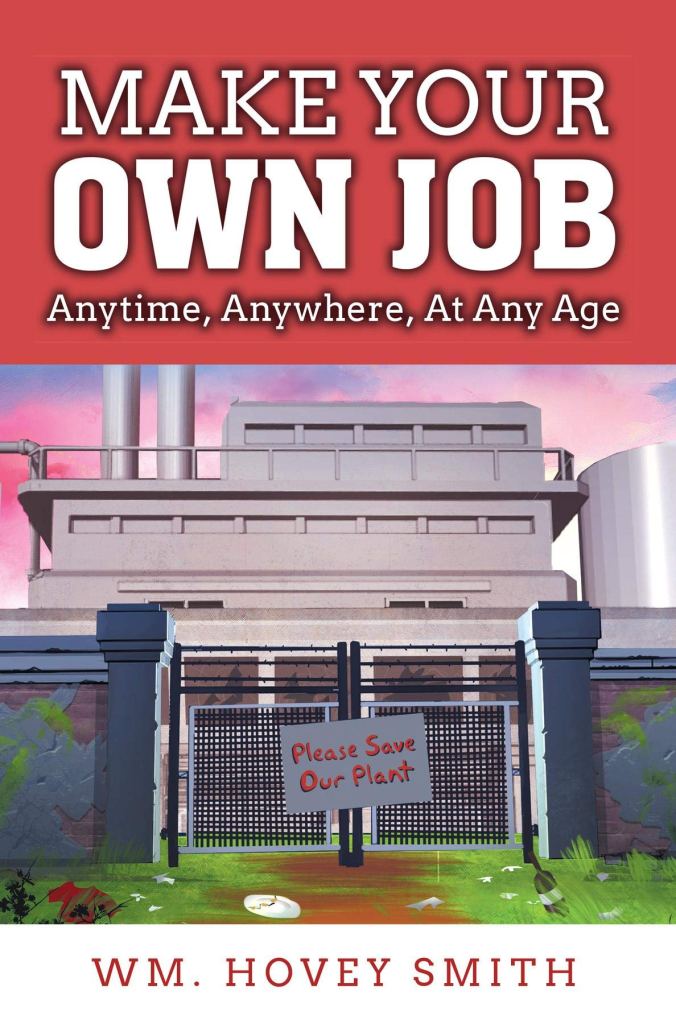
Make Your Own Job by W M Hovey Smith is a comprehensive guide to reinvent new opportunities in life. The gig economy is the new normal. Covid-19 crisis and subsequent massive layoffs have clearly taught us one thing- our jobs are impermanent. Job security is a myth in the fast-growing technological world. The best career advice in this era is to Make Your Own Job. In the author’s words, stay and lose your job or move.
Make Your Own Job is a wholesome guide to kick-start our entrepreneurial career. The author details how to start a one-person business from scratch. From raising the capital to marketing and legalizing the business, everything is covered in this guide. The possible challenges and their solutions along with ideas to scale the business are explained very skillfully in this book. This includes a comprehensive guide to finding a work-life balance and taking care of mental and physical health in these turbulent times. Overall, Make Your Job is an A-Z guide to build a scalable business that serves our own advantages.
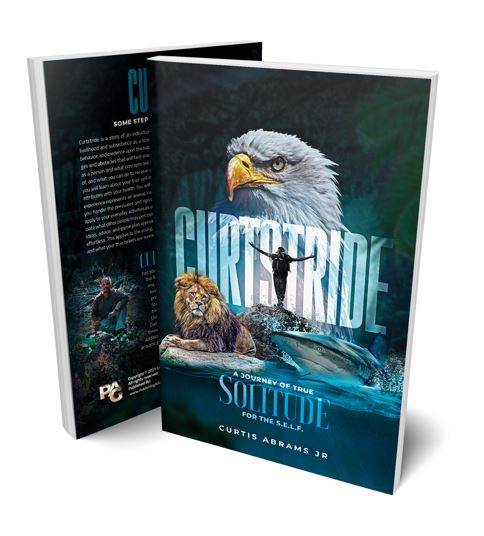
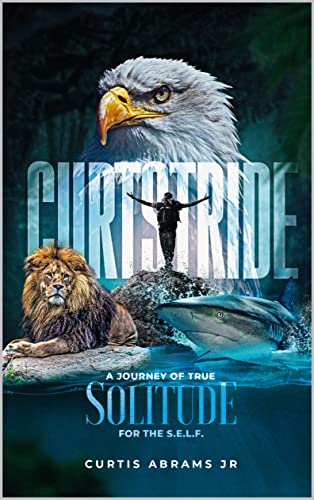
Today I’ll be hosting author Curtis Abrams. His debut book Curtstride: The Natural Instincts of Solitude for the S.E.L.F is now available on Amazon.com.
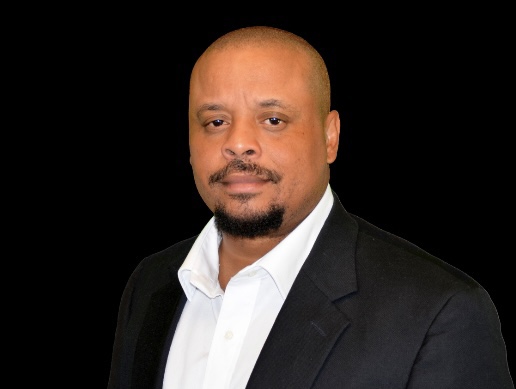
Curtis Abrams has worked in Media Psychology and Sales Management for over 15 years. A native of Tuscaloosa, Alabama, and currently resides in Tallahassee, Florida, Curtis has been a loner and an introvert most of his life. He is now a licensed professional home and commercial insurance inspector for the State of Florida. Additionally, Curtis is a licensed tutor who mentors and volunteers at public and private schools in Florida. A University of Alabama graduate with a Communications degree, Curtis also served in the U.S. Army for 10 years and has travelled throughout the world to learn about different social cultures. In addition, he’s an avid writer and is currently learning how to play the acoustic guitar and keyboard for his inner peace.
Pleasure to welcome Mr Abrams to this episode of the author interview.
When did you first realize you wanted to be a writer?
When I knew in my heart that I could tell stories based on my early childhood at about 12 to 14 years old listening to people reading books to me. As I used my imagination of what narrative takes off into my own world, I knew Writing stories would take me on a great journey so many years later as an adult, I find myself in the same world of imagination, I can deliver the message to other people that can see within my vision.
How long have you been writing?
I started writing when I was in college at and I wrote some short stories and a few screenplays and blogs for about 15 years.
What inspired you to write Curtstride: The Natural Instincts of Solitude for the S.E.L.F.?
The idea of not understanding your true value based on events that have happened in your life and realizing you’re not finding the true meaning of your purpose due to distractions and noises made me want to write particularly about battling it alone in the cruel world. And since the pandemic has evolved around the globe I wanted to bring some sort of awareness and a constant reminder that you are going to be OK because you are courageous, smart and passionate and I decided to put it in a self-help related book that’s really cognizant of your physical, social, psychological and inner instincts and abilities to survive like an animal whether you feel lonely in self-isolation or you’re just alone and becoming acclimated to your environment, and that’s what solitude is about.
You can now order Paperback and Kindle versions of Curtstride: The Natural Instincts of Solitude for the S.E.L.F. from Amazon.com
What is the most difficult part of your artistic process?
Is trying to find a total solution to any ambiguous dilemma that enters our thoughts and imagination because everyone thinks different and clarifies their meaning a lot less or more did anyone else. And I would like to try to stand on common ground for everyone when I write so everyone can get a profound resolution to whatever the narrative is.
What is the most surprising thing you discovered while writing your book?
What I discovered when I wrote my book is when I read after I did my writing I feel exhilarated because I can let it make sense based on my passion that it can deliver a message to someone out there if the intent is correct. And if my story can outlast throughout time and reach someone who may need to hear the message in which I believe it will.
Who is your favourite author and why?
I will have to say I’m inspired by Agatha Christie simply because I used to read a lot of her novels when I was young and it always had a twisted plot in the end that got me captivated and more intrigued into the story in which we as readers wanted more of the story. It felt like I was actually in that setting based on her storytelling.
What books or authors have most influenced your own writing?
I am a fan of Napoleon Hill, August Wilson, Rhonda Byrne, Stephen King, John Grisham, Earl Nightingale, William Shakespeare, Charles Dickens, Michael Eric Dyson and James Baldwin
What is the best piece of advice you received about writing?
I was always told that when a reader displays their story do you always listen to what they have to offer so you can digest and analyze whatever the story entails. The more you listen to someone about their story the better it will make sense for you to understand. Is one thing to look at the pages but it’s another thing to actually see it.
What inspires you to get out of bed each day?
The profound discipline and passion to realize that I have a purpose and intent to live and to make a difference for myself. To keep answering to any challenges that I embrace, as long as I have breath in my body. And to have the ability to help others when in need.
If you had to describe yourself in three words, what would they be?
Believe internally, always.
Writing can be an emotionally draining and stressful pursuit. Any tips for aspiring writers?
. If you want to write, remember it must entertain the audience as well as you must give a story and you must deliver a sort of information as to why the story is being told. If you know in your heart that you can leverage a story then it would not be hard to produce it, but don’t get yourself stuck because you’re overthinking and trying too hard to make a jigsaw puzzle come together, it takes time, patience, and the ability do you know where and what direction you’re following in order to get from here to there. Take your time, breathe when possible, no distractions, and finish the race.
Are you working on anything at the present you would like to share with your readers about?
I’m going to soon start an awareness program for people who are going through loneliness, anxiety, depression or social isolation issues, I would like to facilitate and reach out to whoever is going through these episodes. I’m going to continue to write more books and material in which it will pertain to mental health, human behaviour as well as social connections. I’m also training to become a certified life coach and if anyone wants to connect with me, I will be more than happy to assist you with anything you looking for. This book that I published, will quite possibly change the way you perceive this life as that you know it, of all ages. And if possible share this unique book throughout the world. That will make me very happy I am here for you, the people. Everyone.
You can follow me on Instagram @curtstride to keep up-to-date on my new projects and initiatives.
Curtstride is a story of an individual’s life journey as they view, learn, and explore as a loner or an outsider. The story centers on your individualistic views, behavior, irrational as you take on the immense challenges and obstacles that will face you being all by yourself. It gives you insight into how unique you are as a person and what concepts are needed for a better outlook of who you are, what you’re capable of, and what you can do to receive a better quality of life when alone. Done in 2nd person narrative, you will learn about your true self internally, your viewpoints dealing with society, and your physical attributes with your health. You will also be guided with an introspective of your inner strength. Each experience represents an animal instinct as you’re living vicariously through their mind and vision as you handle the pressures and rigorous ways of life. Throughout the story, you can incorporate and apply to your everyday activities as you walk through contemporary society as a Lone Wolf and appreciate what other people may perceive as different or unique. There are examples of subject matter and ideas, advice, and game plan approach to the individual to make their journey seemingly reliable and effortless. This applies to the young, teenager, adult, and elderly. Whatever job or business you obtain and what your true beliefs are surrounded by. This journey is for everyone.
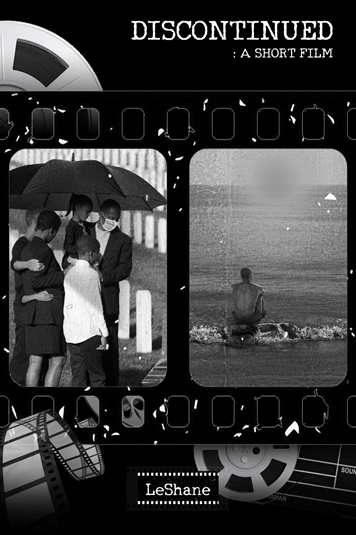
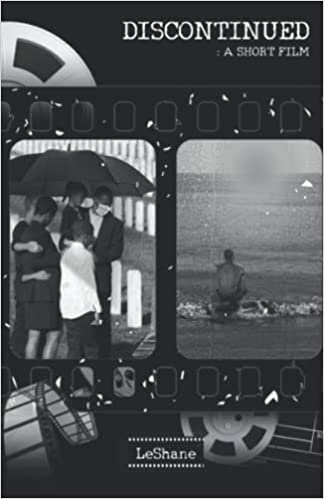
Today I’ll be hosting author Kevyn ‘LeShane’ Teape on my blog. His newly published poetry collection Discontinued: A Short Film is now available on Amazon.com
Kevyn ‘LeShane’ Teape is a critically acclaimed spoken word artist, poet, and entrepreneur. He began professional writing at the age of 16. By the time he graduated from The College of New Jersey at 22, he had self-published his first full-length anthology, two chapter books, and had won an Outstanding Book Award from the American Education Research Association for his contributions to the book “Open Mic Night: Campus Programs That Champion College Student Voice and Engagement”.
Kevyn is passionate and outspoken about social reform. He has worked and volunteered for a variety of equal rights, feminist, and mental health awareness advocacy organizations. He continues to push for social reform in his daily life and regularly uses his platform to discuss social issues, grief, and healthy ways to cope with hardship in his written works.
It is my pleasure to welcome author LeShane to this episode.
When did you first realize you wanted to be a writer?
I don’t think I had come to a realization that I wanted to be a writer until I was maybe 18 or so despite the fact that I had already marked becoming a published author on my bucket list for years. At about 15, I started dreaming about being a successful director but I didn’t start writing until a year later when I began writing a trilogy that I would have liked to be adapted into film.
Even to this day, the term writer doesn’t seem to encompass what I really desire. I do refer to myself as a writer, but what I really want is to be a storyteller. I want to tell stories and use every medium at my disposal to do so. I perform spoken word, I’m invested in music production, and I am involved in visual arts as well. I want to combine these mediums and more to create more complex and rich stories that elaborate on some of my thoughts and spark discourse for people to engage in.
How long have you been writing?
I started writing about 9 years ago. During this time I’ve had a few hiatuses and there were a couple of times when I told myself that I was in ‘retirement’. Over the past two years though I’ve become more consistent and found a process that works well for me.
When I was younger my English teachers complimented me on my creative writing and poetry in particular. I thought if I’m good at writing poetry, maybe it would be romantic to write my girlfriend a poem every month for our anniversaries. I realized that I enjoyed creative writing during those times where I would write for her. Once our relationship ended, I continued to write. I took inspiration from what was going on in the world around me, things I learned in school, and the conversations that I took part in or just overhead. Eventually, my writing preferences grew to include conceptual stories.
What inspired you to write Discontinued: A Short Film?
In simplest terms, I was inspired by the present.
On a personal level I was experiencing strong feelings of despair, frustration and sadness when I began to write this book. I graduated with my Bachelor’s in May of 2020 in the midst of a recession, I had lost my job and a family friend because of COVID, and everyone in my life was experiencing hardships as a direct result of the virus.
On a broader level, I was extremely discontented with the current state of affairs in the world both domestically and internationally. The prevalence of police brutality, racism, misogyny, & ethnocentric ideologies in the United States tears me apart inside. I don’t see how anyone can watch someone get choked to death by someone whose responsibility is to ensure public safety and not find an issue with it. I can’t fathom how someone can be blind to how someone’s racial, gender, and sexual identities play a role in how much they are compensated at work to their likelihood to be victims of violence and abuse. These factors impact our lives and that’s just reality. I grew more frustrated as COVID 19 continued to spread, the lack of political leadership, and how people showed a lack of accountability for the safety of others as many people continued to disregard safety protocols, regulations, and recommendations from healthcare organizations and officials despite the growing number of casualties and hospitalizations.
All of the frustration drove me to write about what was going on. The overarching theme that was showing itself through most of my writing around the time was a sense of pain and grief. At least in American society, we don’t talk enough about dealing with hardship and grief and it’s so counterintuitive. We are exposed to positive and cheery emotions all the time in the media but in comparison we are seldom exposed to a more realistic depiction of life and the full spectrum of emotional experiences. Everyone in life will go through trying times, experience the death of a loved one, experience some form of trauma, etc. These things are all a part of the human experience and it is crucial that we learn how to navigate them. I wanted to write a real story about overcoming grief in a relatable way. There’s material that shows what it may look like to process the events that have happened, the destructive coping mechanisms someone might engage in, uncovering the underlying emotions, constructive ways to cope, positive thinking and more. I just really wanted to frame a fictional narrative that people could relate to and could maybe help someone dealing with hardships overcome them. Powerful stories can really have that kind of impact on people.
You can now purchase Discontinued: A Short Film on Kindle, Paperback and Hardcover formats from Amazon.com
What is the most difficult part of your artistic process?
The most difficult part of the process is the final editing stages. I don’t know anyone in their right mind that enjoys it. Personally, by the time I get into that phase where I don’t believe there’s much of anything to add but before the final edit, fatigue starts to set in. That’s when I start awaiting the finish line: that time when you can finally rest knowing that the book is done, in production, and soon to be published. Once that happens you can fully reinvest your time and energy into all the other projects and creative efforts you are still excited for but haven’t been able to allocate most of your time to because you’ve been so hyper-focused on putting the final touches on this one project.
For me this always takes at least two months or so to complete because I find myself rereading and overanalyzing what I’ve written in the pursuit of that mythical destination we refer to colloquially as artistic perfection. Like all artists and creatives that share their work with the public, I take pride in releasing the best quality content I can. I think I put even more pressure on myself when I write these conceptual anthologies as each poem doesn’t just have to stand on its own merit but also has to add something of value and fit within the larger story. I find myself constantly hovering my cursor over the same lines trying to find the exact words, the exact style, and the exact phrasing to get not only the point across but the emotion I want to convey.
I think one thing that helps though is to put things back into perspective. You’ll never articulate exactly what your initial vision was. That’s the thing about art. It starts off as an idea in your head with no tangible elements and you have to reinterpret that thought into something that represents it as closely as you can. It’s like painting Van Gogh’s Starry Night, it’s not going to be an exact replica but you’ll get most of it and what you create is unique and beautiful in its own right.
What is the most surprising thing you discovered while writing your book?
I discovered that it’s possible. The biggest reason why writing a book was on my bucket list was because I once thought that it was an impossible task for someone like me to stay focused enough to follow through a long-form cohesive narrative. I have always struggled with staying attentive and I have been accused of not being detail-oriented enough in the past so it was a huge step for me to write and publish my first full-length book last year. After I published my last book I didn’t really know if I could do it again. I was lost and didn’t know what to do next for a few months and the fear that I wouldn’t be able to write another book that could even compare in quality loomed over me until I just started writing without a purpose in mind. This year I took on an even bigger project that is significantly longer in duration, deals with a broader scope of issues, and is every bit as detail-oriented if not more so than my last book. This book has proven to me that I can not just replicate what I did in the past but also venture further and go every bit as far as my thoughts can take me.
Who is your favourite author and why?
Alan Moore is my favorite author of all-time. Everything he writes is so compelling and intriguing. I don’t really enjoy happy endings in fiction. I prefer hyperrealism because that’s more relatable and applicable to real life. From V for Vendetta, to Promethea, to Watchmen, he utilizes a hyper-realistic approach to tell complex stories that have rich social commentary. There’s such a strong existential element to all of his writing and his writing is always thought-provoking and pushes the reader to really engage with their own beliefs, life choices, and to the extent that any of it matters. I’m not at all suggesting that his works are nihilistic either as that would be a gross and inaccurate oversimplification. There’s just so much to be said that any short summary of his works can’t possibly do them justice. Alan Moore might actually be insane in all the ways that are perfect for a writer to be. He’s an absolute genius and a legend. If you enjoy philosophy and thought-provoking books you need to read his catalog.
What books or authors have most influenced your own writing?
I would have to say books like Watchmen, The Great Gatsby, 1984, Disgraceland: Musicians Getting Away With Murder and Behaving Very Badly, A History of the World in Seven Glasses, and Storynomics have influenced my writing the most. Each has had an impact on me and not for reasons that you may initially be led to believe. Watchmen is influential to me because it doesn’t primarily rely on plot to drive the story and the story provides a lot of open discourse to ponder and that’s one of the biggest things I try to provide my readers with. 1984 is influential because it is a dystopian novel about the future. Often when we think about the future we assume that our situations will improve but it won’t unless we actively do something to improve our way of life. If we stumble, the future can be the present with improved technology or worse we may find ourselves in more disadvantageous situations. The Great Gatsby has such a powerful feel and I love F. Scott Fitzgerald’s use of voice. Something about the voice of the story is so emotionally resonant with me in a melancholic way and it’s a feeling I try to replicate in some of my work. Similarly, I love Jake Brannan’s Disgraceland book and subsequent podcast of the same title for his use of voice. A History of the World in 7 Glasses is influential because of the perspective. It uses drinks, something so simple, to really extrapolate and share their impact on different societies and cultures over human history. Storynomics by Robert McKee because it’s helped me venture out from traditional three act structures while being able to hone in on what’s important to a story.
What is the best piece of advice you received about writing?
Just do it. There’s no such thing as good writing, just good editing. I was watching a writer discuss her writing process in a Ted Talk interview on Youtube years ago and this piece of advice really stuck with me. You know as writers, it’s common to feel pressured to convey your thoughts perfectly from the start and that’s just not a realistic expectation. Writing anything exactly how you envisioned in one take is like catching lightning in a bottle. It’s just not sustainable and something you can rely on to happen often enough as a writer. I’ve written over a thousand poems and I can honestly say I might have written 3 poems in one take.
There are a few different strategies that you could implement but here’s my typical process. I typically get inspired by things I think about or come across during the day. For example, an interesting line or phrase that I think in my internal monologue, a discussion on a podcast, or the sound of someone’s voice can inspire me to write. I’ll write any lines that come to mind and then write a quick one-liner, or several bullet-point summary about what my thoughts were, the emotion I’m trying to invoke and the conclusion in my iPhone notes app. When I get a chance to start fleshing out my thoughts I’ll just write a couple trial lines that encapsulate the feeling first then experiment with rhyming schemes or stanza structures. I am really busy and I have attention span deficit related issues so by this time I’ve completed this task I’m ready to move on to something else. At a later time or date I’ll revisit the rough draft I’ve created and will find the words and format to really convey what I was trying to get across. Just start writing and trust in your editing process. If you can do this you’ll eventually flesh out your thought and be proud of what you’ve come up with.
What inspires you to get out of bed each day?
Death. I don’t fear death, I fear not making the most out of every chance I get until that day comes. Not to be incredibly morbid but it can happen at any time too. I’ve witnessed so many people die in my life over the years from youth to old age. Witnessing friends die in high school and cousins die in their early 20’s provided me with an additional sense of urgency. Every day I’m just trying to be the best person I can be, help someone if I can, grow interpersonally and professionally, and just try to be alive. To me being alive is about being active, venturing out of my comfort zone, taking risks, finding out more about myself through exploration and putting myself out there.
If you had to describe yourself in three words, what would they be?
I would describe myself as ambitious, compassionate, and open-minded. For better or for worse I have a number of goals that I would like to achieve and I’m unwavering in my pursuit of what I want. I would describe myself as compassionate as I don’t have any problems with showing sympathy. One of my biggest desires is to spread love and to receive love. I meet my friends and family where they are, that’s a boundary of mine. You can have as much love and support as you need as long as you are also bringing love and support in return. Also, I try to work towards contributing to progress on social issues that I care about. I’m pretty open-minded, I like to explore academically and learn about other perspectives, ideas, and engage in hypothetical what-ifs. Even more, than exploring beliefs, I’m into epistemology which is the study of why you hold the beliefs you do and if they’re justified. I think that’s part of being an artist of any sort. What can you create if you don’t first venture out into what’s new or lightly explored?
Writing can be an emotionally draining and stressful pursuit. Any tips for aspiring writers?
Sometimes you just have to be reminded why you started writing in the first place. When you do anything for the primary purpose of making money it will get stressful. It’s something that stressed me out for 3 years in college as I struggled to justify writing on the side if it just was going to take up my time and not contribute to me financially. Yet writing does indeed contribute, maybe not financially right away but for me, writing can be relaxing and a fun way to convey what’s on my mind. Getting back to the core of why you write and focusing on that will help you stay on task and help your writing out as well. It only feels like work if you view what you’re doing as work, and not as something you’re doing because you want to accomplish something.
Are you working on anything at the present you would like to share with your readers about?
My annual goal is to write and publish at least one book per year. I started this goal with my first full-length book for mass release in 2020 and I’m holding myself accountable to hit that target. With that said I’m roughly 30-40% done with what will be my next full-length release titled “Skyscrapers..” for 2022. I’m really excited for the finished product and this project has spawned some of my most creative and favorite poems to date.
In the meantime, I have a lot of content that is ready to be released once I come up with a solid plan. I am selecting one of a few finished conceptual anthologies to release in 2022. I am also in the process of creating a shop where my readers can buy merch. So stay tuned for more big news to come down the line.
You can follow me on my blog to keep up-to-date on the progress of these projects.
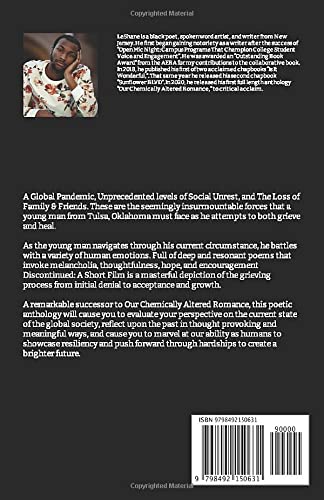
A Global Pandemic, Unprecedented levels of Social Unrest, and The Loss of Family & Friends. These are the seemingly insurmountable forces that a young man from Tulsa, Oklahoma must face as he attempts to both grieve and heal.
As the young man navigates through his current circumstance, he battles with a variety of human emotions. Full of deep and resonant poems that invoke melancholia, thoughtfulness, hope, and encouragement Discontinued: A Short Film is a masterful depiction of the grieving process from initial denial to acceptance and growth.
A remarkable successor to Our Chemically Altered Romance, this poetic anthology will cause you to evaluate your perspective on the current state of the global society, reflect upon the past in thought provoking and meaningful ways, and cause you to marvel at our ability as humans to showcase resiliency and push forward through hardships to create a brighter future.
A Global Pandemic, Unprecedented levels of Social Unrest, and The Loss of Family & Friends. These are the seemingly insurmountable forces that a young man from Tulsa, Oklahoma must face as he attempts to both grieve and heal.
As the young man navigates through his current circumstance, he battles with a variety of human emotions. Full of deep and resonant poems that invoke melancholia, thoughtfulness, hope, and encouragement Discontinued: A Short Film is a masterful depiction of the grieving process from initial denial to acceptance and growth.
A remarkable successor to Our Chemically Altered Romance, this poetic anthology will cause you to evaluate your perspective on the current state of the global society, reflect upon the past in thought provoking and meaningful ways, and cause you to marvel at our ability as humans to showcase resiliency and push forward through hardships to create a brighter future.
Title: Discontinued: A Short Film
Author: LeShane
Genre: Poetry
Pages: 110
My Review
Discontinued: A Short Film is a collection of beautifully written, thought-provoking poems. They express human emotions in their raw, unadulterated, unapologetic form. The words contain so much pain, anger and they spill the truth about our world. The author lost a dear friend and this event is marked in the first poem. The rest of them reflects his pain on this insurmountable loss. His grief leads him to unexplored places. He becomes less reactive and more of an observer. This leads him to inner conflicts and they are overflowed through these poems.
The poems are written in a unique style. Every verse brings out an incident from the author’s life and his perspective on them. Death and life is another recurring subject in these poems. Overcoming trauma is not an easy subject to write or explain. Everyone has their own way to heal. Nevertheless, the author has penned his thoughts and process through these poems.
I really loved how he structured his poems. Every poem tells you a story. Sometimes, it is about family, friends, experiences etc. It comes to a full circle at the end. He returns to where he began. In a way, these poems represent the uncertainty and unpredictable nature of our lives. Even the title of this book makes sense at the end. It is the discontinued chapter of life but only a short one. The collection ends with a beautiful poem on hope. It evokes courage within our souls. No matter how painful life is, it must continue and we all are bound to survive.
Really loved this piece of writing. One of the best works in poetry!
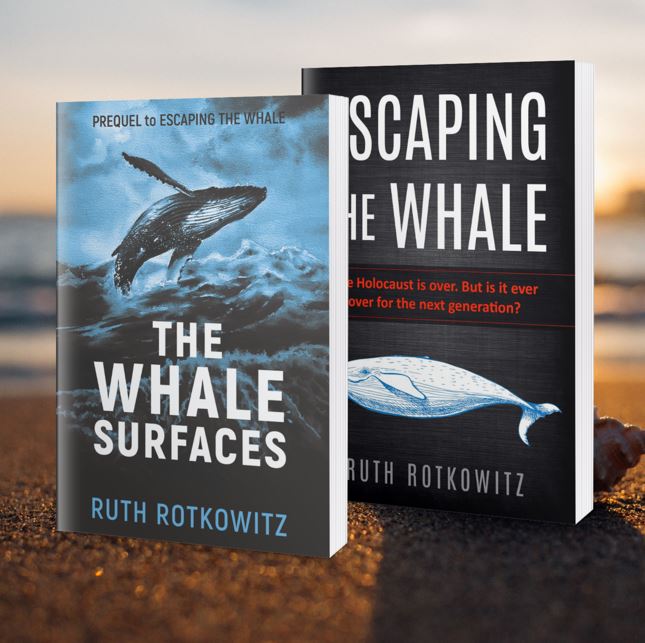
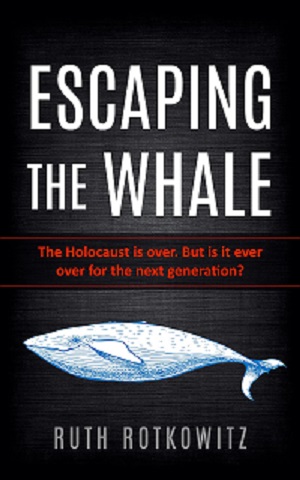
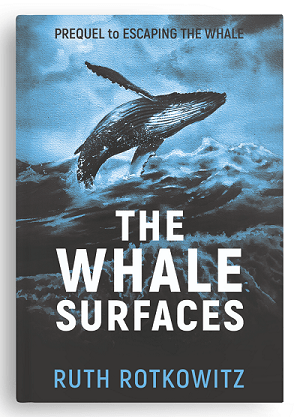
Today I’ll be hosting author Ruth Rotkowitz on my blog. Her novels, Escaping the Whale and The Whale Surfaces are available on Amazon.com
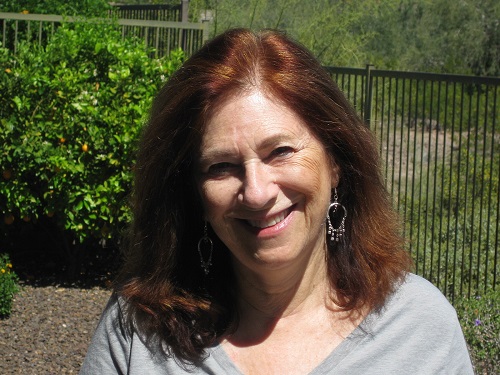
Ruth Rotkowitz is the author of two novels: Escaping the Whale and the prequel, The Whale Surfaces. Both novels feature a daughter of Holocaust survivors who struggles with a legacy of inherited trauma. Readers’ interest in the background of the adult protagonist in Escaping the Whale, which was published first, inspired the creation of the prequel, which describes the woman’s childhood and adolescence. As a daughter of survivors herself, Rotkowitz has experienced, observed, and researched inherited trauma. In the talks she has conducted via Zoom this past year, she has been heartened by the reactions of many types of readers of varied backgrounds who relate to her protagonist’s struggles.
Rotkowitz has published fiction, nonfiction, and poetry in various literary journals and has been a staff writer and member of the editorial board of the (now defunct) Woman’s Newspaper of Princeton, where several of her feature articles garnered awards. She holds a B.A. and M.A. in English and has taught English on both the college and high school levels. She currently conducts book talks for the Phoenix Holocaust Association in the Phoenix, Arizona area, where she resides.
It is my pleasure to welcome Ms. Rotkowitz to this interview.
When did you first realize you wanted to be a writer?
I always knew. I felt the “calling,” so to speak, as a little girl, because I always loved reading and marveled at the power and beauty of the written word.
How long have you been writing?
I was always writing. I got serious about trying to get my work published in the seventies, when I left teaching and was home with a child. I started with small pieces – fiction, nonfiction, poetry. I began framing ideas for novels a few years later, and began working at novel-writing in the eighties.
What inspired you to write these books?
I was visited by the idea of a troubled young woman as a protagonist. As I began writing of this woman’s life and her attempt to conceal her fears and delusions in order to appear normal, I connected her problems with the problems of children of Holocaust survivors as well as the struggles of women to be taken seriously, in their relationships and careers. I was inspired to set the first novel,Escaping the Whale, in 1980 because women were just beginning to break out of the passive role set for them, and because I vividly remember the fascination that year with the Iran hostage crisis. I saw a connection between that situation and my protagonist’s.
The creation of the second book, The Whale Surfaceswas inspired by the questions readers of the first book asked. They were curious about the protagonist’s upbringing and wanted a picture of how she became this woman haunted by demons, trying desperately to banish them herself. Thus, during the lockdown, I wrote the prequel, a novella, which fleshes out this character’s story.
You can now order Hardcover, Paperback, eBook and Audible version of Escaping the Whale fromAmazon.comand Hardcover and Paperback version fromBarnes & Noble, The Whale Surfaces is available on paperback and eBook version from Amazon.comandBarnes & Noble
What is the most difficult part of your artistic process?
The most difficult part is getting away from the artistic process. When I become obsessed with what I perceive as the success of other writers who have also published late in life with small presses, I become discouraged. How did they get that review? How did they get on that show? Etcetera etcetera. That is the kiss of death, leaving me angry and discouraged. I have to remember that I must not compare myself to anyone else. Just do my work, enjoy what I do, and feel pride in what I have achieved. Jealousy destroys creativity, and I have to constantly remind myself to move beyond it and just write!
What is the most surprising thing you discovered while writing your books?
What surprised me, and still surprises me, is the total immersion I experience in my character’s life. I become her. Her problems, fears, obsessions, and joys become mine. I actually dream about her. I think, in those dreams, I am working out some parts of the story.
Who is your favorite author and why?
There are many authors I adore, but Alice Hoffman is by far one of my favorites. I love the way she weaves myth, legend, and the supernatural into her tales of human characters. As you might surmise from the titles of my novels, I feel a connection with the Biblical story of Jonah and the whale, and I employed that as a metaphor for my character’s dilemma. Myths from all cultures have so much to teach us, and I am inspired by Hoffman’s ability to create a smooth flow between that world and the real world.
What books or authors have most influenced your own writing?
As a young girl, I was enamored of Little Women by Louisa May Alcott. I loved how the book drew me in so that I truly cared about the characters. The emotional connection I felt with Jo, the main character, and the pain I felt at Beth’s death, made me realize that writing has the power to connect with readers on an emotional level.
As an adult, I devour novels that portray a female character struggling with mental illness and/or butting heads with others who do not understand her. How To Be A Good Wife by Emma Chapman, The Pleasing Hour by Lily King, Beloved by Toni Morrison, Orphan Train by Christina Baker Kline, Illumination Night and The Probable Future by Alice Hoffman, All the LightWe Cannot See by Anthony Doerr, The Girl With the Louding Voice by Abi Dare, and Pigs in Heaven by Barbara Kingsolver are some of the books that have inspired me to explore the stories that reside in my head.
If you had to describe yourself in three words, what would they be?
Sensitive, creative, searching
Writing can be an emotionally draining and stressful pursuit. Any tips for aspiring writers?
If you love your character or your story, focus on that. Let it come to life on the page. Don’t be distracted by other worries about what you are creating. Enjoy the writing itself!
Are you working on anything at the present you would like to share with your readers?
I have begun two other novels. One deals with a woman who has inherited a castle in which she grew up and that she has spent her adult years trying to maintain. At some point, she will begin to question why she is doing that, since it has prevented her from having a life of her own. The other novel I have begun features an installation artist who teaches art in high school to pay her bills. She meets a charismatic, dysfunctional couple who fascinate her. They are both successful actors and they worm their way into her life, helping her but also controlling her.
You can follow me on Instagram @ruthrotkowitz to keep up-to-date on the progress for this project.
For more information on author Ruth Rotkowitz, visit her website
About Escaping the Whale
To everyone who knows her, 28-year-old Marcia Gold leads the perfect life. A high school guidance counselor in 1980 Brooklyn, New York who specializes in helping pregnant teens, Marcia thrives in her work. She also has a handsome, successful boyfriend who has won the approval of her Jewish, Holocaust-survivor family – no easy feat.
However, beneath the shiny surface lurks another reality. Plagued by frightening and debilitating panic attacks brought on by her family’s wartime legacy and exacerbated by the Iranian hostage crisis in the news, Marcia becomes convinced that “demons” are occupying her closet and her mind. Determined to keep her terrifying secret life a secret, Marcia is pushed closer and closer to a breaking point.
A series of crises finally forces the explosion Marcia can no longer contain. Determined to rid herself of her “demons,” she concocts a plan, desperate to be reborn as a new person. Unfortunately, she discovers that her plan creates its own problems. Can she find another path out of her psychic pain, one that will lead her to true normalcy?
Marcia Gold is the daughter of Holocaust survivors whose lives have been defined by their painful experiences in Europe. A sensitive child, Marcia has absorbed this history as her own, and the Holocaust looms over her childhood like an ever-present cloud. Despite caring parents and a safe life, Marcia’s childhood is filled with panic and delusions.
Marcia realizes early on that her fearful imaginings are upsetting to others. Yet demons are haunting her and she feels them infiltrating her life, making her ‘different.’ No one can understand her sense of alienation and her frightening ‘visions.’ Mortified by them herself, she believes her only hope lies in escaping the scene of her childhood and beginning an independent life. Only then, she concludes, will she vanquish those demons whose tentacles seem to be sliding relentlessly through the inside of her brain, poisoning all that they touch. Marcia’s search for independence is really a search for mental health.
Read after Escaping the Whale, the prequel explains Marcia’s journey to adulthood. Read as a stand-alone, it provides a picture of a child struggling to be ‘normal.’ Marcia Gold, in both books, is waiting to be understood.
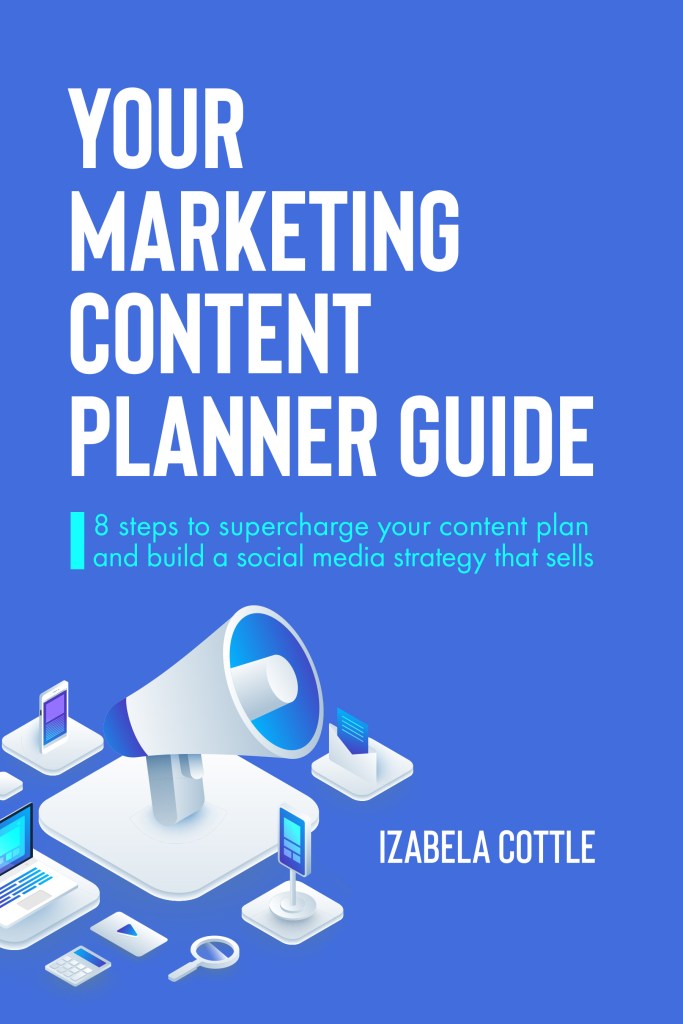
Title: Your Marketing Content Planner Guide: 8 Steps to Supercharge Your Content Plan and Build a Social Media Strategy that Sells
Author: Izabela Cottle
Pages: 100
Genre: Business, Marketing
My review
Content marketing is the driving force of a business. If there are no customers then there will be no business. Converting an audience into potential buyers needs effective strategies. Being a sought after marketing strategist, the author, Izabela Cottle draws her wisdom from years of experience to this book. This is a concise summary of effective, foolproof, battle-tested tactics. Because of that, I find these techniques, believable, practical, and most importantly converting.
This book mainly addresses small business owners and entrepreneurs. It gives a thorough knowledge of content planning, execution and monitoring. But you can still learn a lot if you are an experienced marketer. Because the author has written very valuable and unique content that actually drives the sales. These strategies analyse our business to the core. It gives a structured and proper content framework focusing on the audience.
Marketing is now all technology-driven. Making your mark on every social media platform is a game-changer. But every platform is different and we have to customize our content to tackle down these algorithm-driven platforms. First, we have to identify our business goal. It is important to decide where to go before starting the journey. The next step is knowing your audience and creating the content. But creating content is inseparably related to monitoring and analyzing its performance. This is the most important part of a strategy. Most authors don’t stress this part. But here, the author explains this part in detail.
This 8 step content planner creates a full circle. We can easily repeat the process by changing our goal in the first step. With new data, we can customize this strategy accordingly. Undoubtedly, this is an all-in-one solution for content marketing.
One of the best features I found in this book is simplicity. The author explains A-Z details with utmost clarity, without giving any chance to raise doubts in between. But this is not a book with theoretical concepts. It is an implementation plan. This unique feature separates this one from others.
The completeness of this book is fascinating. The author has left no stones unturned. A must-read for everyone who wants to learn or innovate their marketing skills.
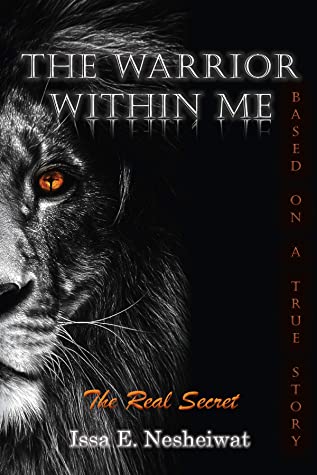
The Warrior Within Me, The Real Secret, is based on a true story and testimony of rescued faith and trusting in God during the terrifying and uncertain times in Nesheiwat’s life. By building endurance and resisting temptation through a series of trials, Nesheiwat was able to unlock “The Secret” by decoding biblical principles and through revelation.
My review
Title: The Warrior Within Me: The Real Secret
Author: Issa E. Nesheiwat
Pages: 183
Genre: Autobiography
Faith is a gift, some people are born with it, and some will achieve it. But it is our fate that either we find it or not. The path of healing starts with belief. The Warrior Within Me: The Real Secret is an autobiographical book by Issa E. Nesheiwat who turned his life all around through his unwavering faith. The best knowledge I gained from this book is how faith can heal any mind, and bring wonders to life if we are persistent. This is a powerful testimony of a man who went through every hardship one can ever felt in a lifetime and managed to find the light at the end of the tunnel.
This is not a typical motivation book you might see in the market. The story he is telling through these pages is real. We can literally feel the pain that he was gone through. He fought through numerous struggles to achieve what he is today. He overcame the health problems of his children, mother, family members, his failures, financial problems and much more in his very short time here. His path was not always easy. Because the path to self-discovery is never crowded. We, ourself has to walk the path to master fear and belief. His struggles awoke the powerful warrior within himself. He met his true self at the end of this road.
This is a captivating read indeed. The words are connected with emotions. I was curious to know about his story from the beginning itself. But the author only introduced it at the right time. He explained scriptures and powerful verses with real-life and relatable incidents at first. Then invite us to the real struggles. Because we can only understand and learn the intensity of his ideas after that.
What makes this book different is it offers a real solution. Every experience of the author is a lesson. We can replicate his results by mirroring his actions. These perfectly organized ideas are enough to embark on a change in our mind and actions. A change that can lead to enlightenment.
Mental illness affects more and more people every year. It affects those who are rich and famous, those who are struggling to make ends meet, and everyone in between. It does not discriminate.
It can last just a few months or your entire life.
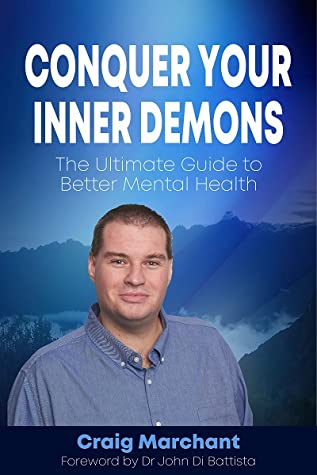
As a person who has suffered from depression, anxiety, and schizoaffective disorder for the majority of his life, Craig Marchant invites you along on his life journey to experience for yourself the ups and downs of living with mental illness.
Laugh with Craig as he shares some of his humorous antics, possibly shed a tear at some of his sadder moments and enjoy the sheer exhilaration of Craig’s recount of completing the Inca Trail.
This must-read book is not only the story of one man’s life journey, but also has a practical section where Craig shares what he believes are the most critical elements when confronted with a mental illness.
These steps will help you navigate the world of mental illness, with the hope that you or a loved one who suffers from mental illness can find a way out of the darkness.
Be under no illusion; the road to recovery is often long and perilous. This book shows you can do this, and no matter how hard it gets, those of us who have undertaken our journey before you – are always with you and have your back.
Conquer Your Inner Demons and take back what is rightfully yours; Your Life!
Title: Conquer Your Inner Demons: The Ultimate Guide to Better Mental Health by
Author: Craig Marchant
Pages: 164
My review
Mental illness is always an underrated and neglected issue. Undiagnosed health problems often lead us to catastrophic aftereffects let alone mental health issues. ‘Conquer Your Inner Demons’ is an attempt to bring light into this less explored problems. Since we are going through a global pandemic that had its clutches on every corner of our life, this guide has far more meaning than it appears.
Mental health has been a very difficult challenge in this post-COVID era, and I found this book a helpful guide in this matter. The author has narrated his journey from undiagnosed mental illness to getting it under control at the end. The book is divided into two parts. The first section is the personal narrative of the author’s life and the second part is all about diagnosing mental illness, busting myths, breaking stigma, and giving much-needed confidence to the survivors. This second part is written in a way that speaks directly to your mind. Every chapter in this section addresses popular misconceptions, insights from the author’s experience, and an action plan to manage various issues. The author even talked about his symptoms and experiences with schizoaffective disease. This needs a lot of courage and a genuine intention to help others who are suffering in similar situations.
His voice is unadulterated, and this pure honesty made me to stick to this book from beginning to end. He genuinely wants to bring a change in this world by helping people. By shedding light on this crucial matter, he has overcome all his inner demons and let the world know how he done it.
Ignorance is the biggest enemy we have to handle. Through the right knowledge and proper self-education, we can handle our demons very easily. This is a proper guide to that path. Loved this book to the core.

 The Ultimate Reviewer