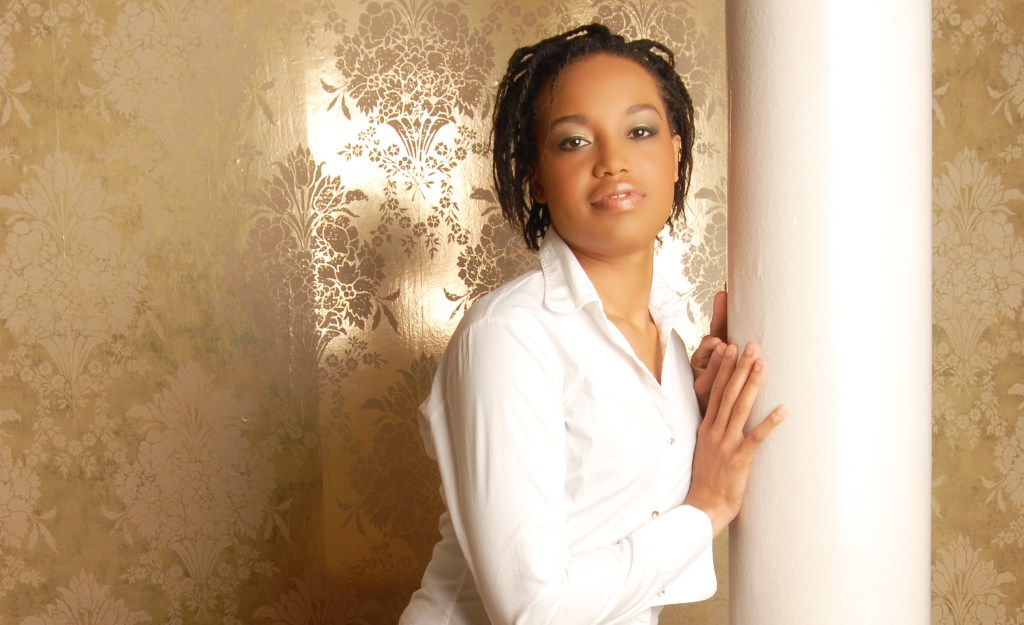
Tiki Black is an award-winning singer and songwriter. Born in Paris to Cameroonian parents, she has drawn inspiration from some of the best names in the industry to create memorable albums. Tiki now bares her soul with her first book, The Sound of the Broken Wand. This unique accompaniment to her second album is a collection of heartfelt poems. She weaves the wealth of her life into each line, from bouncing around the world to experiencing different peoples and settings while evoking a sense of magic we sorely need in our lives. Her unique voice blends Western and African cultures in a soothing way evoking both inner strength and fragility. She has been hailed as a true visionary and now gladly shares part of her innermost self for the first time.
When did you first realize you wanted to be a writer? I always felt it was something I was, not something I chose to be. It was the only way to express myself without the sound of my voice upsetting the status quo. I decided to be an author to share my thoughts beyond music.
How long have you been writing? My mother’s mind must be filled with the poems I wrote to her for birthdays and other celebrations. I always wrote so it’s hard for me to truly pinpoint when that started. However, the first poem I remember sharing with strangers was “My Alexander”, at 17. That fictional piece tells of a bond between two lovers and that transcends death.
What inspired you to write The Sound of the Broken Wand? Stories in general but particularly fairy tales. This is about breaking the spell of bewitchment and embracing the magic of the resulting emancipation.
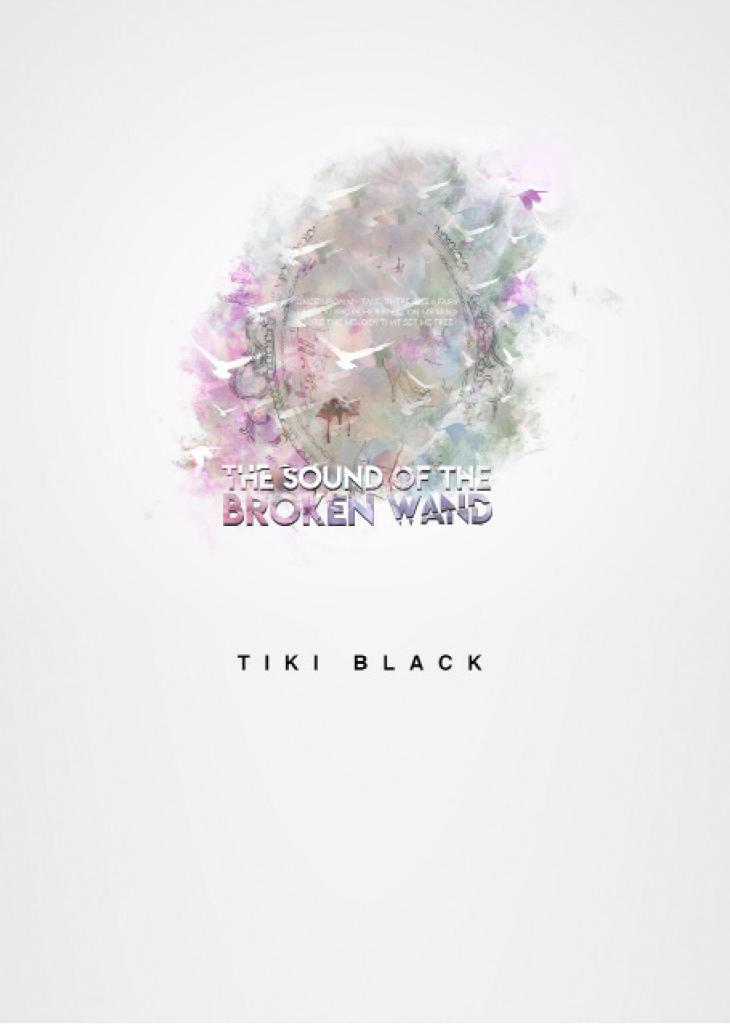
The Sound of the Broken Wand Available on Amazon.com
What is the most difficult part of your artistic process?
Erecting borders around the creative mind so that I can complete a book or an album in spite of having more ideas about the theme than I end up putting in.
What is the most surprising thing you discovered while writing your book? That a life led without creativity creates the borders around emancipation. That creativity that wallows in its own juices and does not expand beyond it becomes stale and constraints emancipation too. That emancipation is a lifelong process of asking questions, researching the answers open-mindedly beyond the close circle of our routine, and not treating any answer as the final one just out of misguided pride.
Who is your favourite author and why? I don’t have a favourite author. I love a lot of pieces for different reasons and not necessarily all creations by the same author.
What books or authors have most influenced your own writing?
I think that the reasoning from the 17th -18th centuries of Enlightenment has marked me. I got and still get to read and reread anything from Voltaire to Montesquieu. In many ways, my style has inherited a lot from the 18th -19th century Romantics. It will be easier for me to incorporate my sense of humour into my next endeavour as did some of my favourite post-colonialism novelists in sub-Saharan Africa. This way, I too will be able to see in a worn-out shoe just a shoe laughing in the imperfect tense.
If you had to describe yourself in three words, what would they be? being, becoming, creative
Writing can be an emotionally draining and stressful pursuit. Any tips for aspiring writers? Don’t stop writing, don’t compromise. Look after your mental, emotional and physical health in parallel. Meditation and silence are a part of honing your skill.
Are you working on anything at the present you would like to share with your readers about? I am working on several books, as I usually do. Which will come out first depends on which progresses faster. I tend to not put pressure on myself to keep stress and frustration at bay.
Award-winning singer and songwriter Tiki Black blends her multicultural assets to create intricate lyrics and memorable music. Tiki now bares her soul with her first book, The Sound Of The Broken Wand, a beautifully written collection of poems and a unique accompaniment to her sophomore album. The artist weaves the wealth of her experience into each line, celebrating the magic of human emancipation, as it breaks the spell of survival and allows us to experience the infinite possibilities of life.
My review
‘My existence was in question Was I human? Automaton? To rise above this condition I needed emancipation. They set me free in tight borders Deemed me unique within the mould They said me safe in that terror And afraid of my own person.’
The Sound of Broken the Wand by Tiki Black is a collection of poems and one essay that reflects on every aspect of human life from birth to death and everything in between. The six themes that are used in the book are the blood, the cage, the mirror, the crown, the shoe, and the wand. The author meditates on each of these themes and the poems reflect those deep thoughts. They talk about life, death, love, refuge, power, debt, journeys, magic, reflection, and much more. The striking characteristics of these poems are they all carry pure raw emotions – the unadulterated, painful, and unacceptable part of our lives. These poems are sharp questions aimed at us. Why we are afraid to break the spell and get out of this survival mode? A single moment of bravery can grant us a lifetime of infinite possibilities.
To break this spell, we have to touch the uncomfortable side of our inner self. The one side that we hide from everyone. The one face you are afraid to show. The one side you don’t want to claim as yourself. But it is yours and you have to accept it. Deniability doesn’t serve you. Rather, accepting one’s dark side will result in liberation.
We all have moulded our faces to be in line with what is socially acceptable. But what if the true freedom lies in breaking this spell and embracing who we are? The world will be truly a better place if everyone accepts their uniqueness and encourages others the same. Tiki Black’s poems are a bold reminder of this fact.
What I loved most is the thoughtfulness of these poems. Each poem touches our minds in the deepest way possible. They present unique questions to us. Answering these questions opens new dimensions of our character and mind. At this stage, these poems are slowly transcended to the genre of self-improvement. I really loved the multidimensional facet of these poems. Really enjoyable and thought-provoking read!
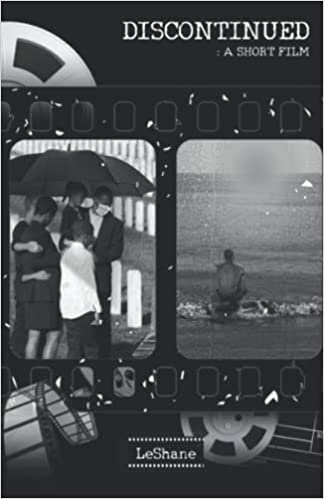
Today I’ll be hosting author Kevyn ‘LeShane’ Teape on my blog. His newly published poetry collection Discontinued: A Short Film is now available on Amazon.com
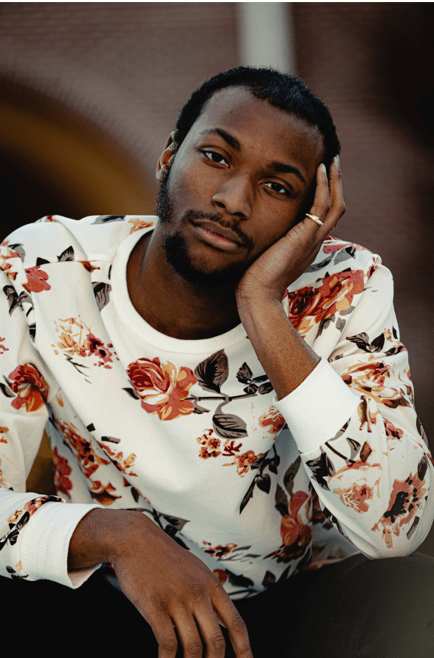
Kevyn ‘LeShane’ Teape is a critically acclaimed spoken word artist, poet, and entrepreneur. He began professional writing at the age of 16. By the time he graduated from The College of New Jersey at 22, he had self-published his first full-length anthology, two chapter books, and had won an Outstanding Book Award from the American Education Research Association for his contributions to the book “Open Mic Night: Campus Programs That Champion College Student Voice and Engagement”.
Kevyn is passionate and outspoken about social reform. He has worked and volunteered for a variety of equal rights, feminist, and mental health awareness advocacy organizations. He continues to push for social reform in his daily life and regularly uses his platform to discuss social issues, grief, and healthy ways to cope with hardship in his written works.
It is my pleasure to welcome author LeShane to this episode.
When did you first realize you wanted to be a writer?
I don’t think I had come to a realization that I wanted to be a writer until I was maybe 18 or so despite the fact that I had already marked becoming a published author on my bucket list for years. At about 15, I started dreaming about being a successful director but I didn’t start writing until a year later when I began writing a trilogy that I would have liked to be adapted into film.
Even to this day, the term writer doesn’t seem to encompass what I really desire. I do refer to myself as a writer, but what I really want is to be a storyteller. I want to tell stories and use every medium at my disposal to do so. I perform spoken word, I’m invested in music production, and I am involved in visual arts as well. I want to combine these mediums and more to create more complex and rich stories that elaborate on some of my thoughts and spark discourse for people to engage in.
How long have you been writing?
I started writing about 9 years ago. During this time I’ve had a few hiatuses and there were a couple of times when I told myself that I was in ‘retirement’. Over the past two years though I’ve become more consistent and found a process that works well for me.
When I was younger my English teachers complimented me on my creative writing and poetry in particular. I thought if I’m good at writing poetry, maybe it would be romantic to write my girlfriend a poem every month for our anniversaries. I realized that I enjoyed creative writing during those times where I would write for her. Once our relationship ended, I continued to write. I took inspiration from what was going on in the world around me, things I learned in school, and the conversations that I took part in or just overhead. Eventually, my writing preferences grew to include conceptual stories.
What inspired you to write Discontinued: A Short Film?
In simplest terms, I was inspired by the present.
On a personal level I was experiencing strong feelings of despair, frustration and sadness when I began to write this book. I graduated with my Bachelor’s in May of 2020 in the midst of a recession, I had lost my job and a family friend because of COVID, and everyone in my life was experiencing hardships as a direct result of the virus.
On a broader level, I was extremely discontented with the current state of affairs in the world both domestically and internationally. The prevalence of police brutality, racism, misogyny, & ethnocentric ideologies in the United States tears me apart inside. I don’t see how anyone can watch someone get choked to death by someone whose responsibility is to ensure public safety and not find an issue with it. I can’t fathom how someone can be blind to how someone’s racial, gender, and sexual identities play a role in how much they are compensated at work to their likelihood to be victims of violence and abuse. These factors impact our lives and that’s just reality. I grew more frustrated as COVID 19 continued to spread, the lack of political leadership, and how people showed a lack of accountability for the safety of others as many people continued to disregard safety protocols, regulations, and recommendations from healthcare organizations and officials despite the growing number of casualties and hospitalizations.
All of the frustration drove me to write about what was going on. The overarching theme that was showing itself through most of my writing around the time was a sense of pain and grief. At least in American society, we don’t talk enough about dealing with hardship and grief and it’s so counterintuitive. We are exposed to positive and cheery emotions all the time in the media but in comparison we are seldom exposed to a more realistic depiction of life and the full spectrum of emotional experiences. Everyone in life will go through trying times, experience the death of a loved one, experience some form of trauma, etc. These things are all a part of the human experience and it is crucial that we learn how to navigate them. I wanted to write a real story about overcoming grief in a relatable way. There’s material that shows what it may look like to process the events that have happened, the destructive coping mechanisms someone might engage in, uncovering the underlying emotions, constructive ways to cope, positive thinking and more. I just really wanted to frame a fictional narrative that people could relate to and could maybe help someone dealing with hardships overcome them. Powerful stories can really have that kind of impact on people.
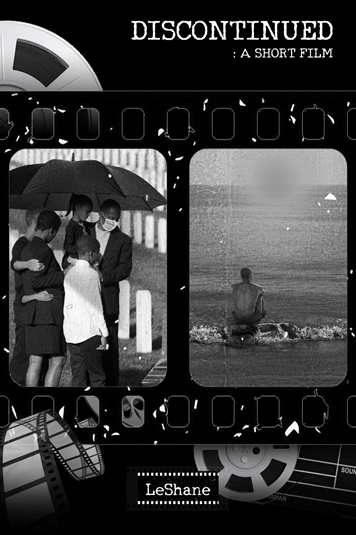
You can now purchase Discontinued: A Short Film on Kindle, Paperback and Hardcover formats from Amazon.com
What is the most difficult part of your artistic process?
The most difficult part of the process is the final editing stages. I don’t know anyone in their right mind that enjoys it. Personally, by the time I get into that phase where I don’t believe there’s much of anything to add but before the final edit, fatigue starts to set in. That’s when I start awaiting the finish line: that time when you can finally rest knowing that the book is done, in production, and soon to be published. Once that happens you can fully reinvest your time and energy into all the other projects and creative efforts you are still excited for but haven’t been able to allocate most of your time to because you’ve been so hyper-focused on putting the final touches on this one project.
For me this always takes at least two months or so to complete because I find myself rereading and overanalyzing what I’ve written in the pursuit of that mythical destination we refer to colloquially as artistic perfection. Like all artists and creatives that share their work with the public, I take pride in releasing the best quality content I can. I think I put even more pressure on myself when I write these conceptual anthologies as each poem doesn’t just have to stand on its own merit but also has to add something of value and fit within the larger story. I find myself constantly hovering my cursor over the same lines trying to find the exact words, the exact style, and the exact phrasing to get not only the point across but the emotion I want to convey.
I think one thing that helps though is to put things back into perspective. You’ll never articulate exactly what your initial vision was. That’s the thing about art. It starts off as an idea in your head with no tangible elements and you have to reinterpret that thought into something that represents it as closely as you can. It’s like painting Van Gogh’s Starry Night, it’s not going to be an exact replica but you’ll get most of it and what you create is unique and beautiful in its own right.
What is the most surprising thing you discovered while writing your book?
I discovered that it’s possible. The biggest reason why writing a book was on my bucket list was because I once thought that it was an impossible task for someone like me to stay focused enough to follow through a long-form cohesive narrative. I have always struggled with staying attentive and I have been accused of not being detail-oriented enough in the past so it was a huge step for me to write and publish my first full-length book last year. After I published my last book I didn’t really know if I could do it again. I was lost and didn’t know what to do next for a few months and the fear that I wouldn’t be able to write another book that could even compare in quality loomed over me until I just started writing without a purpose in mind. This year I took on an even bigger project that is significantly longer in duration, deals with a broader scope of issues, and is every bit as detail-oriented if not more so than my last book. This book has proven to me that I can not just replicate what I did in the past but also venture further and go every bit as far as my thoughts can take me.
Who is your favourite author and why?
Alan Moore is my favorite author of all-time. Everything he writes is so compelling and intriguing. I don’t really enjoy happy endings in fiction. I prefer hyperrealism because that’s more relatable and applicable to real life. From V for Vendetta, to Promethea, to Watchmen, he utilizes a hyper-realistic approach to tell complex stories that have rich social commentary. There’s such a strong existential element to all of his writing and his writing is always thought-provoking and pushes the reader to really engage with their own beliefs, life choices, and to the extent that any of it matters. I’m not at all suggesting that his works are nihilistic either as that would be a gross and inaccurate oversimplification. There’s just so much to be said that any short summary of his works can’t possibly do them justice. Alan Moore might actually be insane in all the ways that are perfect for a writer to be. He’s an absolute genius and a legend. If you enjoy philosophy and thought-provoking books you need to read his catalog.
What books or authors have most influenced your own writing?
I would have to say books like Watchmen, The Great Gatsby, 1984, Disgraceland: Musicians Getting Away With Murder and Behaving Very Badly, A History of the World in Seven Glasses, and Storynomics have influenced my writing the most. Each has had an impact on me and not for reasons that you may initially be led to believe. Watchmen is influential to me because it doesn’t primarily rely on plot to drive the story and the story provides a lot of open discourse to ponder and that’s one of the biggest things I try to provide my readers with. 1984 is influential because it is a dystopian novel about the future. Often when we think about the future we assume that our situations will improve but it won’t unless we actively do something to improve our way of life. If we stumble, the future can be the present with improved technology or worse we may find ourselves in more disadvantageous situations. The Great Gatsby has such a powerful feel and I love F. Scott Fitzgerald’s use of voice. Something about the voice of the story is so emotionally resonant with me in a melancholic way and it’s a feeling I try to replicate in some of my work. Similarly, I love Jake Brannan’s Disgraceland book and subsequent podcast of the same title for his use of voice. A History of the World in 7 Glasses is influential because of the perspective. It uses drinks, something so simple, to really extrapolate and share their impact on different societies and cultures over human history. Storynomics by Robert McKee because it’s helped me venture out from traditional three act structures while being able to hone in on what’s important to a story.
What is the best piece of advice you received about writing?
Just do it. There’s no such thing as good writing, just good editing. I was watching a writer discuss her writing process in a Ted Talk interview on Youtube years ago and this piece of advice really stuck with me. You know as writers, it’s common to feel pressured to convey your thoughts perfectly from the start and that’s just not a realistic expectation. Writing anything exactly how you envisioned in one take is like catching lightning in a bottle. It’s just not sustainable and something you can rely on to happen often enough as a writer. I’ve written over a thousand poems and I can honestly say I might have written 3 poems in one take.
There are a few different strategies that you could implement but here’s my typical process. I typically get inspired by things I think about or come across during the day. For example, an interesting line or phrase that I think in my internal monologue, a discussion on a podcast, or the sound of someone’s voice can inspire me to write. I’ll write any lines that come to mind and then write a quick one-liner, or several bullet-point summary about what my thoughts were, the emotion I’m trying to invoke and the conclusion in my iPhone notes app. When I get a chance to start fleshing out my thoughts I’ll just write a couple trial lines that encapsulate the feeling first then experiment with rhyming schemes or stanza structures. I am really busy and I have attention span deficit related issues so by this time I’ve completed this task I’m ready to move on to something else. At a later time or date I’ll revisit the rough draft I’ve created and will find the words and format to really convey what I was trying to get across. Just start writing and trust in your editing process. If you can do this you’ll eventually flesh out your thought and be proud of what you’ve come up with.
What inspires you to get out of bed each day?
Death. I don’t fear death, I fear not making the most out of every chance I get until that day comes. Not to be incredibly morbid but it can happen at any time too. I’ve witnessed so many people die in my life over the years from youth to old age. Witnessing friends die in high school and cousins die in their early 20’s provided me with an additional sense of urgency. Every day I’m just trying to be the best person I can be, help someone if I can, grow interpersonally and professionally, and just try to be alive. To me being alive is about being active, venturing out of my comfort zone, taking risks, finding out more about myself through exploration and putting myself out there.
If you had to describe yourself in three words, what would they be?
I would describe myself as ambitious, compassionate, and open-minded. For better or for worse I have a number of goals that I would like to achieve and I’m unwavering in my pursuit of what I want. I would describe myself as compassionate as I don’t have any problems with showing sympathy. One of my biggest desires is to spread love and to receive love. I meet my friends and family where they are, that’s a boundary of mine. You can have as much love and support as you need as long as you are also bringing love and support in return. Also, I try to work towards contributing to progress on social issues that I care about. I’m pretty open-minded, I like to explore academically and learn about other perspectives, ideas, and engage in hypothetical what-ifs. Even more, than exploring beliefs, I’m into epistemology which is the study of why you hold the beliefs you do and if they’re justified. I think that’s part of being an artist of any sort. What can you create if you don’t first venture out into what’s new or lightly explored?
Writing can be an emotionally draining and stressful pursuit. Any tips for aspiring writers?
Sometimes you just have to be reminded why you started writing in the first place. When you do anything for the primary purpose of making money it will get stressful. It’s something that stressed me out for 3 years in college as I struggled to justify writing on the side if it just was going to take up my time and not contribute to me financially. Yet writing does indeed contribute, maybe not financially right away but for me, writing can be relaxing and a fun way to convey what’s on my mind. Getting back to the core of why you write and focusing on that will help you stay on task and help your writing out as well. It only feels like work if you view what you’re doing as work, and not as something you’re doing because you want to accomplish something.
Are you working on anything at the present you would like to share with your readers about?
My annual goal is to write and publish at least one book per year. I started this goal with my first full-length book for mass release in 2020 and I’m holding myself accountable to hit that target. With that said I’m roughly 30-40% done with what will be my next full-length release titled “Skyscrapers..” for 2022. I’m really excited for the finished product and this project has spawned some of my most creative and favorite poems to date.
In the meantime, I have a lot of content that is ready to be released once I come up with a solid plan. I am selecting one of a few finished conceptual anthologies to release in 2022. I am also in the process of creating a shop where my readers can buy merch. So stay tuned for more big news to come down the line.
You can follow me on my blog to keep up-to-date on the progress of these projects.
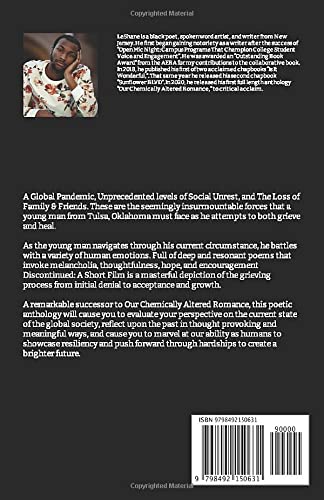
A Global Pandemic, Unprecedented levels of Social Unrest, and The Loss of Family & Friends. These are the seemingly insurmountable forces that a young man from Tulsa, Oklahoma must face as he attempts to both grieve and heal.
As the young man navigates through his current circumstance, he battles with a variety of human emotions. Full of deep and resonant poems that invoke melancholia, thoughtfulness, hope, and encouragement Discontinued: A Short Film is a masterful depiction of the grieving process from initial denial to acceptance and growth.
A remarkable successor to Our Chemically Altered Romance, this poetic anthology will cause you to evaluate your perspective on the current state of the global society, reflect upon the past in thought provoking and meaningful ways, and cause you to marvel at our ability as humans to showcase resiliency and push forward through hardships to create a brighter future.
A Global Pandemic, Unprecedented levels of Social Unrest, and The Loss of Family & Friends. These are the seemingly insurmountable forces that a young man from Tulsa, Oklahoma must face as he attempts to both grieve and heal.
As the young man navigates through his current circumstance, he battles with a variety of human emotions. Full of deep and resonant poems that invoke melancholia, thoughtfulness, hope, and encouragement Discontinued: A Short Film is a masterful depiction of the grieving process from initial denial to acceptance and growth.
A remarkable successor to Our Chemically Altered Romance, this poetic anthology will cause you to evaluate your perspective on the current state of the global society, reflect upon the past in thought provoking and meaningful ways, and cause you to marvel at our ability as humans to showcase resiliency and push forward through hardships to create a brighter future.
Title: Discontinued: A Short Film
Author: LeShane
Genre: Poetry
Pages: 110
My Review
Discontinued: A Short Film is a collection of beautifully written, thought-provoking poems. They express human emotions in their raw, unadulterated, unapologetic form. The words contain so much pain, anger and they spill the truth about our world. The author lost a dear friend and this event is marked in the first poem. The rest of them reflects his pain on this insurmountable loss. His grief leads him to unexplored places. He becomes less reactive and more of an observer. This leads him to inner conflicts and they are overflowed through these poems.
The poems are written in a unique style. Every verse brings out an incident from the author’s life and his perspective on them. Death and life is another recurring subject in these poems. Overcoming trauma is not an easy subject to write or explain. Everyone has their own way to heal. Nevertheless, the author has penned his thoughts and process through these poems.
I really loved how he structured his poems. Every poem tells you a story. Sometimes, it is about family, friends, experiences etc. It comes to a full circle at the end. He returns to where he began. In a way, these poems represent the uncertainty and unpredictable nature of our lives. Even the title of this book makes sense at the end. It is the discontinued chapter of life but only a short one. The collection ends with a beautiful poem on hope. It evokes courage within our souls. No matter how painful life is, it must continue and we all are bound to survive.
Really loved this piece of writing. One of the best works in poetry!
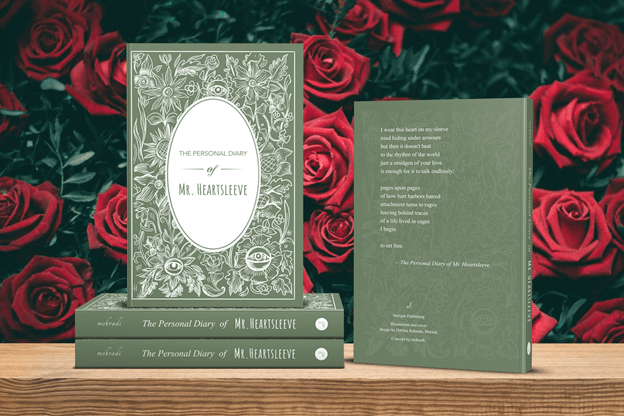
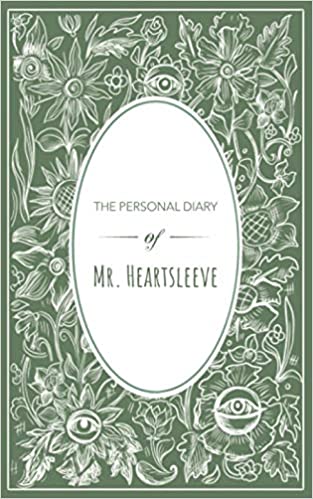
Today I’ll be hosting mokradi on my blog. His debut collection The Personal Diary of Mr. Heartsleeve is now available on Amazon.com
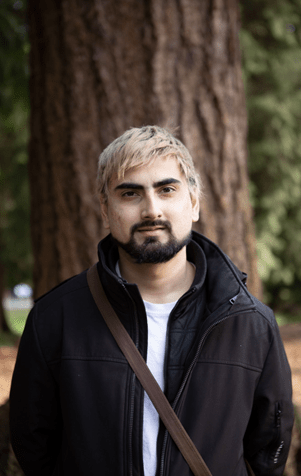
mo-kra-di (he/him/his) is an Indian storyteller and chronicler who uses digital media as his primary platform for artistic expression. mokradi engages directly with readers through social platforms where he showcases his work and interacts with a thriving community of thousands. In the years to come, he hopes to continue his digital exploration of themes ranging in masculinity, migration to spirituality and self-identity.
It is my pleasure to welcome mokradi to this episode.
Me: If you had to describe yourself in three words, what would they be?
mokradi: I am not too sure but now I am curious to know! I regularly post poems and prose, some even attempting to describe myself, on my instagram page @mokradi_
I think if you get to know me through my work you are welcome to try!
Me: When did you first realize you wanted to be a writer? How long have you been writing?
mokradi: I can still recall my tiny white eyes opening wide with unfettered excitement on opening one of my very first books: an illustrated poetry magazine by Sukumar Rai, a renowned Indian writer fondly remembered for his poems for children. I was maybe six or seven at the time.
As any child, I was captivated by the bright drawings of characters and scenes in this children’s book but for the first time I was drawn to the words. The effect words had in rhyming was so magical to me and how Rai effortlessly created these sonic worlds that told a story, all coming out from the nib of his pen!
I feel my artistic expression began very shortly after. I would pick up random crayons, red, blue or yellow and start scribbling over these very same pages with my own inspired rhymes. They probably didn’t make much sense, but the fact I could rhyme this word with that word and make a verse was an exhilarating affair. I don’t think I have stopped since.
Me: What inspired you to write The Personal Diary of Mr. Heartsleeve?
mokradi: Although this fascination for poetry continued throughout my childhood, it really started to take shape during my University days in Canada.
University is an ideal space to explore different forms of expression without worrying about it defining you. I started to take courses in writing and poetry even though I was pursuing a Science degree. Now looking back, I am beyond grateful for the tools these courses provided not only in writing but also in my day-to-day life.
On the other hand, University can also be quite a dark environment. During my four years, I saw many friends endure academic stress, financial hardship, break ups and other emotionally-draining experiences. These first-hand encounters sparked the image of a young adult in me: a boy trying to come to terms with a rapidly changing world, both from outside and from within.
Mr. Heartsleeve was born.
Based on these observations, I began creating these stories within stories you will read in the book. These stories explore the nature of sadness in young people, what it means to love, to lose, to consume and to grow up.
Me: What is the most difficult part of your artistic process? Writing can be an emotionally draining and stressful pursuit. Any tips for aspiring writers?
mokradi: This is a great question and the answer might already be embedded in there somewhere: The process is key I think. Trusting the process is the most difficult part.
Some days you come up with great material, other days you spend twice as much time, but nothing comes. This unreliability can be very frustrating, and you might stress and tell yourself you are no longer creative and that spontaneous part of you has died.
Creativity can never be killed but that doesn’t stop people from trying. Our minds are quick to self-sabotage and abandon the process. However in my experience, I feel we never really possessed this creativity to begin with, but it was something we tapped into, perhaps after having earned its trust first.
You have to trust the process, only then does creativity let you in, even if it’s for a short while. Once you are in, you just hold on and the rest it will do. It might then decide to suddenly leave you, don’t take it too personally, be grateful that when it left, it left you with all these gems in your hand that you can then reveal to others. Trust the process, have faith in it.
Me: What books or authors have most influenced your own writing? Who is your favourite author and why?
mokradi: Ahh.. so many to name! I’m fortunate enough to have been surrounded by a diverse group of friends growing up who introduced me to many inspiring authors that have shaped my style.
Some that come to mind would be Roald Dahl, R.K Narayan, Franz Kafka, Murakami, George Orwell, Syliva Path, Sarojini Naidu, Miss Louise Bennett, Adichie Chimamanda and so on!
Fascinatingly enough my favourite author at the moment is one of the greatest painters the world has known, Vincent Van Gogh. I chanced upon a book of his in a dusty second-hand book store. It is a collection of intimate letters he wrote to this brother, ironically much like a personal diary! I find his writing to be so eloquent, maybe even slightly better than his paintings.
Me: Are you working on anything at the present you would like to share with your readers about?
mokradi: Yes, I am already working on my next poetry book which is rooted in themes of migration.
Each year, millions of people, now more so, begin an astounding journey to leave their homeland, in search of a new country to call home. Whether by choice or force, these travellers endure great adversities that they must overcome.
My next book will highlight these endeavours, as I too draw on my personal migration story, describing the challenges encountered in adapting to a new way of life, having moved from India to Canada almost a decade ago!
You can follow my page @mokradi_ to keep up-to-date on the progress for this project!
About the book
The Personal Diary of Mr. Heartsleeve is a collection of poetry and prose dedicated to the nature of sadness and the wisdom that emerges from its exploration. Through Mr. Heartsleeve’s Personal Diary, the reader probes answers to profound questions like: what is sadness made of?
Is the nature of suffering the same in everyone? Is there an ending to attachment?
With each diary entry, the sense of separation between the reader and Mr. Heartsleeve seems to collapse leading one to inquire whether Mr. Heartsleeve and his Personal Diary could’ve ever existed outside of us?
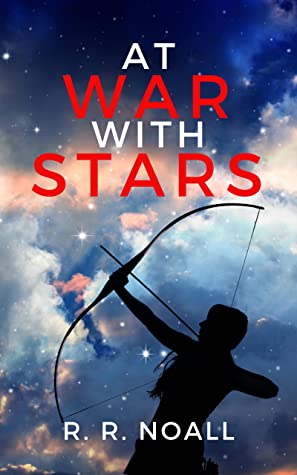
Along life’s path, there are so many unanswered questions. Poet R.R. Noall explores self-discovery, sense of place, and identity in her third poetry collection, At War with Stars. Are you seeking answers? Are you finding them too? This poetry collection was written for you.
Title: At War with Stars
Author: R.R. Noall
Pages:104
My review
At war with Stars is a deep dive into the soul in search of answers. The questions which are engulfing the void inside our mind is broken into pieces. Each piece of them is moulded into poems reflecting this quest. They are surprisingly original and thought-provoking.
These poems drag us from our comfort zone and suddenly throw us into a rollercoaster of emotions. This is the journey of exploring the highs and lows of life and the eternal existential crisis. There is no middle ground. The suffering is real. The unpolished edges of these words will scratch our mind. This is an in-depth essay unravelling through complex human emotions.
They carry very deep underlying meaning and not easy to comprehend. You cannot skim through them. Because in every repeated reading, it opens a whole new level of understanding. The author has beautifully weaved words to give this inherent quality.
One of the striking features of these poems are, they are straight from the heart. They bears the scars and colour of pain. They project an unadulterated voice and waiting for the reader to explore it.
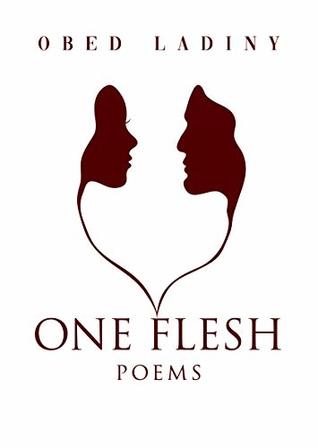
One Flesh: Poems is a fun, serious, accessible, and inspirational free-verse poetry book.
Title: One Flesh: Poems
Author: Obed Ladiny
Pages: 72
My Review
One Flesh by Obed Ladiny is a collection of soulful poems. They hammered down strong emotions like love, hate, pain, despair, sorrow, broken dreams, and loneliness through words.
These poems are surprisingly fresh and beautiful. I really loved the section of poems on marriage. Through a series of poems, the author portrayed how two minds grew apart to different worlds despite their physical bonding. The mind exists in countless small rooms and closets unknown to each other within a single small house.
The author has consciously changed the style of verses to create a deep meaning within. This unique style really surprised me. You can create endless dimensions and meaning to a few words by carefully arranging them in a unique fashion. This is being creative inside a creative work.
One of the striking features of these poems is, they are straight from the heart. It bears the scars and colour of pain. The unadulterated voices are filled with underlying meaning and waiting for the reader to explore.
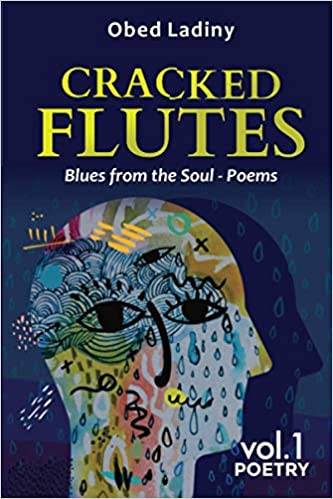
Cracked Flutes: Blues from the Soul – Volume 1 is literary venture through the poetic eye as various aspects of brokenness in our society and in our own lives are explored.
Ladiny’s reflections are about the things that concern everyone in everyday living. He has penned emotionally-charged poems flowing with rhythmic cadence and beautifully expressed verse. These poems help readers think about the really important facets of life.
Thought-provoking and inspiring, this book is sure to find a place in readers’ hearts as they bask in a lyrical observation of life.
Title: Cracked Flutes: Blues from the Soul vol. 1
Author: Obed Ladiny
Pages: 99
My review
Have you ever heard the songs from cracked flutes? How do you feel about them- disturbing, out of tune, desperate? But they are original, right? You may not like them but they do exist in this world.
One big cracked flute exists in our heart. It receives every beat down and thrashing. It hopes to produce melodious songs one day. But all that cracks can push out are unholy sounds. Each one represents the darkness looming around the past. These poems bear those songs.
Truth is not sweet. It is rough and brutal to consume. The pain is excruciating. It will overflow through our veins. These poems give you the same feeling. Oppression, colour, pain, anger, dilemma, greed, dreams, despair, sadness…everything is poured through words. They have a disturbing flavour of rawness. The emotions behind these words will strike straight through your heart.
Living each moment in your personal hell is not a good sight. How to get out from that ditch? Pour your heart out to a paper and fill it with void instead. That is better. These abstract poems are deciphering these emotions. They derive different meaning each time you read them. They safeguard some unexplainable magic under their wings for this.
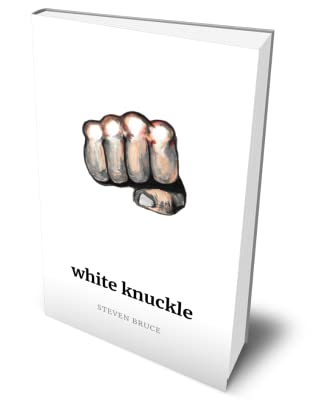
Bruce’s debut poetry collection, an autobiographical report on the reality of life in a poverty-stricken, drug and violence-fuelled environment, is a gut-wrenching composition of grief, loss, and abandonment at an early age.
This powerful book is brutal, tragic, and moving: an essential read.
Title: White Knuckle
Author: Steven Bruce
Pages: 100
My review
Raw, brutal and honest.
These poems drag us from our comfort zone and suddenly throw to a rollercoaster of emotions. The highs and lows are filled with misery. There is no middle ground. The suffering is real. The unpolished edges of these words will scratch our mind. This is an in-depth essay unravelling through complex human emotions. Their beauty lies in their unadulterated voice. We can feel the white knuckle against our face in each poem. It hurts because it is meant to be.
Broken dreams, pain, anger, abuse, frustration, death, greed, hunger… everything is poured through words. But these are not like any other poems. Because amidst this crushing pain, they all have one common feature- a hidden sense of survival. These are not served with the sugar-coating of hope. Rather, they all have a pinch of survival instinct in every line.
Pain is the greatest lesson. We don’t remember happiness but we remember every pain we had. It opens a new path for redemption. We can witness that redemption here.
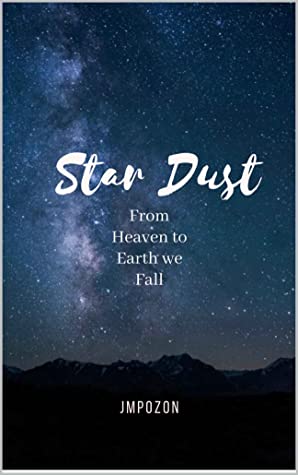
Star Dust is a intricately written collection of poetry, prose and short quotes centered around up lifting women of color as well as all our sisters around the globe. With the use of powerful words the author explores and navigates the themes of self love, healing, loss , and femininity. This is women’s empowerment at its finest.
Title: Star Dust: From heaven to Earth We Fall
Author: J.M. Pozon
Pages: 116
My review
Star Dust: From Heaven to Earth We Fall is a collection of poetry, prose and quotes that carries very deep underlying meaning. They are not easy to comprehend. Because it reflects the depth of pain. They hurl through the levels of misery and completes a full circle in the end, just like the stars in their orbits. This is the true voice of women, a compassionate, deeply hurt, uplifted and empowered women. These powerful poems can evoke a sense of pride in every woman’s heart.
The collection is divided into four sections. Each section has its unique theme that fits its place in the circle. I felt that the poems in the first section are more like rejecting the pain by remembering our worth. These poems bear the pain of lost love. Second section is all about realizing that worth. Accept that unique superpowers. Third section includes most empowering poems. They not only encourage to embrace our power but also counsel to use them most diligently. The final section is all about walking through that newly drawn path proudly. Be the woman you always wanted to be.

 The Ultimate Reviewer