“Evil has no sense of humour, neither understanding it nor comprehending the power it has over darkness, decay and death”

Christopher Griffith

Today I’ll be hosting Christopher Griffith author of Rick With A (Bipolar) View in my blog. He is an accomplished author with 8 novels in his credit other than Rick With A (Bipolar) View. Christopher loves television, electronic music, Matthew, poetry, rip-roaring conspiracies, supermarkets, fantasy fiction from The Lord of the Rings to Harry Potter, and anything Shakespeare. He writes upon these subjects that in the study of them he will hopefully interest others, and learn thereby himself!

It is my pleasure to welcome Mr Griffith to this episode of the author interview.

  • When did you first realize you wanted to be a writer?

I was 21 years old and having a torrid time on a teacher training course at the University of Reading; I absolutely loved the friends I was making these but the experience of teaching was just dire, and although I didn’t know it at the time I was also suffering from undiagnosed mental illness, bipolar disorder. Fighting this sickness was taking up much of my energy, and in fact, my whole body and soul was crying out for a change of direction in my life. I’d flirted with creative writing in my second year as an undergraduate, starting to write the book previous to this one but eventually getting bogged back down in the academic study of the time, and so one day, when I was sitting in my accommodation at Reading the memory of that venture, presented itself to me again and I thought, ‘Let’s finish writing that book.’

  •  How long have you been writing?

I’m 45 now, so 24 years. Wow, it doesn’t feel that long!

  • What inspired you to write Rick With A (Bipolar) View?

As mentioned above, I was struggling with the condition bipolar disorder and in fact, had only just recently been diagnosed in April 1998; I finished writing my first book, Temples of a Fantasy Revenge that winter and was determined to start a different subject than fantasy for my next book. I also wanted it to be a stream-of-consciousness effort in which the narrator ‘talks’ to the audience of the book. Once I’d made that decision, and then further decided I’d put much of my then present self into the main protagonist, it became an easy final decision to populate the rest of the book with versions of my good friends at the time, friends with whom I’d shared great experiences back at school. I wanted to keep on record that kind of easy, lazy even lifestyle you have as a student when the only worries are really who you’re dating and when is the next party. I hope I’ve captured that sense in my book.
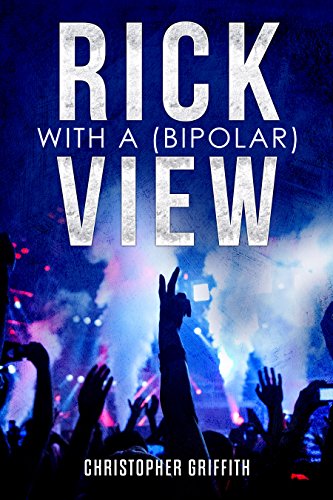
You can now purchase Kindle and Paperback versions of Rick With A (Bipolar) View from Amazon.co.uk

  • What is the most difficult part of your artistic process?

Getting it right! I mean that and what I mean is that there are so many permutations needed to make a book work – you’ve got to get the characters right, the story, plot lines, dialogue, description, style, tone, rhythm, pace, spelling(!), and at the end of the day it’s really simple, the best books you read are the ones where all these things come together harmoniously, in equal measure. Have I achieved it? Well of course I hope so but you must be the judge of that! All I can say is that I bring my best effort to every composition I undertake and I really try to respect that bond between author and reader. There’s one last thing of course to the artistic process – inspiration. Mine doesn’t come from the clouds or a Muse but from everyday life in which an item on the news or an experience I have that day can inspire me to examine that situation, that story, in more detail. Once I’ve found inspiration, all those elements I’ve mentioned above then come to bear on the subsequent output; blending them together is the difficult part.

  • What is the most surprising thing you discovered while writing your book?

The most surprising thing is that I was able to find any humour in the situation of having bipolar disorder. For all those who suffer from the condition, or know someone who does, the thought that you might be able to laugh at/with it is simply untenable. This is a horrid mental illness that invades the sufferer and tries to turn them against themselves. It can be stopped by medication of course, but also by the affection and love of those closest to us. When we’re in late adolescence and early adulthood that kind of support can come to us as much from friends as family, and so I went for an examination of the former realising along the way, particularly in the central chapter when Jimmy takes on Rick’s illness, that actually likes everything evil in the world, and bipolar disorder is that insidious, laughing at it can diminish and even expel its horror. Evil has no sense of humour, neither understanding it nor comprehending the power it has over darkness, decay and death. Sorry for getting a bit deep here, but along with suffering the tragedy of mental illness, try also to laugh at it too.

  • Who is your favourite author and why?

My favourite author is Willard Price; I have favourite books of course but I have rarely read through an author’s entire output as I did with Willard’s books when I was in childhood. For those not in the know, these were a series of adventure stories in which two brothers found themselves tackling a variety of what could loosely be called ‘dangers’. The thing is, I learnt so much from these tales, that a person who is in a starving state can’t just be fed lots of food to fill them up and get their weight back, it has to be a much longer, drawn-out process. Much like when the brothers dive deep underwater and have to come up slowly or they get what can be called ‘the bends’. What I took on board the most here was the patience you have to have with life, surely a tremendous lesson given our society’s current infatuation with immediacy and having every craving satisfied straightaway. Favourite authors teach us life lessons, and I have never forgotten the importance of waiting patiently for the desired outcome.

  • What books or authors have most influenced your own writing?

All of them. Every author I have read has had an impact on me and my writing, but if I had to be more determined it would be the great minds that have put pen to paper, Shakespeare, Chaucer, Milton right at the top. Then there were novels by authors like Henry Fielding, William Godwin, Mary Shelley whose style was a revelation for me, but then getting back down to earth there have also been a tremendous science fiction and fantasy authors, Arthur C. Clarke, Isaac Asimov, Philip K Dick, Tolkien, Robert Jordan, Terry Brooks whose work has developed and expanded my mind in entirely different ways to the Classics I’ve mentioned. I’ll also spare a word for all ‘normal’ reading material too, newspapers, magazines, anything in print or on-screen really which contains words. The English Language isn’t my forte, and I have no skills in that department, but I love words in any shape or form, always seeking to learn more about how to fit them together to make more effect.

  • If you had to describe yourself in three words, what would they be?

Inquisitive, Ireful, Indefatigable

  • Writing can be an emotionally draining and stressful pursuit. Any tips for aspiring writers?

Yes, I completely agree, and it can actually be dangerous to your health; I wrote a now-lost novel once which made me a thousand times more ill mentally than I had been before. The problem was, I lost control of the narrative. Sometimes that can be good when for example character takes on greater life than you thought and alters the plot accordingly, but you as the author still need to be in overall control of the story. If you feel it is running away from you, stop, read back and more often than not you’ll realise that at some point in the past you’ve let the plot slide into areas that don’t gel with where the story was going until that point. And that’s the most important tip I can give you because the writer’s hunch, just like the detective’s, must be acute at all times, and more importantly must be listened to and thereby acted upon. If you’re emotionally drained and stressed with your pursuit, recognise it early and put stop to it by recollecting your thoughts. Stop, go back, see where you turned left in your narrative rather than right, and then off you go again. Writing should never be laboursome, sometimes intense, yes, sometimes hard going, but not a chore, enjoyable.

  • Are you working on anything at the present you would like to share with your readers about?

Yes, I’ve posted all the poetry I’ve written over twenty or so years on a blog which can be found at https://christophergriffith50.blogspot.com/ and whose last few poems I have only just been working on very recently. I’m also determined to write a thriller like the Da Vinci Code and have started planning that; lastly, I still keep my hand into the literature I first studied as an undergraduate and am working on a translation of a medieval poem called Piers Plowman by William Langland. This amazing writer worked on this single poem throughout his entire life and it really does offer the most amazing insight into the fourteenth century, a century often likened to our recent twentieth for how dreadful it was for the human race to sometimes live through and suffer. But we’re resilient, humankind, and we tend to get back to our feet when we’ve been cast on our behinds! Resilience, there’s my final word for being a writer. Don’t let anyone tell you how to or you can’t or what are you doing etc. if you want to write then sit down, take a piece of paper and cast your thoughts upon it…  

Visit Christopher on https://www.williamottowaysutopia.com/   and do check out his books on Amazon.com
“You need to love the writing craft and be highly driven to take your dream from conception to publication”

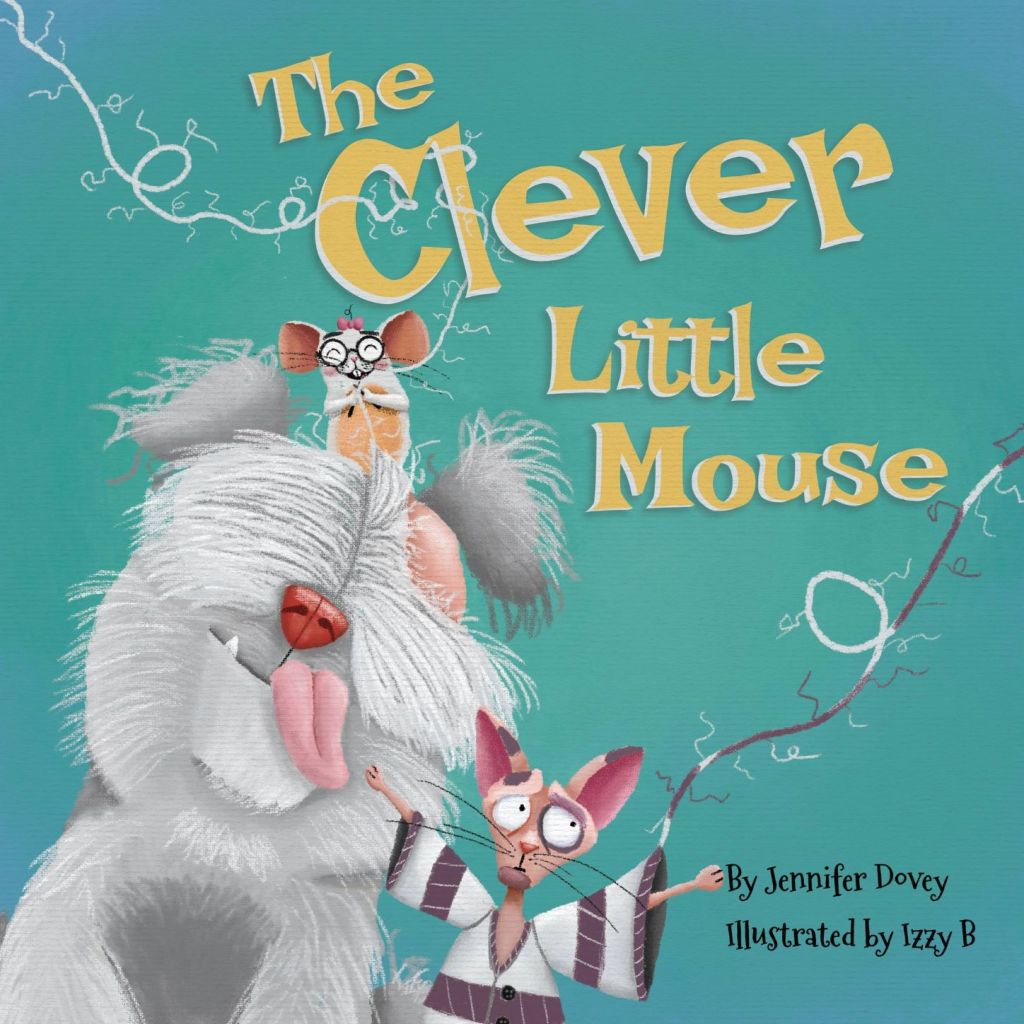
Today I’ll be hosting author Jennifer Dovey on my blog. Her debut children’s bookThe Clever Little Mouse will be available for purchase on Kickstarter.com

Jennifer Dovey is an English teacher, writer and author of children’s books. She is also a busy mum to three girls and one fur baby! She always loved to write and to share her ideas with the world. Crafty forms of expression constantly inspire her as well her writings which are so on point that you want to reach through the page, shake their hand and marvel at their genius.  She writes for the sheer joy of writing. For its own reward.

It is my pleasure to welcome Ms Dovey to this episode of the author interview.

  • When did you first realize you wanted to be a writer?

Ever since I was young – perhaps around the age of 8, I realised I could write stories and make up rhymes easier than other children in my class. As time went on, I developed a love for the aesthetics of good writing and loved sharing my work with others. It didn’t matter if it was a play or a short story, I simply enjoyed writing and sharing my work with others.

  • How long have you been writing?

As an English teacher, I have done my fair share of writing. On the side, I have worked as a professional writer for a few years now – mainly writing content for others to put on their website. ‘The Clever Little Mouse’ is my first children’s fiction book.

  • What inspired you to write The Clever Little Mouse?

The story just came to me one day while I was hanging out washing. I literally stopped what I was doing, went inside and wrote it down. I had read somewhere that ‘children don’t want boring books’ (I believe Aaron Blabey said this) and being a fan of ‘Pig the Pug’ I knew I didn’t want to do a boring book either. My own children love funny stories and I guess I wanted to write something they would enjoy too.

You can now order a Hardcover copy of The Clever Little Mouse on Kickstarter.com

Are your characters created from scratch or are they based on people from your life?

All three characters are created from scratch and are not based on any animals I know.

  • What is the most difficult part of your artistic process?

I think good stories should have a clever or unexpected ending. Once you have worked this out, the hard part is over.

  • What is the most surprising thing you discovered while writing your book?

I learnt more about how rhyme should really be used to weave a story together whilst deploying a high standard of the writing craft. Rhyme shouldn’t be used with reckless abandon for the sake of it, but to embellish what is already a decent story. Sometimes, when authors try to rhyme, they go on a rudderless hunt for rhyming synonyms and end up choosing words that are out of reach for young children. Rhyming should be complimentary to the story with words that are not bent and contorted just to fit in.

  • Who is your favourite author and why?

My favourite children’s author would be Roald Dahl. His books never fail to capture my imagination and draw me into his stories. He once said, “Books shouldn’t be daunting, they should be funny, exciting and wonderful.” His books certainly are and he is truly inspiring.

  • What books or authors have most influenced your own writing?

‘Pig the Pug’ by Aaron Blabey; ‘The Very Cranky Bear’ by Nick Bland; ‘Green Eggs and Ham.’ By Dr Seuss; ‘I Want My Hat Back’ by Jon Klassen; ‘The Wonderful Things You Will Be’ by Emily Winfield Martin and ‘Giraffes Can’t Dance’ by Giles Andreae.

  • What is the best piece of advice you received about writing?

Children’s books should be able to be read by the child and not just by an adult reading to a child. If there are some words that children can’t pronounce or understand, then they’ll end up disengaged and disinterested pretty quickly.

  • What inspires you to get out of bed each day?

My children are big motivators in my life but equally the belief and value in the work I do, motivates me to get out of bed in the morning. I like knowing that I’m appreciated for my skills and efforts and that the work I do is making a difference. I’m also motivated to provide for my family and afford them with the absolute best life possible.

  • If you had to describe yourself in three words, what would they be?

Entrepreneurial, creative and positive.

  • Writing can be an emotionally draining and stressful pursuit. Any tips for aspiring writers?

You need to love the writing craft and be highly driven to take your dream from conception to publication. Practice writing as much as you can in all forms and read great books with language choices that inspire you.

  • Are you working on anything at the present you would like to share with your readers about?

My next book teaches grammar principles through amusing pictures and a narrative. As a teacher, I see a need for this, as there are common grammar mistakes that children make over and over again. I think it would be wonderful to have a book that illustrates the point to make it memorable for young readers.

You can follow me on Instagram @JenniferDoveybooks to keep up to date with my projects.

Reach out to me for more

“The more you listen to someone about their story the better it will make sense for you to understand” Curtis Abrams on writing and launching his debut book Curtstride

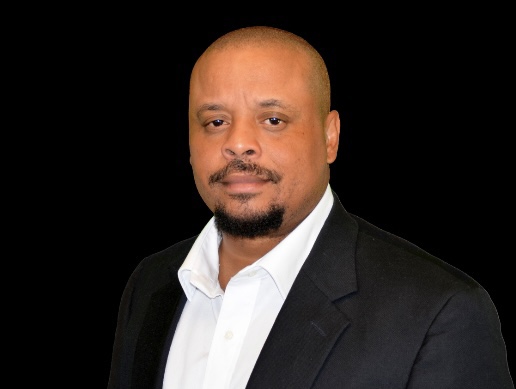
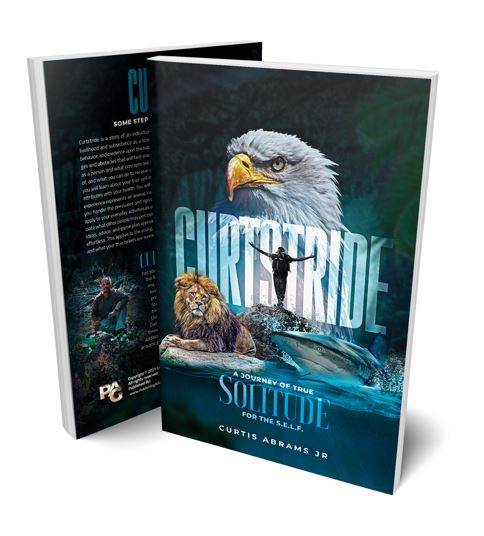
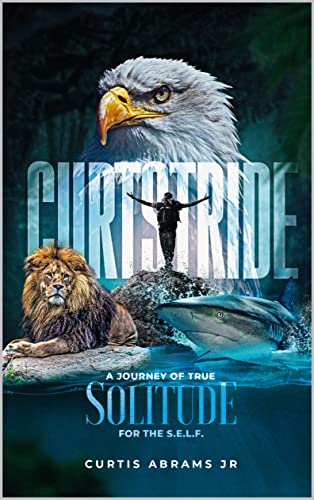
Today I’ll be hosting author Curtis Abrams. His debut book Curtstride: The Natural Instincts of Solitude for the S.E.L.F is now available on Amazon.com.

Curtis Abrams has worked in Media Psychology and Sales Management for over 15 years. A native of Tuscaloosa, Alabama, and currently resides in Tallahassee, Florida, Curtis has been a loner and an introvert most of his life. He is now a licensed professional home and commercial insurance inspector for the State of Florida. Additionally, Curtis is a licensed tutor who mentors and volunteers at public and private schools in Florida. A University of Alabama graduate with a Communications degree, Curtis also served in the U.S. Army for 10 years and has travelled throughout the world to learn about different social cultures. In addition, he’s an avid writer and is currently learning how to play the acoustic guitar and keyboard for his inner peace. 

Pleasure to welcome Mr Abrams to this episode of the author interview.

  • When did you first realize you wanted to be a writer?

 When I knew in my heart that I could tell stories based on my early childhood at about 12 to 14 years old listening to people reading books to me. As I used my imagination of what narrative takes off into my own world, I knew Writing stories would take me on a great journey so many years later as an adult, I find myself in the same world of imagination, I can deliver the message to other people that can see within my vision. 

  • How long have you been writing?

I started writing when I was in college at and I wrote some short stories and a few screenplays and blogs for about 15 years. 

  • What inspired you to write Curtstride: The Natural Instincts of Solitude for the S.E.L.F.?

The idea of not understanding your true value based on events that have happened in your life and realizing you’re not finding the true meaning of your purpose due to distractions and noises made me want to write particularly about battling it alone in the cruel world. And since the pandemic has evolved around the globe I wanted to bring some sort of awareness and a constant reminder that you are going to be OK because you are courageous, smart and passionate and I decided to put it in a self-help related book that’s really cognizant of your physical, social, psychological and inner instincts and abilities to survive like an animal whether you feel lonely in self-isolation or you’re just alone and becoming acclimated to your environment, and that’s what solitude is about. 

You can now order Paperback and Kindle versions of Curtstride: The Natural Instincts of Solitude for the S.E.L.F. from Amazon.com
  • What is the most difficult part of your artistic process?

 Is trying to find a total solution to any ambiguous dilemma that enters our thoughts and imagination because everyone thinks different and clarifies their meaning a lot less or more did anyone else. And I would like to try to stand on common ground for everyone when I write so everyone can get a profound resolution to whatever the narrative is. 

  • What is the most surprising thing you discovered while writing your book?

What I discovered when I wrote my book is when I read after I did my writing I feel exhilarated because I can let it make sense based on my passion that it can deliver a message to someone out there if the intent is correct. And if my story can outlast throughout time and reach someone who may need to hear the message in which I believe it will. 

  • Who is your favourite author and why?

I will have to say I’m inspired by Agatha Christie simply because I used to read a lot of her novels when I was young and it always had a twisted plot in the end that got me captivated and more intrigued into the story in which we as readers wanted more of the story. It felt like I was actually in that setting based on her storytelling. 

  • What books or authors have most influenced your own writing?

I am a fan of Napoleon Hill, August Wilson, Rhonda Byrne, Stephen King, John Grisham, Earl Nightingale, William Shakespeare, Charles Dickens, Michael Eric Dyson and James Baldwin

  • What is the best piece of advice you received about writing?

I was always told that when a reader displays their story do you always listen to what they have to offer so you can digest and analyze whatever the story entails. The more you listen to someone about their story the better it will make sense for you to understand. Is one thing to look at the pages but it’s another thing to actually see it. 

  • What inspires you to get out of bed each day?

The profound discipline and passion to realize that I have a purpose and intent to live and to make a difference for myself. To keep answering to any challenges that I embrace, as long as I have breath in my body. And to have the ability to help others when in need.

  • If you had to describe yourself in three words, what would they be?

Believe internally, always. 

  • Writing can be an emotionally draining and stressful pursuit. Any tips for aspiring writers?

. If you want to write, remember it must entertain the audience as well as you must give a story and you must deliver a sort of information as to why the story is being told. If you know in your heart that you can leverage a story then it would not be hard to produce it, but don’t get yourself stuck because you’re overthinking and trying too hard to make a jigsaw puzzle come together, it takes time, patience, and the ability do you know where and what direction you’re following in order to get from here to there. Take your time, breathe when possible, no distractions, and finish the race.

  • Are you working on anything at the present you would like to share with your readers about?

I’m going to soon start an awareness program for people who are going through loneliness, anxiety, depression or social isolation issues, I would like to facilitate and reach out to whoever is going through these episodes. I’m going to continue to write more books and material in which it will pertain to mental health, human behaviour as well as social connections. I’m also training to become a certified life coach and if anyone wants to connect with me, I will be more than happy to assist you with anything you looking for. This book that I published, will quite possibly change the way you perceive this life as that you know it, of all ages. And if possible share this unique book throughout the world. That will make me very happy I am here for you, the people. Everyone. 

You can follow me on Instagram @curtstride to keep up-to-date on my new projects and initiatives.

Reach out to me http://www.CurtstrideAbrams.com

About the book

Curtstride is a story of an individual’s life journey as they view, learn, and explore as a loner or an outsider. The story centers on your individualistic views, behavior, irrational as you take on the immense challenges and obstacles that will face you being all by yourself. It gives you insight into how unique you are as a person and what concepts are needed for a better outlook of who you are, what you’re capable of, and what you can do to receive a better quality of life when alone. Done in 2nd person narrative, you will learn about your true self internally, your viewpoints dealing with society, and your physical attributes with your health. You will also be guided with an introspective of your inner strength. Each experience represents an animal instinct as you’re living vicariously through their mind and vision as you handle the pressures and rigorous ways of life. Throughout the story, you can incorporate and apply to your everyday activities as you walk through contemporary society as a Lone Wolf and appreciate what other people may perceive as different or unique. There are examples of subject matter and ideas, advice, and game plan approach to the individual to make their journey seemingly reliable and effortless. This applies to the young, teenager, adult, and elderly. Whatever job or business you obtain and what your true beliefs are surrounded by. This journey is for everyone.

Purchase here: Amazon

‘Read as often, and as many different books, as you can’: 10 Questions with Kayleigh Hughes

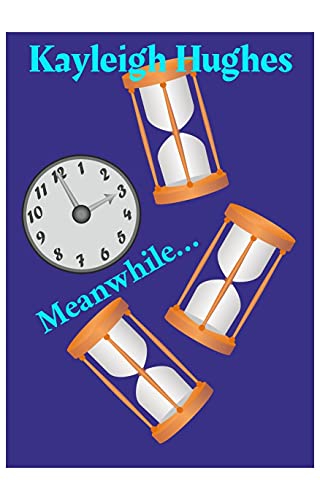
Today I’ll be hosting author Kayleigh Hughes on my blog. Her debut novel Meanwhile…  is available on Amazon.com

Kayleigh Hughes first discovered her passion for writing stories in her teens, them being
mainly drama, thriller, with the occasional bit of comedy. She is the author of the first part of the Meanwhile… series, with the second and third currently in the works. When not immersed in her characters and their worlds, she is absorbing yet another piece of film or television trivia, or jamming on the guitar and bass.

It is my pleasure to welcome the author Kayleigh Hughes  to this episode.

  • When did you first realize you wanted to be a writer?

In my teens.

  • How long have you been writing?

Since I was about fifteen.

  • What inspired you to write Meanwhile…?

I had been reading Good As Dead by Mark Billingham, which depicts a hostage situation in a newsagent. The whole hostage situation type of story has always interested me, and whilst reading that book, I realized I wanted to write one of my own. I just didn’t plan on it developing into the story it did.

You can now order paperback and Kindle version of Meanwhile… from  Amazon.com Amazon.co.uk
  • What is the most difficult part of your artistic process?

At times, finding motivation.

  • What is the most surprising thing you discovered while writing your book?

In all honestly, that it seemed to be as good as others have said.

  • Who is your favorite author and why?

I don’t have just one – I couldn’t. Among my favorites are Ann Cleaves, Mark Billingham, and more recently, I have taken a liking to Richard Osman’s work (and am quite looking forward to his upcoming book). I just like their styles.

  • What books or authors have most influenced your own writing?

Well, whilst writing Meanwhile…, I binged a lot of Stephen King’s books, so possibly The Stand and 11.22.63 . Also, Mark Billingham.

  • If you had to describe yourself in three words, what would they be?

Analytical. Diligent. Procrastinating.

  • Writing can be an emotionally draining and stressful pursuit. Any tips for aspiring writers?

Keep practicing. Don’t give up. Read as often, and as many different books, as you can, so as to familiarize yourself with different writing styles. Make sure you have your main plot points outlined. Take on board any (and I mean any) feedback you receive – get at least one other set of eyes to read your work, regardless of what number draft it is, because it will help you identify your strengths and weaknesses as a writer – be it dialogue or characterization – and help you to hone your craft. Try not to edit as you go along. The biggest one: just write.

  • Are you working on anything at the present you would like to share with your readers about?

The next book in the Meanwhile… series

You can follow me on Instagram @kayleighhughesauthor and Facebook @kayhughes  to keep up-to-date on the progress of this project

About Meanwhile…

It’s one bad day for Samuel Manson and Caroline Cleaver – Samuel’s running late with a train to catch, while Caroline has a score to settle. Placed together in a compromising situation, how long will it be before either one cracks?

First in a three part series. The next will follow in due course.

Purchase here: Amazon.com Amazon.co.uk

“Jealousy destroys creativity, and I have to constantly remind myself to move beyond it and just write!” Ruth Rotkowitz on the process of writing and launching her novels

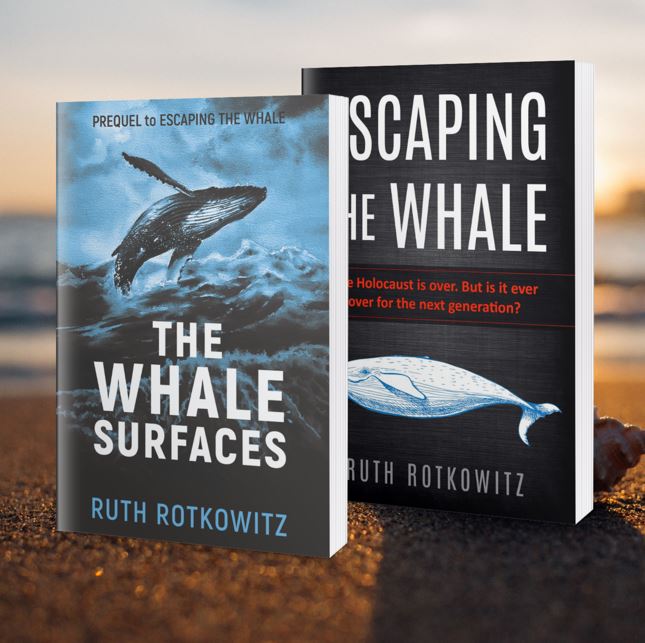
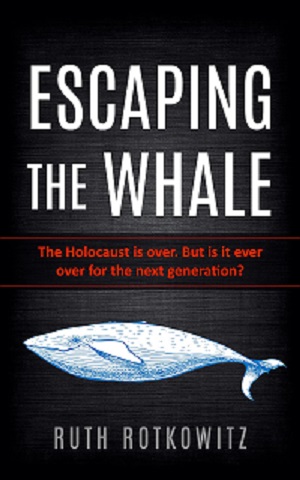
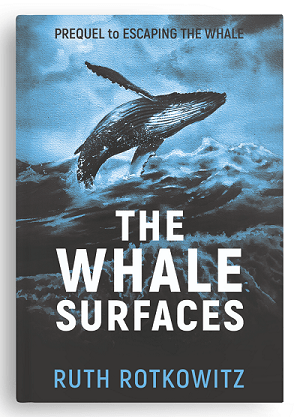
Today I’ll be hosting author Ruth Rotkowitz on my blog. Her novels, Escaping the Whale and The Whale Surfaces are available on Amazon.com
Ruth Rotkowitz is the author of two novels: Escaping the Whale and the prequel, The Whale Surfaces. Both novels feature a daughter of Holocaust survivors who struggles with a legacy of inherited trauma. Readers’ interest in the background of the adult protagonist in Escaping the Whale, which was published first, inspired the creation of the prequel, which describes the woman’s childhood and adolescence. As a daughter of survivors herself, Rotkowitz has experienced, observed, and researched inherited trauma. In the talks she has conducted via Zoom this past year, she has been heartened by the reactions of many types of readers of varied backgrounds who relate to her protagonist’s struggles.

Rotkowitz has published fiction, nonfiction, and poetry in various literary journals and has been a staff writer and member of the editorial board of the (now defunct) Woman’s Newspaper of Princeton, where several of her feature articles garnered awards. She holds a B.A. and M.A. in English and has taught English on both the college and high school levels. She currently conducts book talks for the Phoenix Holocaust Association in the Phoenix, Arizona area, where she resides.

It is my pleasure to welcome Ms. Rotkowitz to this interview.

  • When did you first realize you wanted to be a writer?

I always knew. I felt the “calling,” so to speak, as a little girl, because I always loved reading and marveled at the power and beauty of the written word.

  • How long have you been writing?

I was always writing. I got serious about trying to get my work published in the seventies, when I left teaching and was home with a child.  I started with small pieces – fiction, nonfiction, poetry. I began framing ideas for novels a few years later, and began working at novel-writing in the eighties.

  • What inspired you to write these books?

 I was visited by the idea of a troubled young woman as a protagonist. As I began writing of this woman’s life and her attempt to conceal her fears and delusions in order to appear normal, I connected her problems with the problems of children of Holocaust survivors as well as the struggles of women to be taken seriously, in their relationships and careers. I was inspired to set the first novel, Escaping the Whale, in 1980 because women were just beginning to break out of the passive role set for them, and because I vividly remember the fascination that year with the Iran hostage crisis. I saw a connection between that situation and my protagonist’s.

 The creation of the second book, The Whale Surfaces was inspired by the questions readers of the first book asked. They were curious about the protagonist’s upbringing and wanted a picture of how she became this woman haunted by demons, trying desperately to banish them herself. Thus, during the lockdown, I wrote the prequel, a novella, which fleshes out this character’s story.

You can now order Hardcover, Paperback, eBook and Audible version of Escaping the Whale from Amazon.com and Hardcover and Paperback version from Barnes & Noble, The Whale Surfaces is available on paperback and eBook version from Amazon.com and Barnes & Noble

  • What is the most difficult part of your artistic process?

The most difficult part is getting away from the artistic process. When I become obsessed with what I perceive as the success of other writers who have also published late in life with small presses, I become discouraged. How did they get that review? How did they get on that show?  Etcetera etcetera. That is the kiss of death, leaving me angry and discouraged. I have to remember that I must not compare myself to anyone else. Just do my work, enjoy what I do, and feel pride in what I have achieved. Jealousy destroys creativity, and I have to constantly remind myself to move beyond it and just write!

  • What is the most surprising thing you discovered while writing your books?

What surprised me, and still surprises me, is the total immersion I experience in my character’s life. I become her. Her problems, fears, obsessions, and joys become mine. I actually dream about her. I think, in those dreams, I am working out some parts of the story.

  • Who is your favorite author and why?

There are many authors I adore, but Alice Hoffman is by far one of my favorites. I love the way she weaves myth, legend, and the supernatural into her tales of human characters. As you might surmise from the titles of my novels, I feel a connection with the Biblical story of Jonah and the whale, and I employed that as a metaphor for my character’s dilemma. Myths from all cultures have so much to teach us, and I am inspired by Hoffman’s ability to create a smooth flow between that world and the real world.

  • What books or authors have most influenced your own writing?

As a young girl, I was enamored of Little Women by Louisa May Alcott. I loved how the book drew me in so that I truly cared about the characters. The emotional connection I felt with Jo, the main character, and the pain I felt at Beth’s death, made me realize that writing has the power to connect with readers on an emotional level.

As an adult, I devour novels that portray a female character struggling with mental illness and/or butting heads with others who do not understand her. How To Be A Good Wife by Emma Chapman, The Pleasing Hour by Lily King, Beloved by Toni Morrison, Orphan Train by Christina Baker Kline, Illumination Night and The Probable Future by Alice Hoffman, All the Light We Cannot See by Anthony Doerr, The Girl With the Louding Voice by Abi Dare, and Pigs in Heaven by Barbara Kingsolver are some of the books that have inspired me to explore the stories that reside in my head.

  • If you had to describe yourself in three words, what would they be?

Sensitive, creative, searching

  • Writing can be an emotionally draining and stressful pursuit. Any tips for aspiring writers?

If you love your character or your story, focus on that. Let it come to life on the page. Don’t be distracted by other worries about what you are creating. Enjoy the writing itself!

  • Are you working on anything at the present you would like to share with your readers?

I have begun two other novels. One deals with a woman who has inherited a castle in which she grew up and that she has spent her adult years trying to maintain. At some point, she will begin to question why she is doing that, since it has prevented her from having a life of her own. The other novel I have begun features an installation artist who teaches art in high school to pay her bills. She meets a charismatic, dysfunctional couple who fascinate her.  They are both successful actors and they worm their way into her life, helping her but also controlling her.

You can follow me on Instagram @ruthrotkowitz to keep up-to-date on the progress for this project.

For more information on author Ruth Rotkowitz, visit her website

About Escaping the Whale

To everyone who knows her, 28-year-old Marcia Gold leads the perfect life. A high school guidance counselor in 1980 Brooklyn, New York who specializes in helping pregnant teens, Marcia thrives in her work. She also has a handsome, successful boyfriend who has won the approval of her Jewish, Holocaust-survivor family – no easy feat.

However, beneath the shiny surface lurks another reality. Plagued by frightening and debilitating panic attacks brought on by her family’s wartime legacy and exacerbated by the Iranian hostage crisis in the news, Marcia becomes convinced that “demons” are occupying her closet and her mind. Determined to keep her terrifying secret life a secret, Marcia is pushed closer and closer to a breaking point.

A series of crises finally forces the explosion Marcia can no longer contain. Determined to rid herself of her “demons,” she concocts a plan, desperate to be reborn as a new person. Unfortunately, she discovers that her plan creates its own problems. Can she find another path out of her psychic pain, one that will lead her to true normalcy?

Purchase here: Amazon.com, Barnes & Noble and Apple Books

About The Whale Surfaces

Marcia Gold is the daughter of Holocaust survivors whose lives have been defined by their painful experiences in Europe. A sensitive child, Marcia has absorbed this history as her own, and the Holocaust looms over her childhood like an ever-present cloud. Despite caring parents and a safe life, Marcia’s childhood is filled with panic and delusions.

Marcia realizes early on that her fearful imaginings are upsetting to others. Yet demons are haunting her and she feels them infiltrating her life, making her ‘different.’ No one can understand her sense of alienation and her frightening ‘visions.’ Mortified by them herself, she believes her only hope lies in escaping the scene of her childhood and beginning an independent life. Only then, she concludes, will she vanquish those demons whose tentacles seem to be sliding relentlessly through the inside of her brain, poisoning all that they touch. Marcia’s search for independence is really a search for mental health.

Read after Escaping the Whale, the prequel explains Marcia’s journey to adulthood. Read as a stand-alone, it provides a picture of a child struggling to be ‘normal.’ Marcia Gold, in both books, is waiting to be understood.

Purchase here: Amazon.com and Barnes & Noble

‘A pen gives me a voice in the world’: 13 Questions with Peter Gray

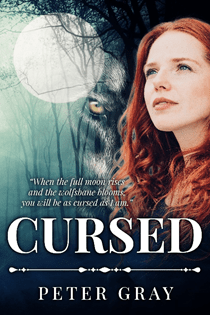
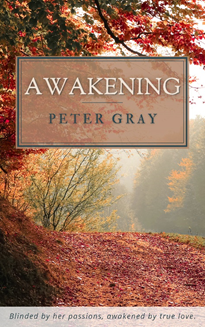
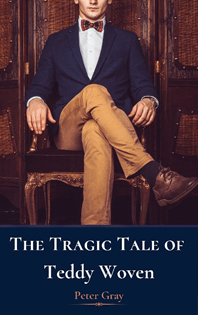
Peter Gray was born in Toronto, Canada. He holds a bachelor’s degree in History and Education but has always felt the lure of classic English literature. Peter published his first story in 2020; a paranormal romance called “Cursed.” His first full length novel “The Tragic Tale of Teddy Woven” was released in the month of September 2020. As a self-published author, Peter specializes in the genres of Gothic horror, paranormal romance, and historical fiction. His first historical romance novel “Awakening” debuted in the month of March 2021; he plans to continue writing in this genre for his upcoming novels “At Peace” and “Far from Home” series which will premiere later this year.

It is my pleasure to welcome the author Peter Gray to this episode.

Me: When did you first realize you wanted to be a writer?

Peter Gray: Unfortunately, I cannot recall an exact time that I wanted to be a writer. I was always a daydreamer, ever since I was a little girl. As I grew older, I began to write these stories down on paper. They were short drabbles at first, but by the time I was in University they began to expand in scale. It is only recently that I decided to publish my stories under a male pen name and share it with the rest of the world. The accessibility of self-publishing through platforms like Amazon or Google Play was the main motivator for me to put my work out there.

Me: How long have you been writing?

Peter Gray: I have been writing all my life, it started with journal entries after school, and then poetry in my teenager years. Once I was in University, I stumbled into the wonderful world of fanfiction, and I think that is where I was able to explore writing stories in different genres. Being heavily immersed in the fanfiction world also allowed me to network with fellow artists and writers, so it gave me an opportunity to meet people that shared the same interests as me. It wasn’t until Covid-19 spread across the world and left my life at a standstill, that I sat down one day and took a serious look at all the stories I had written so far. This period of reflection gave me the confidence I needed to research the advantages of self-publishing, create a pen name, and eventually publishing my novels on Amazon.  

Me: What inspired you to write your first book?

Peter Gray: There were several motivations for me to write “Cursed.” It was Halloween season at the time, and I promised my friends that I would write a short horror story for them. I have always had this strange fascination with werewolves, so it was easy for me to pen “Cursed.” The story was originally a fanfiction, but I liked the storyline so much that I decided to change it up and publish the story on Amazon to reach a wider audience. I am aware that there are a lot of werewolf stories out there, but I believe “Cursed” is significantly different because it mixes elements of comedy and horror to give it a more light-hearted feel. I believe the classic 1981 film “An American Werewolf in London,” was another motivator for me to write this novel. I had the pleasure of watching it after I published “Cursed,” and it gave me some sense of pride to see that my book shared the same vibe as that insanely comedic eighties film.

Purchase here: Amazon.com

Me: Are your characters created from scratch or are they based on people from your life?

Peter Gray: Thus far, all the characters that I have written have been created from scratch or vaguely inspired by other fictional characters. One of my future published works “At Peace,” is autobiographical in a way, which is both intimidating and unnerving for me. I believe that is the reason I have been repeatedly pushing back the dates so far, but I know for certain it will be published at the end of this year. This historical romance focusses on a budding romance between two teachers. A lot of the scenes in the first few chapters are a dim reflection of my own life, so it is an eerie experience to see my life suddenly penned upon a page. I think it is the best story that I have produced so far, probably because it correlates with that age old saying: “Write what you know.” I work in the education profession, so detailing the daily lives of a teacher’s duties and their classroom expectations was incredibly easy to do. This story is romantic and emotional evocative, and I believe it will be a favourite for many of my fans.

Me: What is the most difficult part of your artistic process?

Peter Gray: The hardest part of writing during a pandemic is finding a quiet, isolated place to work. I currently live at home with my family. Lately it has been difficult to find a place to write new stories or market my published works. This inconvenience has made me wake up in the early hours of the morning, in the hopes of writing a chapter or two. Afterwards, I go out for a long walk among nature to clear my mind and allow my creative thoughts to wander. It is through these tranquil-like moments that I generate more ideas for a story. When I return home, my mind is full to the brim with new ideas, and then I am off, typing at my keyboard like a madman. My work habits, however strange they might appear, have allowed me to produce multiple novels within a short period.

Me: What is the most surprising thing you discovered while writing your book?

Peter Gray: I discovered that I like to integrate social justice issues into my novels. I never want to shy away from issues such as racism, environmental issues, or social injustice. A pen gives me a voice in the world, a vocal piece for me to fight for the rights of others.

Purchase here: Amazon.com

The philosophical topic of existentialism heavily influenced the “Far from Home” book series. The main characters in these novella’s often question their religious beliefs in a time when the Protestant faith was sacred, and the church heavily aligned with the British Monarchy. We see a lot of philosophical questions that plague the character’s mind, such as: “Why am I here?” or “Where will I go when I die?” In this book series, vampires’ chips away at the once firmly held religious beliefs of the Reeds’ family. It is apparent that the sudden emergence of vampires, those demonic creatures that possess the power to live beyond the grave, have a significant advantage over those people that cherish the Enlightened period and refuse to believe in the fact that vampires are free to roam throughout London, England. When penning “Far from Home” I was heavily influenced by Bram Stocker’s “Dracula,” and Sir Arthur Conan Doyle’s “Sherlock Holmes” novels, as well as John William Polidori “The Vampyre.” The book series, “Far from Home” starts off as a black noir, detective styled novella, but over the time the story evolves to focus on the tragically dark romances between the vampire, Aodhan McVeigh, and the woman he has chosen to be his lover.

Me: Who is your favourite author and why?

Peter Gray: An incredibly difficult question, but if I had to choose a single author it would be Charlotte Brontë. Her books influenced me in my late adolescence, and it helped me go through some difficult times in high school. Only when I entered University and began to study English literature, that I began to truly appreciate her writing style. There are a lot of similarities that I share with her life, such as writing under a male pseudonym or working in the education profession. When it was time to choose a pen name, I thought about all the female authors that influenced my life growing up and the hardships they faced to get their work published because they are a woman. It was the lives of the Brontë sisters during the nineteenth century that influenced me to write under a fictional male pen name, in the hopes of echoing the troubling time period for female authors because of their sex. 

Me: What books or authors have most influenced your own writing?

Peter Gray: Edgar Allan Poe’s “Ligeia” and “The House of Usher” are two major influences for me when I decided to partake in the Gothic horror genre. I also absolutely adore dark romanticism literature! I love stories with an ill-fated heroine being preyed upon by a sinister villain; dark moors, haunted houses, vengeful ghosts, those are the things that continually spark my imagination. In terms of light literature, I am highly inspired by the Romanticism period and the famous poets that wrote about sublime scenery and landscapes in England, Italy, and other parts of Europe that had not succumbed to the wave of the Industrial revolution. Another writer that has influenced my writing style is the lyrical poet, John Keats. He is my hero! I worship the very ground he walks upon, and he is one of the main reasons I fell in love with poetry at an early age. Recently, I have been enjoying Gothic novels by Renee Ross, a fellow indie writer with a penchant for all things dark and maniacal. I would suggest “The Ghost of Emily Grey,” a short horror novel I binge read in two days. I could go on for days, of course, but those are the writers that have influenced me the most so far.

Me: What is the best piece of advice you received about writing?

Peter Gray: I don’t remember a time when anyone gave me writing advice. I am quite headstrong, incredibly so, and I think that is the reason I went into the self-publishing business instead of falling into the long line of writers waiting to be noticed by big publishing companies. The best piece of writing advice I saw online was by Charles Bukowski. He is so raw with his words, so much grit and frankness that he knocks the reader over with the truth. I find his life inspiring too, it was just a few months ago that I watched a documentary detailing his daily writing habits. It just proves that you have to live everyday like it’s your last and make no excuses when it comes to writing. Bukowski’s writing philosophy is seen in this quote, when he says: “There’s nothing to stop a man from writing unless that man stops himself. If a man truly desires to write, then he will.” As a writer we have a choice; we can settle and write down stories that society dictates as acceptable or popular at this time, or we can listen to our intuition and tell a story that is deeply meaningful to you. When I first started to write stories it was to cater to a certain audience, but now I am at the point in my life where I think “How much longer will I be here? What legacy am I going to leave in the world?” and it is those types of questions that makes me want to put my best work out there.

Me: What inspires you to get out of bed each day?

Peter Gray: That’s an easy one! To write!!!

Me: If you had to describe yourself in three words, what would they be?

Peter Gray: Bold, emphatic and a leader.

Me: Writing can be an emotionally draining and stressful pursuit. Any tips for aspiring writers?

Peter Gray: Have a network of people that you can rely on. They can be fellow writers or people that know you intimately and will call you out if the story can be improved upon. Writing is a lonely process, but it does not always have to be that way. Social media allows me to connect with fellow writers and ask them for advice. I am still new here, and yes, I have published four novels in less than two years, but I am still learning the intricacies of this business. When you are an indie writer it is essential to get your name out there. The books won’t sell by themselves! It requires work, patience, and a little bit of luck. The best advice I can give to an aspiring writer is to network with fellow artists and believe in yourself.

Visit the author’s website https://www.gray-blog.com/

Me: Are you working on anything at the present you would like to share with your readers about?

Peter Gray: I am in the middle of rewriting “Far from Home: Book Two,” since it was penned over two years ago. My writing style has drastically changed, so I am basically rewriting the entire story from scratch. I want to add more foreshadowing this time, especially when it comes to the dark, twisted relationship between Aodhan McVeigh and the woman he cleverly seduced, the young Victoria Reeds. I believe the first edition had a lot of Hades and Persephone vibes to it, but their storyline begins to change, and the reader starts to see the consequences of their actions after Victoria abandons her home and turns into a blood-thirsty vampire.

My romance historical novel “At Peace” is completed, so it is currently waiting to be published in the winter of 2021. I am still debating whether I want to submit it to a publisher or take the normal route and self-publish online.

“Far from Home: Book Three” was completed two months ago, during a burly Canadian winter with lots of snow and extremely frigid temperatures. Book three is hands down my favourite, and I am extremely impatient when it comes to publishing it next year. This story will generate a wide array of reactions from the audience. “Far from Home: Book Three” deals with issues of human morality, our spirituality, possibilities of reincarnations, and existentialism themes, which will clash with a lot of people’s worldview. Aodhan McVeigh also becomes very desperate in the final adaption of this book, and I believe more dangerous than ever before, especially with the supernatural powers he possesses since he is a century old vampyre with a single-minded purpose to destroy anyone that stands in his way.

You can follow my page @petergray_writer to keep up-to-date on the progress for my projects!

Other Books by Peter Gray

Visit the Amazon page of Awakening &The Tragic Tale of Teddy Woven

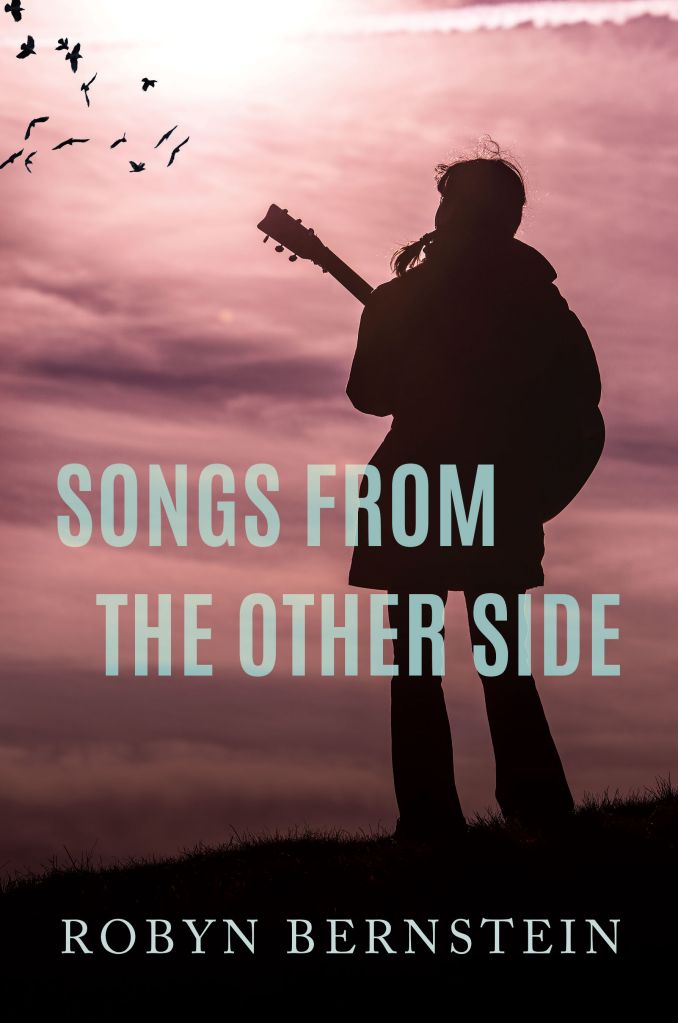
“Being a writer is, knowing that your story may have a hundred other stories within it”, Robyn Bernstein on the process of writing and launching her debut novel, Songs From The Other Side

Today I’ll be hosting Robyn Bernstein on my blog. Her debut novel Songs From The Other Side is now available on Amazon.com
Robyn Bernstein is a Duke University graduate, currently living in Arizona with her husband and three children. Her fiction work is influenced by a decade of living in New York City, as she frequently highlights art, music and architecture as important aspects of her characters’ East Coast lives.

It is my pleasure to welcome Ms. Bernstein to this episode.

Me: When did you first realize you wanted to be a writer?

Robyn: I entered a writing contest for Seventeen magazine when I was fifteen. Out of thousands of entrants, my short story received honorable mention. Until then, I had never qualified myself as a writer because most of the work I did was either for academic purposes or journaling.

Me: How long have you been writing?

Robyn: I think I’ve been writing for as long as I’ve been able to pick up a pen and write, though the types of things I’ve enjoyed writing have changed dramatically. For a very long time, it was poetry or lyrics for songs. Despite early on, having won a lot of small poetry contests and even placing in that short story contest, I had always enjoyed writing as a very private thing. Most of my characters have strong elements of my own vulnerabilities and there was a sense of feeling exposed or revealed by sharing them.

Me: What inspired you to write Songs From The Other Side?

Robyn: After this past year, 2020, the confluence of hardship and loss for so many people, it seemed like Songs From The Other Side had tremendous relevance. It is is at the heart, a love story but one that taps into universal aspects of grief and how to honor and eventually overcome great loss. I wanted the writing style to be poetic, lyrical and to have the depictions and descriptions within the story be so beautiful at times that the words were comforting, even when the characters themselves were suffering.

You can now order paperback and Kindle version of Songs From The Other Side from  Amazon.com

Me: Are your characters created from scratch or are they based on people from your life?

Robyn: They came to life for me so clearly when I was writing that I can only assume they are parceled together parts of people I know. Jonah, for example, one of my absolute favorite characters has the dynamic energy and sense of humor of my husband, but also the joyful optimism of our three boys.

Me: Were there alternate endings you considered?

Robyn: I knew the ending before I knew the entire story leading my characters there. There was never another ending.

Me: What is the most difficult part of your artistic process?

Robyn: I had a lot of trepidation about releasing my work to the public and I think that tapped into fears related to perfectionism. Not surprisingly, this theme shows up in some of the characters in the book but somehow they’re able to work it out in a much shorter time than me! Songs From The Other Side takes place over several months in 1985 and most of my characters are able to find some resolution before the end of that brief time.

Me: What is the most surprising thing you discovered while writing your book?

Robyn: The book alludes to the magical realism we apply to our own lives when seeking out answers, the idea that if we are attune to it, maybe there is some pattern or purpose affixed to the coincidences in life. For me, it felt like some fun universal joke to write a romantic book about messages, meaning and healing only to have the wrong manuscript be distributed when my book was first released! Why, for a book that was delayed (by me) in being released because I had such fears about perfectionism did the most flawed thing I could have foreseen actually happen? I hated but also loved the joke of it, to think that this forced me to realize that something creatively upsetting happened and I didn’t die. I fixed it and recovered which is actually the most prevalent theme of this whole book. How do we get to the other side?

Me: Who is your favourite author and why?

Robyn: Oh there are so many. Jeanette Winterson for her shattering honesty. Mary Karr for combining beauty and sorrow in her words. Donna Tartt because of her genius structuring of stories.

Me: What books or authors have most influenced your own writing?

Robyn: Mary Karr. I love her ideas on framing, that how you tell a story is based on the perception of what took place. Something can happen and yet two people see the same thing differently. She writes about her own life but not all of her family members have the exact same or choose to allow themselves to have the exact same memories. That to me is what being a writer is, knowing that your story may have a hundred other stories within it.

Me: What is the best piece of advice you received about writing?

Robyn: Write every day. Sometimes my daily writing doesn’t actually get written down though. Sometimes I simply run little scripts of ideas or thoughts in my head, small character sketches. I find it generates a creativity without scattering it too far so that when I actually do sit down to write, I always have a starting point. Sometimes my starting point is – why didn’t I write that down! But at least this way, I never feel writer’s block, something else maybe, but never writer’s block.

Me: What inspires you to get out of bed each day?

Robyn: Excitement to see what’s going to happen next. And also my youngest two kids are still in the stage of high energy and constant creativity. So, I think curiosity about what they’ve done in the kitchen plays a role.

Me: If you had to describe yourself in three words, what would they be?

Robyn: Curious, Enthusiastic and Passionate

Me: Writing can be an emotionally draining and stressful pursuit. Any tips for aspiring writers?

Robyn: Allow yourself the separation required to write, to really step back from the world when you need to go inward and be interior to put your thoughts on paper because in order to have topics to write about, you’ll have to eventually pick your head back up and be able to engage and interact again. I think this balance is easier if you fully live in each space when you need to.

Me: Are you working on anything at the present you would like to share with your readers about?

Robyn: Yes! I am almost done with my second book called Too Cold For Snow. I am so excited about this book about four wealthy sisters during the financial collapse of 2008. Each one has such an intriguing story line, all set in the desolate cold of a Connecticut winter.

You can follow my page @nycazwriter to keep up-to-date on the progress for this project!

About the book

Songs from the other side by Robyn Bernstein

Newly orphaned, Jayne reads her father’s physics notebook to comfort herself. The journal is filled with private lectures and hand written theories. These writings mirror the darkly restrictive circumstances unfolding in Jayne’s life, but also foresee the chance encounter with Jonah, another science nerd who may guide her through her grief. Despite the punishing judgment inflicted by Aunt Pauline, a religious zealot and Jayne’s new guardian, Jayne believes the contents of her father’s journal provide secret messages for her, encouraging her and Jonah to enroll together in a science contest that takes place in New York City. Jayne and Jonah’s friendship grows as they begin to plan their escape, hoping to win prize money for proving the science of salvation. But is Jayne willing to betray the lessons in the journal when they no longer align with what she and Jonah ultimately intend to do? Only Jayne can decide if new love is worth the risk of losing her last connection to her Mom and Dad.

Purchase here: Amazon.com

Connect with Robyn on Instagram

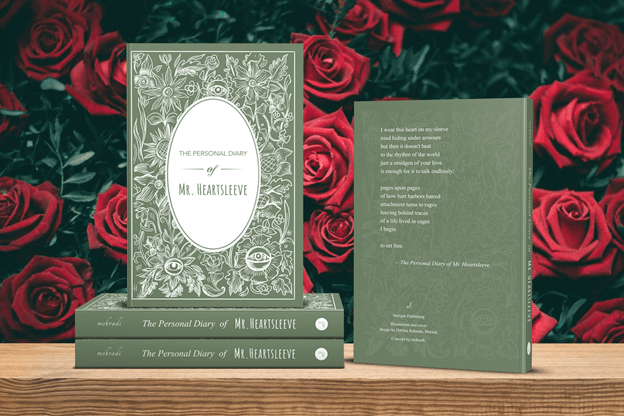
“Creativity can never be killed but that doesn’t stop people from trying”, mokradi on the process of writing and launching his debut collection, The Personal Diary of Mr. Heartsleeve

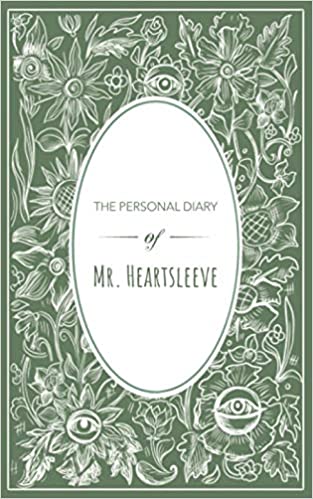
Today I’ll be hosting mokradi on my blog. His debut collection The Personal Diary of Mr. Heartsleeve is now available on Amazon.com

mo-kra-di (he/him/his) is an Indian storyteller and chronicler who uses digital media as his primary platform for artistic expression. mokradi engages directly with readers through social platforms where he showcases his work and interacts with a thriving community of thousands. In the years to come, he hopes to continue his digital exploration of themes ranging in masculinity, migration to spirituality and self-identity.

It is my pleasure to welcome mokradi to this episode.

Me: If you had to describe yourself in three words, what would they be?

mokradi: I am not too sure but now I am curious to know! I regularly post poems and prose, some even attempting to describe myself, on my instagram page @mokradi_ 

I think if you get to know me through my work you are welcome to try!

Me: When did you first realize you wanted to be a writer? How long have you been writing?

mokradi: I can still recall my tiny white eyes opening wide with unfettered excitement on opening one of my very first books: an illustrated poetry magazine by Sukumar Rai, a renowned Indian writer fondly remembered for his poems for children. I was maybe six or seven at the time.

As any child, I was captivated by the bright drawings of characters and scenes in this children’s book but for the first time I was drawn to the words. The effect words had in rhyming was so magical to me and how Rai effortlessly created these sonic worlds that told a story, all coming out from the nib of his pen!

I feel my artistic expression began very shortly after. I would pick up random crayons, red, blue or yellow and start scribbling over these very same pages with my own inspired rhymes. They probably didn’t make much sense, but the fact I could rhyme this word with that word and make a verse was an exhilarating affair. I don’t think I have stopped since.

Me: What inspired you to write The Personal Diary of Mr. Heartsleeve?

mokradi: Although this fascination for poetry continued throughout my childhood, it really started to take shape during my University days in Canada.

University is an ideal space to explore different forms of expression without worrying about it defining you. I started to take courses in writing and poetry even though I was pursuing a Science degree. Now looking back, I am beyond grateful for the tools these courses provided not only in writing but also in my day-to-day life.

On the other hand, University can also be quite a dark environment. During my four years, I saw many friends endure academic stress, financial hardship, break ups and other emotionally-draining experiences. These first-hand encounters sparked the image of a young adult in me: a boy trying to come to terms with a rapidly changing world, both from outside and from within.

Mr. Heartsleeve was born.

Based on these observations, I began creating these stories within stories you will read in the book. These stories explore the nature of sadness in young people, what it means to love, to lose, to consume and to grow up.

You can now order your official paperback of The Personal Diary of Mr. Heartsleeve across Amazon.com, Amazon.ca, Amazon.co.uk, Amazon.de, Amazon.fr, Amazon.it, Amazon.es or Amazon.co.jp.

Me: What is the most difficult part of your artistic process? Writing can be an emotionally draining and stressful pursuit. Any tips for aspiring writers?

mokradi: This is a great question and the answer might already be embedded in there somewhere: The process is key I think. Trusting the process is the most difficult part.

Some days you come up with great material, other days you spend twice as much time, but nothing comes. This unreliability can be very frustrating, and you might stress and tell yourself you are no longer creative and that spontaneous part of you has died.

Creativity can never be killed but that doesn’t stop people from trying. Our minds are quick to self-sabotage and abandon the process. However in my experience, I feel we never really possessed this creativity to begin with, but it was something we tapped into, perhaps after having earned its trust first.

You have to trust the process, only then does creativity let you in, even if it’s for a short while. Once you are in, you just hold on and the rest it will do. It might then decide to suddenly leave you, don’t take it too personally, be grateful that when it left, it left you with all these gems in your hand that you can then reveal to others. Trust the process, have faith in it. 

Me: What books or authors have most influenced your own writing? Who is your favourite author and why?

mokradi: Ahh.. so many to name! I’m fortunate enough to have been surrounded by a diverse group of friends growing up who introduced me to many inspiring authors that have shaped my style.

Some that come to mind would be Roald Dahl, R.K Narayan, Franz Kafka, Murakami, George Orwell, Syliva Path, Sarojini Naidu, Miss Louise Bennett, Adichie Chimamanda and so on!

Fascinatingly enough my favourite author at the moment is one of the greatest painters the world has known, Vincent Van Gogh. I chanced upon a book of his in a dusty second-hand book store. It is a collection of intimate letters he wrote to this brother, ironically much like a personal diary! I find his writing to be so eloquent, maybe even slightly better than his paintings.

Me: Are you working on anything at the present you would like to share with your readers about?

mokradi: Yes, I am already working on my next poetry book which is rooted in themes of migration.

Each year, millions of people, now more so, begin an astounding journey to leave their homeland, in search of a new country to call home. Whether by choice or force, these travellers endure great adversities that they must overcome.

My next book will highlight these endeavours, as I too draw on my personal migration story, describing the challenges encountered in adapting to a new way of life, having moved from India to Canada almost a decade ago!

You can follow my page @mokradi_ to keep up-to-date on the progress for this project!

About the book

The Personal Diary of Mr. Heartsleeve is a collection of poetry and prose dedicated to the nature of sadness and the wisdom that emerges from its exploration. Through Mr. Heartsleeve’s Personal Diary, the reader probes answers to profound questions like: what is sadness made of?

Is the nature of suffering the same in everyone?
Is there an ending to attachment?

With each diary entry, the sense of separation between the reader and Mr. Heartsleeve seems to collapse leading one to inquire whether Mr. Heartsleeve and his Personal Diary could’ve ever existed outside of us?

Purchase link: Amazon.com

Connect with mokradi here: Instagram

An Interview with Amercia Morris| The Quintessential Author And Content Creator Taking the World By Storm

Considered as a visionary by peers and audience, Author And Content Creator Amercia Morris’s strength lies in her ability to see the big picture

Amercia Morris is an author and content creator who was brought up in the city of Buffalo, New York. She graduated with a degree in Social Sciences from Erie Community College. Known as a talented lady with vision, Amercia Morris’s life mission is to inspire and encourage others to live the life of achievers, full of abundance and fulfilment by creating an inspiring environment.  This is because she has quite an influential aura and inspiring personality.

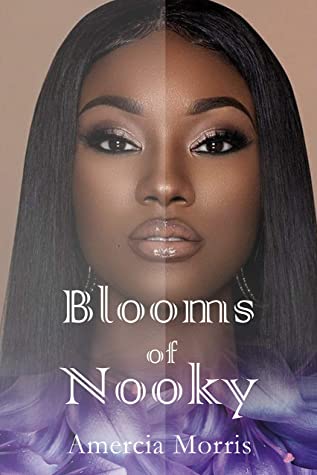
Amercia has always loved writing and has freelanced for various online magazines and blogs. She is currently operating her own web blog Nooky life. Her first novella, Planet Nooky has already been published. Also a fiction novel Blooms of Nooky following that and many more promised to come.

It is my pleasure to welcome Ms. Amercia Morris to this episode.

Me: What inspired you to write Blooms of Nooky?

Ms. Morris:  I wrote Blooms of Nooky, to shed light on Kinks and fetishes mainly in the African American community and promoting sex in a light where we can be free and respected as individuals. It has been a constant fetishization of black women and we see women being degraded a lot in the media. When it comes to sexuality, men as well. But here, I wrote this book where a beautiful intelligent young black woman who is introduced into this depiction of a secret society and is happy and respected and not degrades or demeaned or shamed for merely being herself intimately. And it says being kinky is ok.

Me: Are your characters created from scratch or are they based on people from your life?

Ms. Morris: These characters are completely new and fresh. Of course as a writer we were given the advice to write what we know of. So Ebony’s personality is taken from myself and some of my favorites like Betsey Johnson. I absolutely love Betsey Johnson and everything she designs. That was Ebony’s inspiration as a fashion designer along with Gi Gi and Nathan. They all have pieces of me in their development but the events are all created by me. Some may stem from real life experiences like hooking up with the wrong guy but none of the same. When I write or create something, I like it to be original as possible as that leaves mystery and suspense. I will be coming out with a memoir very soon which will help people as well. I researched a lot while writing my books. Because I try to make accurate descriptions and give solid information that can be fact checked. So that my readers can actually dive into my work and relating to the things which is happening.

Me: When did you first realize you wanted to be a writer?        

Ms. Morris: Since my childhood, I had a fascination of words, especially with the English language. Because most words in the American English language have several meanings and tenses. Which is why I choose the word Nooky. Because, even though there is a mainstream meaning for nooky, it can really mean anything you want it to be. So with that base, I started writing using the new words I learned and fell in love with. I continued to write here and there, mostly in a way to express myself clearly. Once I was introduced to poetry, that’s when I fell in love and realized that I enjoyed it and was good at it.

Me: How long have you been writing?

Ms. Morris: I have been writing for entertainment purposes since I was 15/16 as a sophomore in High school.

Me: What is the most difficult part of your artistic process?

Ms. Morris: The most difficult part is making sure your message is clear within a length of time you believe is suitable. I myself like to get straight into the point in a sense I like to give as much punch as possible. I want my readers to want more. That is why I leave each writing ready for a sequel.

Me: What is the most surprising thing you discovered while writing your book?

Ms. Morris: Hmm… good question. I think it must be that I discovered more of myself. Meaning, I never know where my imagination will take me to. For each book I published, I started with an outline of idea and characters. But I keep surprising myself as to where it actually takes me.

Me: Who is your favourite author and why?

Ms. Morris: I would say Toni cade Bambara. Bambara used her writing to inspire and ignite change. Her stories were entertaining and also educating. She wrote short stories which I love and there is not a lot of black women who write short stories. She wasn’t afraid to speak her mind and touch on an array of different subjects. She did not box herself into a certain genre or field. She was an author, activist and a teacher. She also pursued many other interests like arts.

Me: What books or authors have most influenced your own writing?

Ms. Morris: Donald Goines is an inspiring author. Unlike Bambara, he was not formally educated. Meaning he wrote without having a college degree. He was actually an ex-con and started writing in jail. From there, he was able to produce amazing content that is still respected today. He broke barriers and beat the odds and stereotypes of a black man of his history, during his time.

Me: Writing can be an emotionally draining and stressful pursuit. Any tips for aspiring writers?

Ms. Morris: Yes I would say, to  be patient with yourself and don’t be afraid to start over. When I was writing my first book, I was literally a couple hundred words away from finishing it and I lost the whole of what I wrote, and I had to start over. I cried and cried. I lost a lot of my work prior to that as well. They were destroyed some way or other like my broken laptop or my notebooks being literally eaten by my dog, which is so ironic. But never give up on what you love and your gift.

Me: What is the best piece of advice you received about writing?

Ms. Morris: I actually didn’t received any advice. I actually wish, I would have been given the gift of a mentor. I am actually still searching for one. Ha ha… so if anyone is out there, seasoned and listening, please contact me.

Connect with Ms. Amercia Morris here Instagram: @Planet_nooky and: @Nookyis Email: mercy@nooky.life

Me: What inspires you to get out of bed each day? 

Ms. Morris: Knowing that I have a new chance to achieve my goals, and move beyond of what is expected of me. Literally one day can be the worse day and in the next, you will be ready to faint at what has been presented to you. All we need is an opportunity in life and perseverance. We will succeed because we, who strive will find a way for each interaction and each encounter as an opportunity to learn and grow.

Me: If you had to describe yourself in three words, what would they be?

Ms. Morris: Bold, Fierce and Honest

Me: Are you working on anything at the present you would like to share with your readers about?

Ms. Morris: I Have a website dedicated to assist those who are in the process of healing from trauma. It is not intended to replace the traditional medicine but aid in the process by allowing you to read different articles and link with peers. It is also a way to explore kinks and fetishes from people who actually experienced those and not just researched. I want to connect with people in the most organic and honest way. I also am going to release a part 2 of Planet Nooky and Blooms of nooky. I have more than ten works that have not been published. So I have lots of content and fresh ideas that come to me consistently. So please stay tuned and you will be surprised.

Author bio

Amercia Morris is not the type of person who can be easily categorized in a few written notes. She can be best described as a multi-talented go-getter who identifies numerous opportunities and successfully grabs them immediately. Her education and life journey have provided her with a unique set of skills that led to the establishment and hosting of Planet Nooky, a TV show and podcast that is a spinoff of her first Urban Erotic Science Fiction. She Also Co-Hosts and creates content for NookyAfter Dark, which is both dedicated to a sex-positive environment.

Amercia has always loved writing and has freelanced for various online magazines and blogs. She is currently operating her own web blog Nooky life and her first novella, Planet Nooky has already been published. Also a fiction novel Blooms of Nooky following that and more promised to come.

In her free time, Amercia likes gardening, visiting museums, going to outdoor parties, traveling, swimming and exploring the world around her. She loves playing games of all sorts and when the time comes for relaxing it is often with a glass of her favorite wine. Previously she was a supporter of and volunteer for The Restore Program, RAINN, and The Geva Theatre. Today, she spends her time between her home in Buffalo and Atlanta Ga.

She is also exploring a career as a Certified Sex Coach in the hope that she can help other women, and men, who may have reservations or fears about sex because of past traumas and hopefully to aid in their healing and ability to have a healthy and happy sex life.

With the iconic success, Amercia Morris has garnered much respect and recognition at such a young age. An epic axiom ‘hard work pays off’ has been an inspiration. Yet, she aspires to achieve more. It is her wish to create a community where we see the true value in our bodies and relationships and use what we have been given to heal each other and not to hurt. She is hopeful that this will enable her to expand nationwide/worldwide and have hubs of little Planet Nooky in all corners of the globe.

For more information about Amercia Morris, her personal story, and her businesses, You can contact or follow her on:

Instagram: @Planet_nooky and: @Nookyis

Facebook: Exquisitemercyllc

Email: mercy@nooky.life

Planet Nooky Amazon.com

Blooms of Nooky Amazon.com

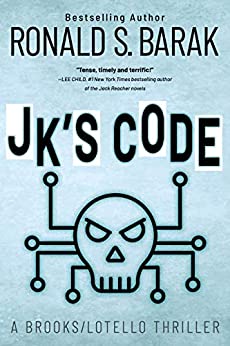
An Interview with Ronald S. Barak| Author of JK’s Code

Today I’ll be hosting  author Ronald S. Barak on my blog. His book “JK’s Code” is available on Amazon.com

Ronald S. Barak

Ronald S. Barak, bestselling author, Olympic athlete, law school honors graduate, and experienced courtroom lawyer, is uniquely qualified to write his novels that appeal to all political and legal thriller fans.

Described by his readers as a cross between Agatha Christie, Lee Child, and John Lescroart, bestselling author Barak keeps his readers flipping the pages into the wee hours of the night. While he mostly lets his characters tell his stories, he manages to get his licks in too.

Barak derives great satisfaction from knowing that his books not only entertain but also stimulate others to think about how things might be, how people can actually resolve real-world problems. In particular, Barak tackles the country’s dysfunctional government representatives–not just back-seat driving criticism for the sake of being a back-seat driver, but truly framing practical remedies to the political abuse and corruption adversely affecting too many people’s lives today. Barak’s extensive legal background and insight allow him to cleverly pollinate his fiction and today’s sad state of political reality.

Barak resides in Pacific Palisades, California, where he is hard at work on his next novel, JK’s Code.

Me: What inspired you to transition from lawyer to fiction writer? 

Ronald: I wrote my first novel on a dare from some friends while I was still practicing law full time. I had so much fun writing that first novel that the transition from lawyer to fiction writer became a no brainer.

Me: How did practicing law help with being a writer?

Ronald: My novels are legal and political thrillers. I was already a political junkie and knew from every day reading what was current. My legal background helped me write my novels without having to do much research. My first novel, The Amendment Killer, took me the better part of a year to write. Practice makes better if not perfect; I wrote JK’s Code in six weeks. This would not have been as easy for me or as timely if I didn’t have the law practice background that I do.

Me: How would you describe your writing process (plotter versus pantser)?

Ronald: I am definitely a pantser. I typically have only one or two thoughts in my head about the plot and the possible outcome when I begin writing. Each day, I review what I wrote the prior day (and clean it up) and then keep going from there. The story often turns out quite a bit different than I originally anticipated. In the case of JK’s Code, I originally thought I was going to write a story about crypto currency crime and, given what was going on in the world, I completely changed that to cybersecurity crime.

Me: I see in your bio that you were an Olympic athlete. How does preparing and competing compare to writing a novel?

Ronald: I was an Olympic gymnast. Writing a novel is kind of like mental gymnastics. One is physical and the other is mental, but they are remarkably similar in terms of practice and focus. The more you practice and focus, the better athlete you can become (assuming a certain amount of innate ability in your genes). The more you practice and focus, the better writer you can become. I think my earlier discipline as an athlete has definitely helped me as a writer.

Me: Tell us a little about the Brooks/Lotello series.

Ronald: When I was dared by some friends to write a novel, and dared to rise to the challenge, I figured out I should write what I liked reading, political and legal suspense and mysteries. I also figured I should write what I know. I had extensive experience as a trial lawyer and to a lesser extent as a trial judge. From there, I created my primary protagonist, Cyrus Brooks, a retired U.S. District Court judge, who kind of thinks and looks like I do, and has a personality and sense of humor similar to mine. I love Constitutional Law (it take all kinds of law and it takes all kinds of people, what can I say?). So, I dreamed up the issue of whether amending the Constitution requires Congressional participation. I needed a victim. I created a precocious 11 year old granddaughter of a Supreme Court Justice. I forced him to choose between saving the country and saving the life of his granddaughter, who was kidnapped by a psychopath wanting to control the outcome of a Supreme Court case about whether an amendment to the Constitution opposed by Congress could still be valid. Because I am diabetic and know the subject, I made the kidnapped youngster diabetic to add considerable complication and tension to the story. Because I’m a pantser, these complications arose as I wrote and not at all neatly in advance. I called that first novel The Amendment Killer because the bad guy, a government spook wanted to kill that Constitutional amendment. In my next novel, The Puppet Master, Cyrus Brooks and his colleague Frank Lotello, a homicide detective, are tasked with finding a vigilante serial killer, a puppet master you might say, assassinating corrupt government officials because he feels they had stripped him of everything he had, his family, his business, his dignity and—maybe—even his sanity. The third novel in my Brooks/Lotello series, Payback, was about a psychopathic serial killer at an international writing conference killing prominent writing personalities because he believed they were not paying him the proper respect as a writer. Some think this killer reflects how I feel as a writer. (You do have to be able to laugh at yourself!) Brooks just happened to be at the conference studying to write a novel of his own. In my latest Brooks/Lotello novel, JK’s Code, a young college technology genius who happens to be the brother-in-law of Frank Lotello stumbles across the plot of a U.S. president to assure his continuing control of the country, right down to the events of January 6. However did I imagine such a story in mid-2020?

Me: JK’s Code is your 4th book in the series. What is it about?

Ronald: In my latest Brooks/Lotello novel, JK’s Code, a young college technology genius who happens to be the brother-in-law of Frank Lotello, one of the two protagonists in the Brooks/Lotello series, stumbles across the plot of a U.S. president to assure his continuing control of the country, right down to the events of January 6. However did I imagine such a story in mid-2020?

Me: What are some of the challenges when writing about real-time issues?

Ronald: Keeping them timely, often referred to as “ripped from the headlines.” In my opinion, to really be “timely,” it is necessary to do your writing before the headlines happen. In The Puppet Master, the second in my Brooks/Lotello series, the killer asserts a legal defense to murder that had never been tried in the real-world courts. Two years later, a real-world serial killer asserted that very defense, which went all the way up to the U.S. Supreme Court. In my latest in the series, JK’s Code, the fictional U.S. president attempted a coup to take over the government. I wrote that seven months before it happened on January 6. I refer to the challenge of writing about real-time issues as having to be creative, to have an imagination on steroids one might say, and to dream up things that might happen before they do in the real world. I might have liked JK’s Code to be traditionally published, but that would have taken another year to come to market and by then it would not have been as timely as when it was released, before many of the events I imagined came to pass.

Me: Where do you get the ideas for your stories?

Ronald: The short answer is “I don’t know.” Sometimes they come to me in my sleep. I just wake up with a thought, jot it down on a post-it note and go back to sleep. Sometimes it comes to me when I’m playing golf or exercising. Sometimes it comes to me when I’m watching or reading the news or a movie and I say “What if . . . ?” The key is to jot down a few words before you forget the idea.

Me: Are your characters created from scratch or are they based on people from your life?

Ronald: Most of the time, they are based on people that I observe in real life. Brooks is very similar to . . . me. Lotello is quite similar to our son. The president in JK’s Code bears a remarkable similarity in personality to Donald Trump. In fact, I’m quite apolitical. I picked on Trump because he was there and people would see who I was mimicking. My next novel might very well pick on Biden. The 11 year old kidnapped granddaughter of a U.S. Supreme Court justice in The Amendment Killer has diabetes. So do I. I used that trait because I know the subject well and could write about it without having to do much research. I also think it’s a subject that can benefit from more attention. Payback involves a novelist who is a psychopathic serial killer and thought he deserves more recognition. Was I thinking of me? Hardly, but it always helps to be able to laugh at yourself.

Me: What is the most challenging part of the writing process for you?

Ronald: If by “process,” you mean the art of writing, I don’t have an answer. If you enjoy writing as much as I do and you are patient, the process will come to you. If you include in process everything that goes with a writing career, then the most challenging part of the writing business is, hands down, building a market and a brand. If you’re an athlete, as I have been, then all you have to do is be talented and work hard. If you’re a lawyer, as I am, then all you have to do is be talented and work hard. If you’re a writer, as I strive to be, it is not enough to be talented and work hard. There are many talented novelists who have worked very hard who you’ve never heard of. You need a little bit of luck to go with the talent and effort.

Me: What is the best piece of advice you received about writing?

Ronald: Write what you know and what you love.

Me: What is the worst piece of advice you received about writing?

Ronald: Write a good story and the readers will come.

Synopsis

Genre(s): Political Thriller; Contemporary Fiction

“Twenty year old computer genius Jake Klein, known to his friends as JK, drops out of college to pursue fortune and fame in the field of cybersecurity. Discovering and upending a conspiracy between the presidents of Russia and America to manipulate the results of the 2020 U.S. presidential election, JK finds himself in a deadly game of cat and mouse with the heads of state of two of the world’s most powerful countries—with the emphasis on deadly. Revealing the truth to the world definitely comes with a price. The fourth in the bestselling Brooks/Lotello novels, JK’s Code, is a political thriller teeming with real-time events, satire, suspense, and just a hint of romance that couldn’t come any closer to the realities of 2020 if JK were covertly dividing his time between the White House and the Kremlin—which he may just be.”

Purchase here: Amazon.com

Connect with Ronald Facebook Twitter Instagram