Today I’ll be hosting author Ruth Rotkowitz on my blog. Her novels, Escaping the Whale and The Whale Surfaces are available on Amazon.com
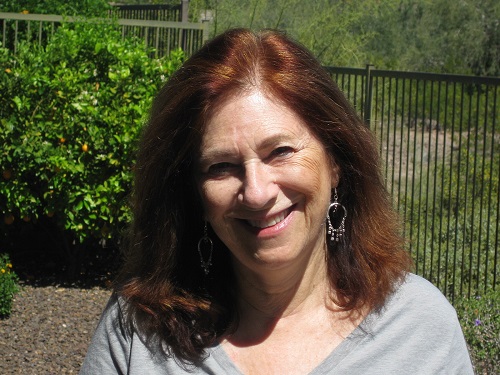
Ruth Rotkowitz is the author of two novels: Escaping the Whale and the prequel, The Whale Surfaces. Both novels feature a daughter of Holocaust survivors who struggles with a legacy of inherited trauma. Readers’ interest in the background of the adult protagonist in Escaping the Whale, which was published first, inspired the creation of the prequel, which describes the woman’s childhood and adolescence. As a daughter of survivors herself, Rotkowitz has experienced, observed, and researched inherited trauma. In the talks she has conducted via Zoom this past year, she has been heartened by the reactions of many types of readers of varied backgrounds who relate to her protagonist’s struggles.
Rotkowitz has published fiction, nonfiction, and poetry in various literary journals and has been a staff writer and member of the editorial board of the (now defunct) Woman’s Newspaper of Princeton, where several of her feature articles garnered awards. She holds a B.A. and M.A. in English and has taught English on both the college and high school levels. She currently conducts book talks for the Phoenix Holocaust Association in the Phoenix, Arizona area, where she resides.
It is my pleasure to welcome Ms. Rotkowitz to this interview.
- When did you first realize you wanted to be a writer?
I always knew. I felt the “calling,” so to speak, as a little girl, because I always loved reading and marveled at the power and beauty of the written word.
- How long have you been writing?
I was always writing. I got serious about trying to get my work published in the seventies, when I left teaching and was home with a child. I started with small pieces – fiction, nonfiction, poetry. I began framing ideas for novels a few years later, and began working at novel-writing in the eighties.
- What inspired you to write these books?
I was visited by the idea of a troubled young woman as a protagonist. As I began writing of this woman’s life and her attempt to conceal her fears and delusions in order to appear normal, I connected her problems with the problems of children of Holocaust survivors as well as the struggles of women to be taken seriously, in their relationships and careers. I was inspired to set the first novel, Escaping the Whale, in 1980 because women were just beginning to break out of the passive role set for them, and because I vividly remember the fascination that year with the Iran hostage crisis. I saw a connection between that situation and my protagonist’s.
The creation of the second book, The Whale Surfaces was inspired by the questions readers of the first book asked. They were curious about the protagonist’s upbringing and wanted a picture of how she became this woman haunted by demons, trying desperately to banish them herself. Thus, during the lockdown, I wrote the prequel, a novella, which fleshes out this character’s story.
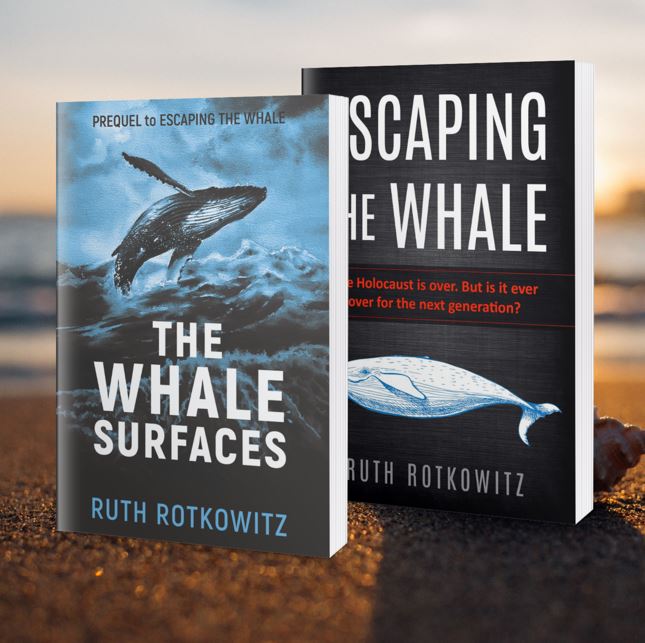
You can now order Hardcover, Paperback, eBook and Audible version of Escaping the Whale from Amazon.com and Hardcover and Paperback version from Barnes & Noble, The Whale Surfaces is available on paperback and eBook version from Amazon.com and Barnes & Noble
- What is the most difficult part of your artistic process?
The most difficult part is getting away from the artistic process. When I become obsessed with what I perceive as the success of other writers who have also published late in life with small presses, I become discouraged. How did they get that review? How did they get on that show? Etcetera etcetera. That is the kiss of death, leaving me angry and discouraged. I have to remember that I must not compare myself to anyone else. Just do my work, enjoy what I do, and feel pride in what I have achieved. Jealousy destroys creativity, and I have to constantly remind myself to move beyond it and just write!
- What is the most surprising thing you discovered while writing your books?
What surprised me, and still surprises me, is the total immersion I experience in my character’s life. I become her. Her problems, fears, obsessions, and joys become mine. I actually dream about her. I think, in those dreams, I am working out some parts of the story.
- Who is your favorite author and why?
There are many authors I adore, but Alice Hoffman is by far one of my favorites. I love the way she weaves myth, legend, and the supernatural into her tales of human characters. As you might surmise from the titles of my novels, I feel a connection with the Biblical story of Jonah and the whale, and I employed that as a metaphor for my character’s dilemma. Myths from all cultures have so much to teach us, and I am inspired by Hoffman’s ability to create a smooth flow between that world and the real world.
- What books or authors have most influenced your own writing?
As a young girl, I was enamored of Little Women by Louisa May Alcott. I loved how the book drew me in so that I truly cared about the characters. The emotional connection I felt with Jo, the main character, and the pain I felt at Beth’s death, made me realize that writing has the power to connect with readers on an emotional level.
As an adult, I devour novels that portray a female character struggling with mental illness and/or butting heads with others who do not understand her. How To Be A Good Wife by Emma Chapman, The Pleasing Hour by Lily King, Beloved by Toni Morrison, Orphan Train by Christina Baker Kline, Illumination Night and The Probable Future by Alice Hoffman, All the Light We Cannot See by Anthony Doerr, The Girl With the Louding Voice by Abi Dare, and Pigs in Heaven by Barbara Kingsolver are some of the books that have inspired me to explore the stories that reside in my head.
- If you had to describe yourself in three words, what would they be?
Sensitive, creative, searching
- Writing can be an emotionally draining and stressful pursuit. Any tips for aspiring writers?
If you love your character or your story, focus on that. Let it come to life on the page. Don’t be distracted by other worries about what you are creating. Enjoy the writing itself!
- Are you working on anything at the present you would like to share with your readers?
I have begun two other novels. One deals with a woman who has inherited a castle in which she grew up and that she has spent her adult years trying to maintain. At some point, she will begin to question why she is doing that, since it has prevented her from having a life of her own. The other novel I have begun features an installation artist who teaches art in high school to pay her bills. She meets a charismatic, dysfunctional couple who fascinate her. They are both successful actors and they worm their way into her life, helping her but also controlling her.
You can follow me on Instagram @ruthrotkowitz to keep up-to-date on the progress for this project.
For more information on author Ruth Rotkowitz, visit her website
About Escaping the Whale
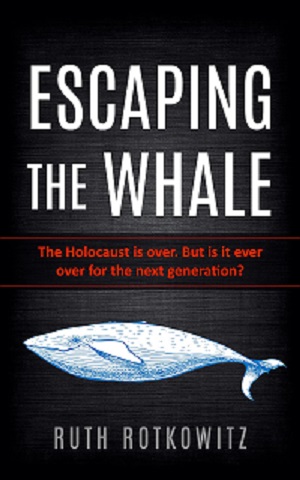
To everyone who knows her, 28-year-old Marcia Gold leads the perfect life. A high school guidance counselor in 1980 Brooklyn, New York who specializes in helping pregnant teens, Marcia thrives in her work. She also has a handsome, successful boyfriend who has won the approval of her Jewish, Holocaust-survivor family – no easy feat.
However, beneath the shiny surface lurks another reality. Plagued by frightening and debilitating panic attacks brought on by her family’s wartime legacy and exacerbated by the Iranian hostage crisis in the news, Marcia becomes convinced that “demons” are occupying her closet and her mind. Determined to keep her terrifying secret life a secret, Marcia is pushed closer and closer to a breaking point.
A series of crises finally forces the explosion Marcia can no longer contain. Determined to rid herself of her “demons,” she concocts a plan, desperate to be reborn as a new person. Unfortunately, she discovers that her plan creates its own problems. Can she find another path out of her psychic pain, one that will lead her to true normalcy?
Purchase here: Amazon.com, Barnes & Noble and Apple Books
About The Whale Surfaces
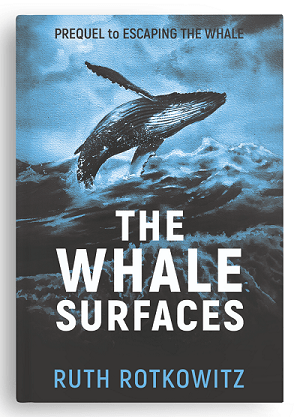
Marcia Gold is the daughter of Holocaust survivors whose lives have been defined by their painful experiences in Europe. A sensitive child, Marcia has absorbed this history as her own, and the Holocaust looms over her childhood like an ever-present cloud. Despite caring parents and a safe life, Marcia’s childhood is filled with panic and delusions.
Marcia realizes early on that her fearful imaginings are upsetting to others. Yet demons are haunting her and she feels them infiltrating her life, making her ‘different.’ No one can understand her sense of alienation and her frightening ‘visions.’ Mortified by them herself, she believes her only hope lies in escaping the scene of her childhood and beginning an independent life. Only then, she concludes, will she vanquish those demons whose tentacles seem to be sliding relentlessly through the inside of her brain, poisoning all that they touch. Marcia’s search for independence is really a search for mental health.
Read after Escaping the Whale, the prequel explains Marcia’s journey to adulthood. Read as a stand-alone, it provides a picture of a child struggling to be ‘normal.’ Marcia Gold, in both books, is waiting to be understood.
Purchase here: Amazon.com and Barnes & Noble
 The Ultimate Reviewer